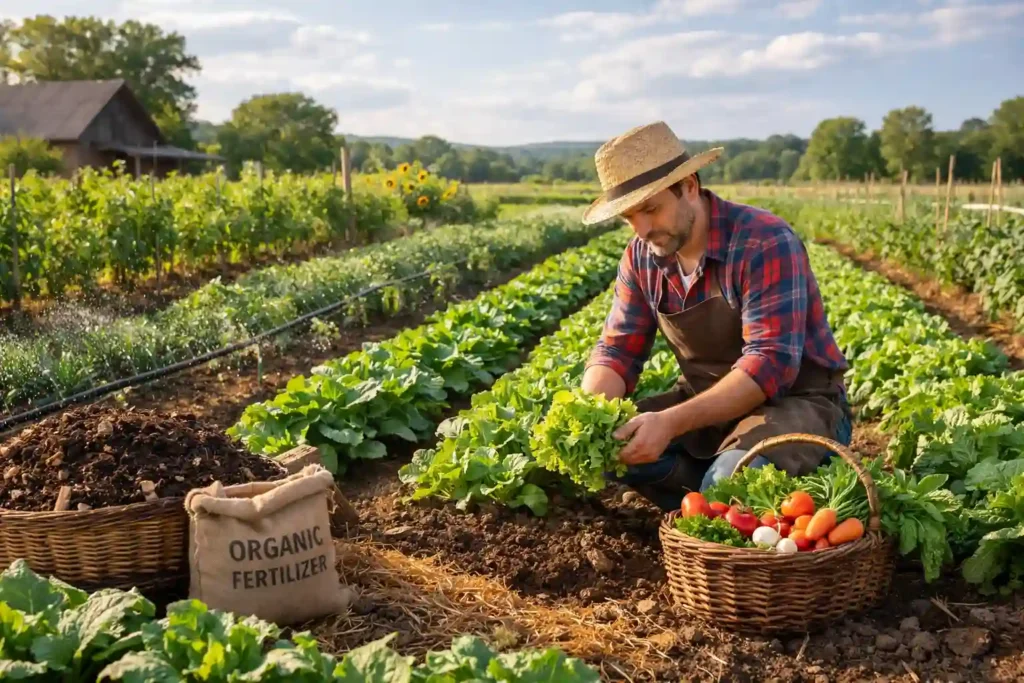
Organic farming is a natural method of farming and agriculture that focuses on growing crops and raising animals without using synthetic chemicals, pesticides, or genetically modified organisms (GMOs). Instead, farmers rely on natural processes such as composting, crop rotation, and biological pest control to maintain soil health and produce nutritious food.
In recent years, organic agriculture has become one of the fastest-growing sectors in the global food industry. Many consumers prefer organic food because it is considered healthier, environmentally friendly, and sustainable. This beginner guide explains the basics of organic farming, its types, advantages, and important practices like soil fertility management.
What Is Organic Farming?
Organic farming is an agricultural system that uses natural inputs and ecological processes to grow crops and maintain livestock. The goal is to protect the environment, improve soil quality, and produce healthy food without harmful chemicals.
In modern agriculture, conventional farming often uses synthetic fertilizers and pesticides to increase crop yield. Organic farming takes a different approach by focusing on natural resources and sustainable farming practices.
Key principles of organic farming include:
-
Avoiding chemical fertilizers and pesticides
-
Maintaining soil fertility through natural methods
-
Promoting biodiversity in the farming ecosystem
-
Using renewable resources in agriculture
-
Protecting water and soil from pollution
These practices make organic farming an important part of sustainable agriculture and environmentally responsible food production.
Types of Organic Farming
There are several types of organic farming, depending on the farming system and production methods. Understanding these types helps beginners choose the best approach for their farm.
1. Pure Organic Farming
Pure organic farming completely avoids synthetic chemicals and artificial fertilizers. Farmers use natural compost, organic manure, and biological pest control methods to grow crops. This method focuses on maintaining a natural balance in agriculture.
2. Integrated Organic Farming
Integrated organic farming combines organic practices with modern agricultural techniques. Farmers may use crop rotation, composting, and natural pest control along with improved irrigation systems to increase productivity.
3. Crop Rotation Farming
Crop rotation is an important type of organic farming where different crops are grown in the same field in different seasons. This helps maintain soil nutrients, reduce pests, and improve crop yield.
4. Green Manure Farming
In this system, farmers grow specific plants like legumes to improve soil fertility. These plants are later mixed into the soil to add nutrients and organic matter.
These organic farming systems help farmers maintain healthy soil and produce high-quality crops without harming the environment.
Soil Fertility Management in Organic Farming
One of the most important aspects of organic agriculture is soil fertility management. Healthy soil is essential for strong crop growth and high agricultural productivity.
Organic farmers use several natural methods to maintain soil health:
Composting
Compost is made from organic waste such as crop residues, animal manure, and food scraps. It provides essential nutrients for crops and improves soil structure.
Crop Rotation
Growing different crops in different seasons helps balance soil nutrients and prevent soil degradation.
Green Manure
Green manure plants increase nitrogen levels in soil and improve soil fertility naturally.
Organic Fertilizers
Natural fertilizers such as farmyard manure, vermicompost, and biofertilizers are widely used in organic farming.
Good soil fertility management ensures long-term agricultural sustainability and helps farmers maintain consistent crop production.
Advantages of Organic Farming
There are many advantages of organic farming for farmers, consumers, and the environment. This is one reason why organic agriculture is gaining popularity worldwide.
1. Environmentally Friendly
Organic farming reduces pollution because it avoids harmful pesticides and chemical fertilizers.
2. Improves Soil Health
Natural farming methods increase soil fertility and improve soil structure over time.
3. Produces Healthier Food
Organic food is free from harmful chemicals and often contains higher levels of nutrients.
4. Protects Biodiversity
Organic farms support beneficial insects, birds, and other wildlife that help maintain a healthy ecosystem.
5. Sustainable Agriculture
Organic farming supports long-term sustainable farming practices that protect natural resources.
6. Growing Market Demand
The global demand for organic products continues to increase, creating better opportunities for farmers and agriculture businesses.
Organic Farming for Beginners
Starting organic farming for beginners may seem challenging, but it can be simple with the right planning and knowledge.
Here are a few steps to start organic farming:
Start with Healthy Soil
Test your soil and improve it with compost, organic fertilizers, and natural nutrients.
Choose the Right Crops
Select crops suitable for your climate and soil conditions. Vegetables, fruits, and herbs are popular organic farming choices.
Use Natural Pest Control
Encourage beneficial insects and use natural pest control methods like neem oil or biological solutions.
Practice Crop Rotation
Rotate crops regularly to maintain soil nutrients and prevent pest problems.
Learn Sustainable Farming Techniques
Understanding modern farming and agriculture practices such as drip irrigation, composting, and organic pest management can improve crop production.
Conclusion
Organic farming is an important part of modern farming and agriculture that focuses on sustainability, environmental protection, and healthy food production. By using natural fertilizers, composting, and effective soil fertility management, farmers can grow crops without relying on harmful chemicals.
For beginners, organic farming offers a great opportunity to adopt sustainable agriculture practices while producing high-quality food. As demand for organic products continues to grow worldwide, organic farming will play a key role in the future of agriculture and global food security.