
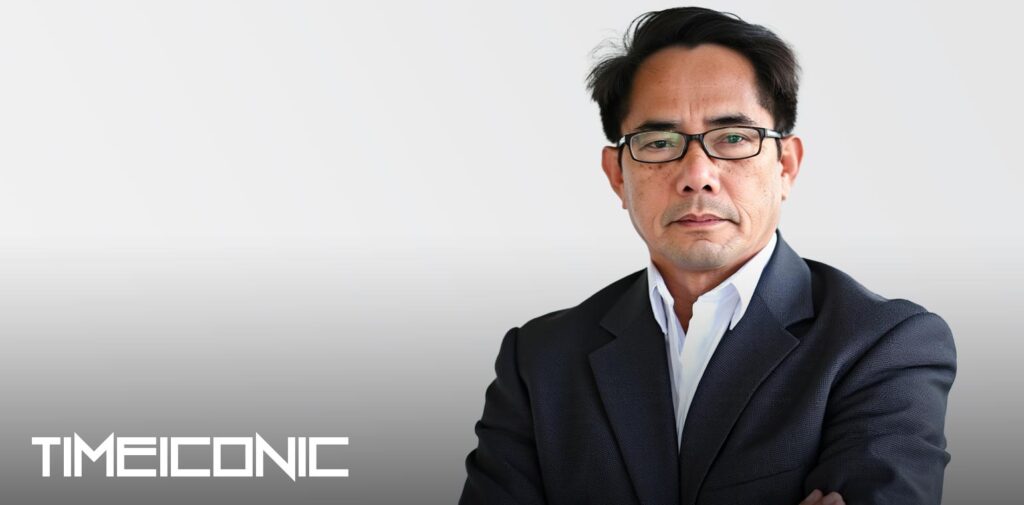
There is a particular kind of scientist who spends a career chasing a single, stubborn question. For Tuan Anh Duong, Founder and CEO of Adaptive Computation LLC, that question has never changed: how does a living brain look at something once and simply know it, while a machine needs thousands of examples to learn the same lesson? It is the kind of question that rarely finds a quick answer, and Duong has never been in a hurry to find one. Instead, he has spent his career building the pieces of an answer one experiment, one algorithm and one chip design at a time.
For more than four decades, Duong has worked to close that gap. Twenty-six of those years were spent inside NASA’s Jet Propulsion Laboratory, where he helped design the neural systems that would one day identify safe landing sites on Mars and search for signs of life on other worlds. The rest have gone into Adaptive Computation, the company he founded to turn those discoveries into a commercial reality. Today, as artificial intelligence dominates global conversation, Duong has been named among the Top 10 Leaders Advancing Bio-Inspired AI Technologies in 2026, recognition for a body of work that quietly reimagines what intelligent machines can be.
His approach stands apart from the AI systems most people now take for granted. Most modern deep learning networks depend on abundant data, often thousands of labeled images for every object they need to recognize, and even then they can only detect and classify, not truly recognize an object the way a person does across different views and settings. Duong set out to build something different: systems that need only a handful of examples, that update themselves as the world around them changes, and that borrow their architecture directly from the human visual and cognitive system. It is a philosophy built on patience, biology and mathematics in equal measure, and it is beginning to reshape how the industry thinks about the next generation of intelligent machines.
“These limitations urgently need an alternative approach, such as inspiring our vision and brain,” Duong says of conventional deep learning’s dependence on massive datasets. “We only need an object image and can classify and recognize whether it is the same object in different views and unknown environments.”
Three Decades at the Frontier of Space Science
Duong’s fascination with intelligent systems took root at JPL, where he began working with associative memory using feedback neural networks before moving into feed-forward networks for Mars landing site identification and life detection research based on amino acid signatures. It was during those early years that he invented Cascade Error Projection, a learning algorithm built for low-bit quantization on hardware, a technical breakthrough that allowed systems to learn from as little as four-bit weight synapses. That kind of efficiency mattered enormously to NASA and the Ballistic Missile Defense Organization, where every gram, watt and dollar carried consequences for a mission millions of miles from home.
It was his work on visual object detection that pushed him toward the ideas that now define his career. Conventional approaches, from eigen-based methods to early neural networks, kept running into the same wall. A DARPA program called Neovision2, focused on neuromorphic vision systems, caught his attention even though his team’s bid for the program did not succeed. The experience left him convinced that modeling the visual pathway alone was not enough. What mattered just as much was the mechanism by which the brain gathers visual information in the first place, a process first documented by the Russian psychologist Alfred Yarbus in his landmark 1950s research on saccadic eye movements, the rapid, searching motions the human eye makes as it scans a scene.
That insight led Duong to develop the Extended Visual Pathway, or EViP, a framework that combines a saccadic eye movement emulator with a visual pathway emulator. He first introduced the concept in a book chapter of the Handbook of Pattern Recognition and Computer Vision, published by World Scientific in January 2010. What he did not expect was how closely his independently derived model would align with the pioneering neuroscience of David Hubel at Harvard University, whose research on the visual cortex had reshaped the field decades earlier. Duong used Hubel’s findings to refine EViP further, an unusual convergence of an engineer’s intuition and a neuroscientist’s evidence arriving at the same conclusion from opposite directions.
“During that time, I strongly became convinced that visual pathway modelling itself may not be sufficient, but it is rather the mechanism to collect it based on saccadic eye movements,” Duong recalls of that turning point in his research.
The years that followed at JPL only deepened his ambitions. He built a real-time on-chip Principal Component Analysis engine to extract object features and led a real-time Mars landing site identification study using adaptive color and shape techniques, work that pushed him steadily toward real-time, adaptive approaches to machine perception. He even imagined, half in earnest, a tiered system of interplanetary sensors and communication ranks, complete with two generals reporting back to Earth, built for NASA’s life detection missions. It was an ambitious, almost military way of picturing a search for life on other worlds, and it captured his conviction that intelligence in the field had to be layered, efficient and self-sufficient. “SWaP-C is a key to becoming practical,” he says, using the industry shorthand for size, weight, power and cost, a principle that has guided nearly every technical decision he has made since.
Much of his research also unfolded under DARPA’s AI Exploration program, where Duong served as principal investigator across two phases of a project situated within what the agency describes as the third wave of artificial intelligence, contextual, adaptive systems that go beyond the pattern recognition of the deep learning networks that defined the field’s second wave. That distinction, between AI that simply recognizes patterns and AI that understands context and adapts to it, sits at the heart of nearly everything Duong has built since.
Building a Brain-Inspired Blueprint
At the center of Duong’s scientific contribution sits a simple but demanding goal: teach a machine to recognize something the way a person does, from a single glance, and to keep learning without forgetting what it already knows. EViP, operating as an unsupervised learning system, forms what Duong describes as the short-term memory of his architecture. From a single image, it produces three types of features: periphery-like features for visual attention, fovea-like features for recognition, and features modeled on the lateral geniculate nucleus for lower-resolution identification, three layers of perception drawn mimically from the structure of the human eye and brain.
The results have been striking. In simulation studies, Duong’s image-based search engine surpassed average human performance when tested against ten thousand visual distractors and matched human-level accuracy against one thousand. Paired with a feedback mechanism capable of tracking moving objects through noisy, low-resolution, or partially obscured images, the system evolved into what Duong calls the On-line and Adaptive Image-based Search Engine in the Loop, or OAISEE. The technology earned Adaptive Computation a DARPA ERIS Awardable in 2025, a recognition that validated years of research built largely outside the mainstream of deep learning.
“With a single sample, EViP produces three types of features, one for visual attention detection, one for recognition, and one for lower resolution recognition and identification,” Duong explains, describing the technical core of the system in terms that echo the layered processing of the human eye itself.
The naming is deliberate too. OAISEE stands for On-line and Adaptive Image-based Search Engine in the Loop, and the phrase “in the loop” is not incidental. Duong designed the system to keep refining its own understanding continuously, folding new observations back into its perception in real time rather than treating learning as a separate step that happens before deployment. That closed loop, perceiving, tracking and refining all at once, is what allows the system to hold onto an object even as noise, resolution and pose keep working against it.
Perception alone was never the finish line. The second half of Duong’s architecture, Dynamic Supervised Learning, functions as long-term memory, allowing the system to absorb new information without discarding what it has already learned. Rather than retraining from scratch each time new data arrives, the model uses a less competitive learning approach, one that only contests ambiguous or overlapping information from earlier objects, so that new knowledge settles on top of existing knowledge rather than erasing it. It is a direct answer to one of deep learning’s most persistent weaknesses: the tendency of static, backpropagation-trained networks to require complete retraining whenever their environment shifts.
“When new objects are introduced with substantial ambiguity, our vision and brain can carefully acquire the different feature knowledge against the previous ones,” Duong says, describing the biological inspiration behind the system. “These inspirations are equipped in our Dynamic Supervised Learning to serve as a visual cortex in the back end of our brain-like systems.”
That combination, unsupervised perception feeding into dynamic, cumulative learning, is what Duong describes as the foundation for genuine self-intelligence, systems capable of adapting continuously in the field rather than waiting for engineers to retrain them in a lab. He draws a direct line back to neuroscience to explain why the feedback loop between the two systems matters so much. The same mechanism that lets a person track a familiar face through a crowded shopping mall or notice a landmark in an unfamiliar rural landscape, he explains, is what allows EViP to keep locking onto a moving object even as lighting, angle and distance keep changing around it. That tracking behavior, layered on top of the recognition system, is what ultimately feeds the long-term memory model with the real-world data it needs to keep learning.
The Adaptive Computation Engine
Founding a company after four decades inside a national research laboratory is its own kind of leap, one that requires translating deep scientific conviction into a product a market can use. Adaptive Computation is built around three interlocking pillars: software, hardware, and a compiler designed to connect the two. The software layer includes EViP and Dynamic Supervised Learning, working together as an evolving, self-learning system capable of recognizing both familiar categories and entirely new ones it has never encountered before.
The hardware layer reaches back to an earlier chapter of Duong’s career, in the early 2000s, when neural networks were still confined to small-scale software and narrow, application-specific chips that struggled to reach broader commercial or military markets and that hungered for a more general-purpose approach. Seeing that limitation, he developed a cognitive computing architecture based on hybrid in-memory processing, in which binary machine code resides directly on the chip, enabling a general-purpose learning system in hardware rather than a narrow, single-purpose one. The California Institute of Technology holds a patent on the innovation, a milestone that gave Duong a foundation to build toward more advanced architectures, including designs comparable to well-known deep learning frameworks such as YOLO and ResNet, alongside his own bio-inspired systems.
“This approach is based on a hybrid, analog input and digital weight, asynchronous and current mode design, to be friendly for hardware implementation and to facilitate the SWaP-C approach,” Duong explains, describing the engineering philosophy that runs through every layer of the company’s technology stack.
The compiler ties the system together, translating the company’s software and hardware capabilities into tools that developers and partners can actually deploy across a range of applications. Together, the three pillars are designed to work as building blocks for what Duong calls in situ, autonomous and self-intelligent systems at the edge, machines that can sense, learn and act without a constant tether to a data center.
Looking ahead, Duong is now focused on developing what he calls an HPU, a processing unit designed not only to power Adaptive Computation’s own self-intelligence systems but also to improve the size, weight, power and cost profile of other widely used approaches, including conventional deep neural networks and large language models. It is a signal that Duong sees his architecture not as a replacement for the rest of the AI industry, but as an efficiency layer that could benefit it broadly, lowering the cost and energy footprint of AI systems that have little to do with his own bio-inspired design.
“SWaP-C and self-intelligence are here to prove an alternative approach, and are among the final milestones in AI, whether general or in special domains,” Duong says, before adding a note of caution that distinguishes his outlook from much of the industry’s current momentum. “We may not need general self-intelligence, due to the cost, and it may create danger to humankind.”
That caution is deliberate. Duong has chosen to pursue specialized, domain-specific applications first, betting that affordability and safety will matter as much as raw capability in determining which AI systems earn lasting trust. It is a strategic patience that traces directly back to his years at JPL, where every system had to justify its weight, its power draw and its cost before it ever left the ground, and where reliability was never a feature to be added later but a requirement from the very first line of code.
A Vision Beyond the Lab
For all its technical depth, Duong’s work is ultimately driven by a distinctly human ambition. He speaks about artificial intelligence not as a tool for maximizing output or profit, but as a means of easing the burden of daily labor across some of the world’s most essential industries. He points to agriculture, manufacturing and distribution as sectors where bio-inspired, low-cost, adaptive systems could meaningfully lift productivity, and he sees personalized healthcare devices, capable of continuously monitoring subtle changes in an individual’s condition at an affordable price, as one of the nearest-term opportunities for the technology. Drone and mobile device navigation, he believes, stand to benefit substantially from the kind of short-term memory perception that EViP provides.
“Our larger vision is that AI will bring us more productivity in foods, services, and manufacturing, then harmonious together with more happiness, not competition,” Duong says, describing the philosophy that anchors his company’s mission.
He returns often to a specific, almost utopian benchmark: a future in which productivity gains from adaptive AI could shrink the standard workweek to something closer to sixteen hours, giving people more time with their families and with nature. It is a striking figure to hear from an engineer more accustomed to talking about bit-depth and quantization than about labor policy, but it captures how deliberately Duong has connected his technical work to a broader social outcome. Reaching that future, he is careful to note, will require more than clever engineering. It will require new workplace regulations designed to protect livelihoods as automation advances, ensuring that the benefits of intelligent systems reach workers rather than bypass them.
“We envision AI harmonically beefing up our lives, not competing with our income,” he says. “New work regulations will be required to protect the workforce, to ensure that life is happiness, not competition.”
As Adaptive Computation moves into its next phase, Duong is actively seeking partners who share that outlook, collaborators drawn less by short-term commercial gain than by a genuine commitment to broad human benefit. “We are open to dialogue with very ambitious partners to establish a new direction in AI to benefit human beings, not big corporations,” he says, a statement that doubles as both an invitation and a mission statement.
It is a fitting note on which to close the story of a scientist who spent twenty-six years helping machines find their way across the surface of another planet, and who has spent the years since trying to teach them to see, learn and adapt the way we do. Across four decades and two very different chapters of his career, from a national laboratory racing to explore the solar system to a startup racing to redefine machine intelligence, the throughline has never wavered: build systems that are efficient enough to be practical, adaptive enough to be trustworthy, and humane enough to be worth building at all.
In an industry increasingly defined by scale, speed and spectacle, Tuan Anh Duong has built a career on a quieter, more patient conviction: that the deepest lessons about intelligence were written long ago, in the architecture of the human brain, and that the future of artificial intelligence depends on finally learning to read them.
