
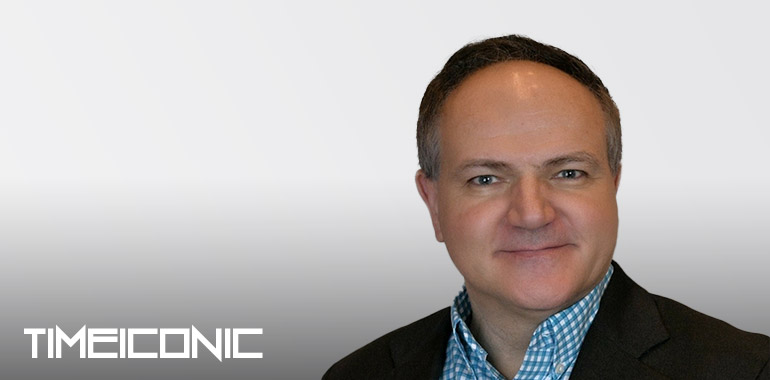
In an era where healthcare systems are under constant pressure to evolve, the role of marketing has undergone a profound transformation. No longer confined to awareness and communication, it now sits at the intersection of technology, trust, and tangible outcomes. At the forefront of this shift stands Sebastian Pistritto, a seasoned marketing executive whose career reflects both the evolution of the industry and the discipline required to lead it responsibly.
With more than two decades of experience spanning B2B marketing, SaaS, fintech, healthcare, and advanced technology sectors, Pistritto has built a reputation for translating complexity into clarity. His journey is not defined by a single industry, but by a consistent ability to align marketing with business impact, particularly in environments where precision, compliance, and trust are non-negotiable.
“Early in my career, working in B2B technology and SaaS taught me how to translate complex solutions into clear business value and build demand generation strategies that directly support revenue growth,” he reflects.
That early exposure would go on to shape a leadership philosophy grounded in outcomes rather than activity, a mindset that has become increasingly critical in healthcare marketing.
A Strategic Transition
Pistritto’s transition into healthcare was not a departure from his earlier work, but a natural progression. The industries he navigated early in his career, particularly fintech and other regulated sectors, shared structural similarities with healthcare. Each required a deep understanding of compliance, long decision cycles, and the importance of building credibility with highly discerning stakeholders.
“My experience in fintech and other regulated industries prepared me for the healthcare environment,” he explains. “These sectors share similar challenges, strict compliance requirements, long sales cycles, and the need to build trust with risk-averse decision makers.”
This foundation allowed him to approach healthcare not as an outsider, but as a strategist equipped with a transferable framework. He understood that while the language and stakeholders might differ, the underlying challenge remained the same: how to communicate value in a way that is both compelling and credible.
Bridging Innovation and Real-World Impact
What distinguishes Pistritto’s approach is his ability to connect innovation with real-world application. In healthcare, where technologies are often highly sophisticated, the gap between product capability and market understanding can be significant. Closing that gap requires more than creativity. It demands alignment across teams and a disciplined approach to messaging.
Throughout his career, he has led data-driven marketing initiatives that prioritize measurable outcomes. From account-based marketing to revenue-focused frameworks, his strategies are designed to ensure that marketing does not operate in isolation, but as an integrated driver of organizational growth.
“Leading data-driven marketing programs helped me bridge the gap between technology innovation and the real operational challenges healthcare organizations face,” he notes.
This philosophy has enabled him to position marketing not just as a support function, but as a strategic partner that directly influences efficiency, transparency, and outcomes across the healthcare ecosystem.
The Discipline of Trust in a Regulated Industry
In healthcare, innovation alone is not enough. Every message, every campaign, and every data point must operate within a framework of responsibility. Trust is not treated as a byproduct of marketing, but as its very foundation.
“Balancing innovation with responsibility in healthcare marketing starts with understanding that trust is the foundation of the entire ecosystem,” he says. “Innovation is important, but it must always operate within a framework of compliance, transparency, and ethical communication.”
This perspective shapes how he builds marketing strategies. Rather than pushing the boundaries of what can be claimed, his focus is on how information is delivered. The goal is not to amplify promises, but to ensure clarity, accuracy, and relevance.
A key element of this approach is cross-functional collaboration. By aligning marketing teams closely with legal, compliance, and clinical stakeholders from the outset, he creates an environment where innovation can thrive without compromising integrity.
For many organizations, innovation in marketing is often associated with bold messaging or disruptive campaigns. Pistritto challenges that notion. In healthcare, he believes innovation should be applied to delivery mechanisms rather than the substance of the message itself.
Technologies such as artificial intelligence, advanced analytics, and personalization have opened new possibilities for engagement. However, their value lies in enhancing how organizations communicate, not in exaggerating what they offer.
“Technologies like AI and advanced analytics can significantly improve how healthcare organizations communicate,” he explains, “but the claims themselves must remain accurate, evidence-based, and clearly supported.”
Equally important is the responsible use of data. As marketing becomes increasingly data-driven, the stakes around privacy and security continue to rise. Pistritto emphasizes that maintaining credibility requires a disciplined approach to data governance, ensuring that innovation never comes at the expense of trust.
Setting the Stage for the Future
Pistritto’s journey illustrates a broader shift in how marketing is defined within healthcare. It is no longer about visibility alone. It is about value, accountability, and measurable contribution to both business performance and patient outcomes.
By combining strategic insight with operational discipline, he has helped organizations navigate complexity while staying grounded in what matters most: delivering solutions that improve efficiency, transparency, and access to care.
As the healthcare landscape continues to evolve, his work offers a clear message. The future of marketing will not be driven by those who simply adopt new technologies, but by those who understand how to integrate them responsibly within a framework of trust.
Pistritto emphasizes that modern healthcare marketing leaders must step into a far more strategic role, one that integrates technology, data, and human insight into a cohesive framework.
“Healthcare marketing leaders need to position themselves as strategic integrators of technology, data, and human insight rather than just campaign managers,” he explains.
This shift reflects a broader industry reality. Marketing is no longer judged solely on creativity or reach. It is evaluated based on its ability to influence pipeline, strengthen stakeholder relationships, and contribute directly to organizational performance. In this context, the marketer’s role expands beyond execution into orchestration, aligning multiple functions toward a unified objective.
Harnessing AI with Responsibility and Purpose
Artificial intelligence has undoubtedly become one of the most influential forces reshaping marketing. Yet, in healthcare, its adoption carries unique responsibilities. Pistritto approaches AI not as a replacement for human decision-making, but as a tool to enhance it.
“Leaders should use AI for predictive analytics, personalization, and audience segmentation, while ensuring human oversight maintains ethical, compliant messaging,” he notes.
This balanced perspective highlights a critical distinction. While AI can process vast amounts of data and uncover patterns at scale, it lacks the contextual judgment required in a highly regulated and sensitive industry like healthcare. Maintaining that balance ensures that innovation strengthens trust rather than undermines it.
At its core, Pistritto’s approach to AI is rooted in accountability. Every technological advancement must ultimately serve a clear purpose, improving how organizations engage with providers, partners, and patients in meaningful and measurable ways.
If AI is the engine driving modern marketing, then data serves as the fuel that sustains it. However, not all data is created equal. Pistritto believes the real value lies in how effectively it is structured, integrated, and applied.
“AI magnifies the value of clean, well-structured data,” he explains. “Leaders must prioritize systems and processes that unify CRM, marketing automation, and patient or provider data.”
This emphasis on integration reflects one of the most pressing challenges in healthcare marketing. Disconnected systems and fragmented data often limit an organization’s ability to generate actionable insights. By building unified data environments, marketing teams can move beyond surface-level metrics and develop strategies that deliver tangible results.
Such an approach also reinforces marketing’s role as a revenue driver. When data is leveraged effectively, it enables more precise targeting, improved engagement, and stronger alignment with sales and operational goals.
Elevating Marketing as a Growth Engine
One of the defining aspects of Pistritto’s leadership philosophy is his commitment to repositioning marketing as a core driver of growth. In many organizations, marketing has historically been viewed as a support function. He challenges that perception by demonstrating its direct impact on business outcomes.
“AI enables marketers to move from awareness-focused programs to initiatives that directly impact pipeline, partner engagement, and patient outcomes,” he says.
This evolution requires a shift in mindset. Marketing strategies must be designed with clear objectives tied to revenue, operational efficiency, and long-term value creation. Success is no longer measured by impressions or engagement alone, but by contribution to the broader business ecosystem.
By aligning marketing efforts with measurable outcomes, Pistritto has consistently helped organizations strengthen their market positioning while delivering meaningful impact across the healthcare landscape.
High-Performing Teams and Culture
Behind every successful strategy stands a team capable of executing with precision and adaptability. In Pistritto’s view, building such teams requires a clear focus on both capability and mindset.
“When building high-performing marketing teams, I focus on three core qualities,” he explains.
The first is a strategic and analytical mindset. In a data-driven environment, marketers must understand how their work contributes to revenue and use insights to guide decisions.
The second is collaboration and cross-functional agility. Healthcare marketing requires close alignment with sales, product, compliance, and operations, making effective communication and adaptability essential.
The third is creativity grounded in results. Innovation matters, but it must be tied to measurable outcomes such as engagement, pipeline growth, and return on investment.
Beyond these qualities, Pistritto emphasizes curiosity, accountability, and continuous learning to ensure teams remain resilient and forward-thinking.
This approach extends into culture. He prioritizes an environment that embraces change, where teams are encouraged to continuously learn and adapt. In a rapidly evolving industry, this mindset ensures they are not just prepared for change, but ready to lead it.
Ultimately, it reflects a broader belief that long-term success in healthcare marketing is driven by consistent, disciplined execution rather than isolated breakthroughs.
A Legacy Rooted in Impact and Accountability
Ultimately, the true measure of success lies in whether marketing strategies create meaningful change. For Pistritto, this extends beyond organizational growth to include improvements in efficiency, transparency, and access to care across the healthcare ecosystem.
“I hope my legacy in healthcare marketing reflects a shift toward data-driven, patient- and provider-centric strategies that deliver measurable impact,” he shares.
This vision underscores a broader transformation within the industry. Marketing is no longer just about communication. It is about enabling better decision-making, supporting innovation, and ensuring that complex solutions are understood, trusted, and effectively utilized.
At the heart of this legacy is a commitment to accountability. Every initiative, every campaign, and every strategic decision must ultimately connect back to outcomes that matter, not only for organizations, but for the communities they serve.
Bridging Knowledge Through Thought Leadership
Beyond his executive leadership, Pistritto has also dedicated himself to sharing the insights gained throughout his career. As an author, he has translated years of experience into practical knowledge, offering guidance to other leaders navigating the evolving landscape of marketing and technology.
“My business experiences have guided much of my career, and in recent years, I’ve chosen to write books to share what I’ve learned,” he explains.
This dimension of his work reflects a belief that leadership extends beyond individual organizations. By contributing to a broader body of knowledge, he is helping shape how the next generation of marketing leaders approaches strategy, innovation, and growth.
His writing emphasizes the integration of technology, data, and human insight, a recurring theme that has defined his professional journey. It also reinforces the importance of adaptability in an environment where change is constant and expectations continue to rise.
Marketing That Drives Change
One of the most compelling aspects of Pistritto’s perspective is his ability to connect marketing with outcomes that extend far beyond traditional metrics. In healthcare, where every decision can have far-reaching implications, this connection becomes especially critical.
He envisions a future where marketing plays a central role in improving how organizations operate and how care is delivered. By aligning messaging with real-world value and ensuring that innovations are communicated clearly and responsibly, marketing can contribute directly to better experiences for providers and patients alike.
“I want to be remembered for helping organizations connect innovation to real-world outcomes, improving efficiency, transparency, and access to care,” he says.
This approach reflects a deeper understanding of the industry’s purpose. It is not enough to promote solutions. The goal is to ensure those solutions are effectively understood and implemented in ways that create tangible benefits.
Empowerment
A lasting legacy is also built through people. Throughout his career, Pistritto has focused on creating environments where teams are empowered to think strategically, act decisively, and continuously evolve.
He views culture as a critical enabler of success, one that influences not only how teams perform, but how they adapt to change. By fostering a culture of strategic rigor, accountability, and continuous learning, he ensures that organizations remain resilient in the face of uncertainty.
Equally important is his commitment to redefining how marketing is perceived internally. By demonstrating its value as a driver of growth and innovation, he helps elevate its role within the broader organizational structure.
“I aim to leave behind a culture of strategic rigor and team empowerment, where marketing is seen not just as a communications function, but as a trusted driver of growth, innovation, and meaningful change,” he notes.
A Vision for the Future
Looking ahead, Pistritto’s vision is both pragmatic and forward-thinking. He recognizes that while technology will continue to reshape healthcare marketing, the fundamental principles of trust, accuracy, and value will remain constant.
The future, as he sees it, will belong to organizations that can successfully integrate advanced technologies such as AI with disciplined, ethical practices. It will also favor leaders who understand that innovation must always be grounded in responsibility.
In this evolving landscape, marketing will play an increasingly strategic role, bridging the gap between innovation and implementation, and ensuring that progress translates into real-world impact.
