
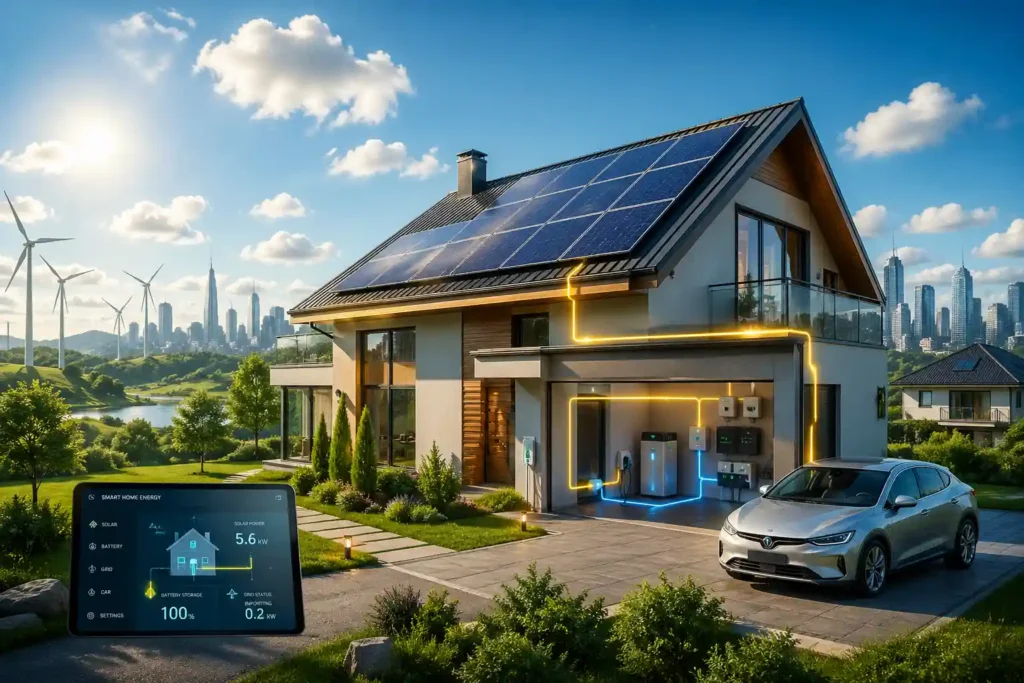
Renewable energy is transforming how Americans power their homes. With rising electricity costs and growing environmental concerns, more homeowners are switching to clean energy solutions like solar panels, wind energy, and geothermal systems.
In this guide, you’ll learn the top benefits of renewable energy for American homes, along with practical insights to help you understand why this trend is growing rapidly in 2026.
What is Renewable Energy?
Renewable energy comes from natural sources that never run out, such as sunlight, wind, and water. Unlike fossil fuels, renewable energy is clean, sustainable, and environmentally friendly.
Popular Types of Renewable Energy for Homes:
- Solar energy (solar panels for homes)
- Wind energy (small residential turbines)
- Hydropower (limited residential use)
- Geothermal energy (home heating systems)
1. Lower Electricity Bills
One of the biggest benefits of renewable energy is saving money on electricity bills.
When you install solar panels or other renewable systems, you generate your own power. This reduces your dependence on the grid and lowers monthly energy costs.
Key Benefits:
- Reduce electricity bills by up to 70%
- Protection from rising energy prices
- Long-term cost savings
2. Environmentally Friendly Energy Source
Renewable energy is clean and produces little to no pollution. This helps reduce your carbon footprint and protects the environment.
Why It Matters:
- Reduces greenhouse gas emissions
- Helps fight climate change
- Improves air quality
Switching to renewable energy is one of the easiest ways homeowners can contribute to a greener planet.
3. Increase in Home Value
Homes with renewable energy systems are more attractive to buyers. Studies show that properties with solar panels sell faster and at higher prices.
Benefits for Homeowners:
- Higher resale value
- Increased property demand
- Modern and energy-efficient appeal
If you’re planning to sell your home in the future, renewable energy is a smart investment.
4. Energy Independence
Renewable energy gives homeowners more control over their energy use.
Instead of relying entirely on utility companies, you can produce your own electricity. This is especially useful during power outages or energy shortages.
Key Advantages:
- Less dependence on grid electricity
- Backup power options (solar batteries)
- Stable energy supply
5. Government Incentives and Tax Benefits
The U.S. government offers several incentives to encourage renewable energy adoption.
Common Benefits:
- Federal solar tax credits
- State-level rebates
- Net metering programs
These incentives significantly reduce the initial cost of installing renewable energy systems.
6. Low Maintenance Costs
Renewable energy systems, especially solar panels, require minimal maintenance.
Once installed, they can last for 20–25 years with very little upkeep.
Maintenance Advantages:
- No moving parts (for solar panels)
- Low repair costs
- Long lifespan
This makes renewable energy a hassle-free option for homeowners.
7. Job Creation and Economic Growth
Renewable energy is one of the fastest-growing industries in the United States.
By switching to clean energy, homeowners indirectly support job creation and economic growth.
Impact:
- Creates local jobs in installation and maintenance
- Boosts clean energy economy
- Supports sustainable development
8. Reliable and Sustainable Energy Source
Unlike fossil fuels, renewable energy sources are naturally replenished.
Why This is Important:
- Unlimited energy supply
- Reduces dependence on finite resources
- Long-term sustainability
Solar energy, for example, will continue as long as the sun shines.
9. Improved Energy Security
Renewable energy improves national and household energy security.
When more homes generate their own power, the overall strain on the electricity grid decreases.
Benefits:
- Reduced risk of power outages
- More stable energy system
- Better disaster resilience
10. Technological Advancements in 2026
Renewable energy technology is rapidly improving.
Latest Trends:
- High-efficiency solar panels
- Smart home energy systems
- Battery storage solutions (like home energy storage)
These innovations make renewable energy more affordable and efficient than ever before.
Is Renewable Energy Worth It for American Homes?
Yes, renewable energy is absolutely worth it. It offers a combination of financial savings, environmental benefits, and long-term sustainability.
Quick Summary of Benefits:
- Save money on electricity bills
- Increase home value
- Reduce environmental impact
- Gain energy independence
- Access government incentives
Final Thoughts
Renewable energy is no longer just an option—it’s becoming a necessity for modern American homes. With rising energy costs and growing environmental awareness, switching to clean energy is a smart and future-proof decision.
Whether you choose solar panels, wind energy, or geothermal systems, the benefits are clear: lower costs, cleaner environment, and greater energy control.
