
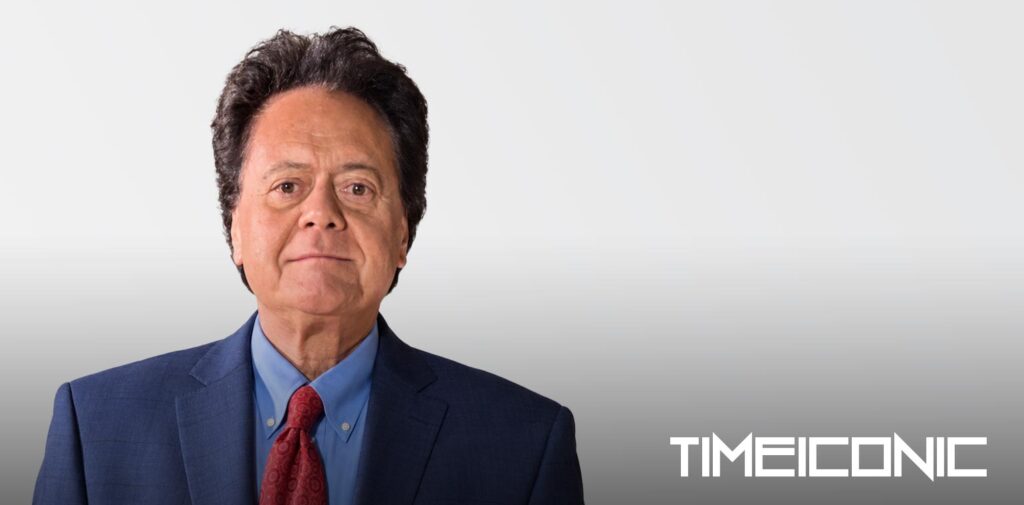
Most leaders in health economics arrive through economics departments, policy schools or consulting firms. Pierantonio Russo arrived through the chest cavity. For more than two decades he operated on failing hearts, and the habits formed in that work now shape how he evaluates drugs, devices and entire health systems. He does not see a cost-effectiveness ratio as an abstract figure. He sees it as a stand-in for a patient who either got better or did not, and for a budget that either made that recovery possible or quietly worked against it.
That perspective makes him an unusual figure in a field that can drift toward spreadsheets and models. Dr. Russo is a physician executive whose career spans cardiac and heart transplant surgery, payer leadership, chief medical officer roles at three organizations, and a growing body of peer-reviewed work in real-world evidence, health economics and AI-driven clinical decision support. His publications span cardiovascular medicine, oncology and rare disease. His tools are increasingly ones he builds himself.
Healthcare systems everywhere are under pressure from therapies priced in the hundreds of thousands of dollars, ageing populations living with several chronic conditions, and a workforce that cannot grow as fast as demand. Dr. Russo argues that this arithmetic makes health economics a leadership discipline rather than a back-office function. In his view, the field’s job is to make trade-offs visible so that allocation happens “by evidence and values rather than by waiting lists and silence.” This cover story follows the path that led him to that conviction, the work that tested it, and the independent chapter he is now beginning.
Twenty Years Inside the Operating Room
Dr. Russo’s clinical career was both deep and administrative. After his time at the Mayo Clinic, he held academic, clinical and leadership posts from 1988 to 2007 as Chief of Cardiac Surgery, Pediatric Cardiac Surgery and Heart Transplantation at several academic hospitals in the United States. They included Temple University, St Christopher’s Hospital, Thomas Jefferson Medical College and the University of Missouri. He also trained as a fellow in heart transplantation and circulatory mechanical support at the Texas Heart Institute in Houston. It was a career spent at the most demanding end of medicine, where children with congenital heart disease and adults with no other option depended on a single team’s judgment.
The surgical years gave him his first lesson in value. “Surgery teaches you that outcomes are measurable and every decision has a cost: you see, one patient at a time, what works and what it takes to deliver it.” A surgeon cannot hide behind averages. Either the repair held or it did not, the transplanted heart took or it failed, and the patient went home or stayed. That immediacy left him with a standard he still applies to every dataset he touches: if an analysis cannot be traced back to an outcome a patient would recognize, it has not yet earned its conclusions.
It also left him with a particular moral clarity about measurement. “Having operated on children with congenital heart disease and transplanted hearts into patients who had no other option, I cannot treat a quality-adjusted life year as an abstraction.” When he evaluates a therapy today, he looks first for what the patient would name as success, such as time to diagnosis, days out of hospital or a return to work. Only then does he turn to the cost. This ordering, patient outcome first and price second, runs through nearly everything he has written or built since leaving the operating room.
Crossing to the Payer Side
In 2007 Dr. Russo made a move that surprised some of his surgical peers. He joined the payer side of healthcare, first as Medical Director at Independence Blue Cross and later as Vice President of Health Services at Harvard Pilgrim Health Care. The decisions he had once made one patient at a time now arrived in bulk. He worked on medical policy, utilization management, bundled payments and a heart-failure program built around remote monitoring, and he came to see a plan’s finances in a new light. “A plan’s budget is the sum of thousands of clinical choices.“
The insurer’s chair also sharpened his thinking about evidence. In a 2009 Managed Care article, “How Insurers Can Bear the Burden of Proof for New Treatments,” he argued that payers should not simply wait years for randomized trials to settle every question. Instead, they should help generate the evidence through practical trials, registries and provisional coverage with evidence development for serious conditions that have few alternatives, withdrawing that coverage if the data fail to support it. The idea treated insurers as active participants in the evidence base rather than gatekeepers waiting at the end of it. Real-world evidence, he notes, has since made that approach far more practical.
His second Managed Care article, written in 2015 with an Independence Blue Cross colleague and titled “Health Care Efficiency: Measuring the Cost Associated With Quality,” tackled a persistent flaw in provider profiling. Most tools measured cost alone and called the result efficiency. The authors showed that efficiency has to be defined as the cost of care at a specified level of quality. The plan’s own incentive program applied the same principle by splitting physician awards evenly between cost management and quality. Both papers, he says, still frame his thinking, and the second one captures what he regards as the permanent job of the field. A decade on, the principle holds, and it explains his insistence that no cost figure should travel without a quality measure beside it.
Building the Evidence and Finding the Missing Patients
The next step in his career was a deliberate one. Having seen how decisions were made inside a plan, Dr. Russo set out to make them evidence-based rather than intuitive. As Chief Medical Officer of three organizations, he built real-world evidence, health-economics and machine-learning programs designed to convert claims, electronic health records and registry data into peer-reviewed findings. The phrase he uses to describe the result is simple. “Health economics, for me, connects the operating table to the health plan.“
His definition of leadership in the field is unusually demanding. It means “owning the whole chain from clinical question to decision, not just producing a model.” That chain begins with framing a question that a clinician or payer actually needs answered, continues through methods that respect the limits of the data, and ends with a result translated into “a choice someone can make on Monday morning.” The Monday-morning test has become something of a personal signature. Every analysis, he says, must finish by stating what a clinician, a payer or a planner should do differently next week.
Methodological discipline is the other half of the signature. Dr. Russo is candid that claims data cannot randomize, and his papers reflect it. They report E-values so that decision-makers know how much weight each estimate can bear, and they rely on causal tools such as entropy balancing, inverse-probability weighting and doubly robust estimation. His standard for real-world evidence is blunt. “Real-world evidence must emulate a target trial, balance its cohorts and quantify unmeasured confounding, or it is anecdote at scale.” He also sees target-trial emulation as a practical bridge between professions, because clinicians recognize the trial, economists recognize the model and data scientists recognize the pipeline.
The scale of his data work is striking. In a retrospective study sponsored by iRhythm Technologies, he followed 8.2 million adults with type 2 diabetes and obesity for incident atrial fibrillation, measuring cases per 100 patient-years, a denominator no trial could provide. In a separate national cardiovascular-kidney-metabolic cohort, 58% of major arrhythmias were diagnosed before chronic kidney disease, which reframes arrhythmia as an early marker of disease progression and points to where earlier detection might pay off. In England, Hospital Episode Statistics allowed his team to show that only 32.9% of 729,520 symptomatic at-risk adults had received any ambulatory monitoring.
Some of his most consequential work addresses patients who never appear in a dataset because nobody has yet named their condition. Dr. Russo co-authored the NIH/NCATS IDeaS pilot, published in the Orphanet Journal of Rare Diseases in 2021, which examined 14 rare diseases across four health-system databases. Direct medical costs per patient ran roughly three to five times those of age-matched controls. Coding undercounted affected patients, and diagnostic journeys stretched over years. That paper led to RarePathAI, a tool that applies graph neural networks to claims data to flag probable rare-disease patients. It achieved an AUC of 0.951 across 98 disease cohorts, effectively turning a diagnostic odyssey into a ranked list a clinician can act on. He is careful about the conditions under which such tools deserve trust. Artificial intelligence, he says, earns its place only when it is reported with calibration, decision curves and fairness checks, and when predictors are restricted to information available before the outcome.
The same instinct to look for the invisible patient drives his oncology work. In a study he led for Thermo Fisher Scientific that linked genomic and claims data for myelodysplastic syndromes, targeted therapy after a positive biomarker was associated with lower 12-month mortality, with a hazard ratio of 0.535. Yet fewer than one in ten eligible patients received it, and genetic-test turnaround ran 14 to 21 days against guideline windows measured in days. His conclusion is direct. “An innovation patients cannot reach delivers no value.” A therapy with a strong hazard ratio that reaches one in ten eligible patients is, he notes, “a modest intervention” at population level, which is why he calls access “the first outcome.”
The Monitoring Program That Tested a Philosophy
If one project shaped him most, he says, it was the ambulatory cardiac-monitoring program with iRhythm Technologies. For three years the company’s health-economics and outcomes-research group and Dr. Russo worked as a single team. The company brought the payer questions and the funding. The analyses were run independently, and every result went to peer review. He treats the arrangement as a model for industry partnership. The company’s team co-designed every question, funded the studies, kept the analysis independent and co-authored every result, including a null finding on downstream costs.
The results built a layered picture of what monitoring does to the total cost of care. In a 2026 Journal of Medical Economics analysis of 132,082 Medicare beneficiaries starting ambulatory cardiac monitoring, entropy-balanced monthly costs were $2,678 with long-term continuous monitoring, $2,721 with event monitoring, $2,873 with Holter and $3,034 with mobile cardiac telemetry. The explanation was not the device fee. The right test, done once, was followed by less repeat testing and less acute care, so a payer judging only the price of the device would have reached the opposite conclusion. A 2026 American Journal of Managed Care study called AVALON followed 428,707 commercially insured patients receiving a first monitor and found that outcomes varied by modality and manufacturer. One long-term continuous monitor was associated with more new diagnoses and fewer retests, cardiovascular events and follow-up costs.
Not every result favored a simple story, and Dr. Russo counts that as a strength. The CAMELOT-ALERT study, published online in the American Heart Journal in 2026, covered 441,792 Medicare fee-for-service beneficiaries. It found a higher 90-day diagnostic yield for iRhythm mobile telemetry, 49.5% versus 40%, with no measurable difference in downstream utilization or costs, and the authors recommended a randomized comparison. Condition-specific work added further detail. In adults with COPD, arrhythmia nearly doubled the hospitalization rate, and among those with arrhythmia, monitoring was associated with roughly 30% fewer hospitalizations and lower costs. Among 213,226 matched pairs with type 2 diabetes, arrhythmia meant more emergency visits, admissions and readmissions, with costs of about $34,171 a year versus $18,687 in an American Heart Association 2024 analysis, and monitoring was associated with lower utilization and spending. An ISPOR 2026 budget-impact model projected net savings of about $12 to more than $100 per patient per month after monitoring costs, rising with baseline risk.
The harder lesson was about honesty. “The real challenge was intellectual honesty.” Every result carried its E-value and limitations, and the team stated in print that whether earlier diagnosis prevents stroke or heart failure remains unresolved and warrants a randomized trial. He is unapologetic about the stance. “Decision-makers trust evidence that admits what it does not know.“
Access, Equity and the Cost of Inaction
Dr. Russo’s view of access is shaped by a structural problem he describes plainly. Price and value are negotiated once, at launch, while value is realized over years and across budgets that do not talk to each other. A gene therapy’s benefit accrues to the patient, the savings to a future payer, and the cost to the plan that paid for the first dose. Solving that mismatch, he argues, requires outcomes-based agreements, evidence commitments after launch and repair of the diagnostic pathway.
His own data complicate the usual explanations for unequal access. In analyses of acute myeloid leukemia and myelodysplastic syndromes, most measured social determinants did not distinguish who received targeted therapy. The findings pointed instead to institutional practice, testing delays and payer processes, which are barriers that are operational rather than financial. He is equally frank that precision medicine often shifts cost instead of removing it. In a study presented at the American Society of Hematology, targeted therapy in AML was associated with fewer acute-care episodes but higher total cost, driven by pharmacy spending. Showing both sides of that ledger, he believes, is what separates credible economics from advocacy.
Equity enters his framework as a measure of value rather than an afterthought. An intervention that reaches only the well-insured is worth less than its trial results suggest, and he asks leaders to weigh the cost of inaction as seriously as the cost of treatment. The rare-disease work made the point concretely, with patients costing three to five times matched controls while enduring diagnostic journeys measured in years. He calls this “a waste invisible in a budget line and devastating in a life.” Alongside equity, his principles for allocation include measuring outcomes per dollar across the full episode, making opportunity cost explicit, favoring interventions that act early in the disease course, and publishing assumptions and sensitivity analyses. On that last point, his rule is plain. “Hard decisions are legitimate when the reasoning is visible.“
The Builder Behind the Agents
The most distinctive thread in Dr. Russo’s recent work is that he builds his own instruments. He has designed and built, as personal products, a suite of single-file AI agents that run in a browser. The suite includes a Medical Affairs agent, an HEOR intelligence platform with cost-effectiveness, budget-impact and HTA-decision modules, a Market Access campaign builder, a launch-campaign agent, PharmaSight for market and pipeline research, and a Patient Definition agent that builds claims cohorts. They share a single governing principle. “The model proposes, the code verifies.“
In practice, that rule is enforced in detail. Claims are profiled deterministically before the model sees a number. Web evidence is restricted to allow-listed sources such as FDA, PubMed, NICE, ICER and CMS. Every figure attributed to a file is re-checked in code, uncited statements are removed, every value carries a provenance tag, and every simulation is seeded so a reviewer can reproduce it. The outputs are drafts for medical-legal review, not substitutes for it. The payoff is speed without loss of rigor, compressing the path from question to cited evidence from months to days. He believes the same leverage will allow value-based healthcare to move from annual contracts to near-real-time management.
He designs his communication layers with equal care. A one-page summary carries the estimand, effect size and confidence interval, the E-value and the decision it supports. A technical appendix holds the design, balance diagnostics and sensitivity analyses. An interactive layer of dashboards, budget-impact calculators and simulations lets a market-access or planning team vary the assumptions and watch the budget impact move. The philosophy behind it is succinct. “Decision-makers do not need less complexity; they need complexity organized around their choice.“
The Next Decade and a New Chapter
Looking ahead, Dr. Russo expects three shifts over the next five to ten years. Evidence will become continuous rather than episodic, with living evidence ecosystems that update as data accrue across a product’s life. Value assessment will move upstream into prevention and early detection, where the cardiovascular-kidney-metabolic epidemic will, in his words, be won or lost. And artificial intelligence will move from analysis to decision support at the point of care. For the next generation of professionals, his advice is practical. “Learn the clinic before you learn the model and spend time inside a payer or health system so that a price list is never again mistaken for a budget. Above all, keep the patient as the unit of analysis, even when the spreadsheet counts dollars.”
After leading evidence programs inside large organizations, Dr. Russo is moving into independent advisory work under his own name. His focus areas are real-world evidence strategy, payer and market-access strategy, and AI-enabled medical affairs, and he intends to make the agents he has built available to organizations under license. The shift is a natural one for a clinician-investigator who has spent years proving that a single person with the right tools can do what once required a department.
He is selective about the partnerships he wants. The first is with health systems and payers that wish to use their own data to find undiagnosed patients earlier, especially across the cardiovascular-kidney-metabolic continuum. The second is with device and biopharma companies that need evidence programs designed for coverage decisions rather than promotion, following the model his iRhythm collaboration established. The third is with academic and NIH-affiliated groups advancing machine-learning case finding in rare disease. He also holds firm views on how such collaborations should start. “Start with a shared question rather than a shared dataset,” he says, noting that his most productive studies began when a clinician, a payer medical director and a health economist agreed on the estimand before anyone opened a database. He adds that payers “act on evidence they helped to design and distrust evidence that arrives finished,” which is why he brings them in early.
The legacy he describes is measurable rather than grand. He wants to leave a body of work showing that real-world evidence, done with causal discipline, can be trusted for coverage and clinical decisions, along with case-finding and decision-support tools that shorten diagnostic journeys in rare and cardiometabolic disease. He frames the test in a single sentence. “If, in ten years, patients are routinely diagnosed earlier because a model flagged a pattern in routine data, the effort will have been worth it.” For a surgeon who once measured success one patient at a time, it is a fitting ambition: to take what the operating table taught him and make it work at the scale of whole populations.
