
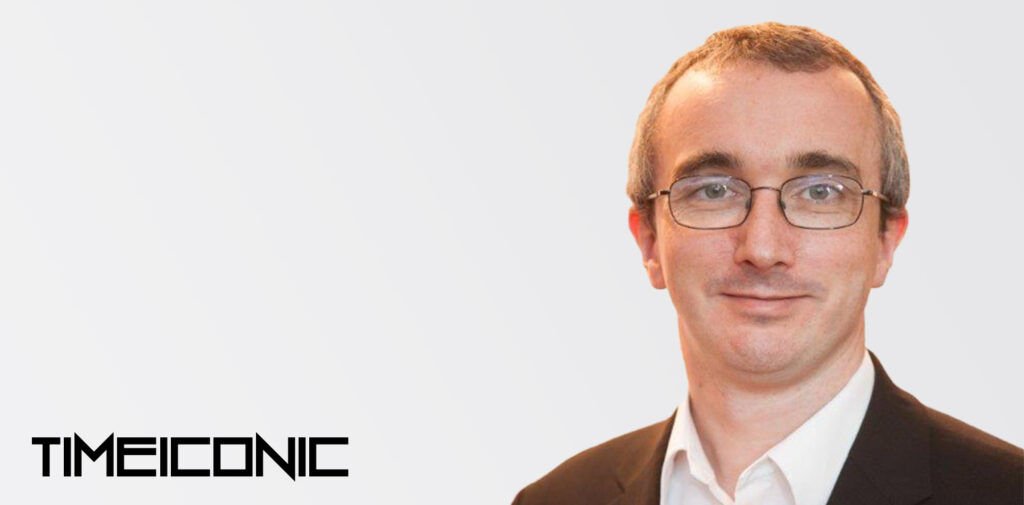
Some careers follow a carefully planned path. Others evolve through curiosity, continuous learning, and the willingness to embrace new opportunities. Paul Taylor‘s professional journey reflects the latter. Over nearly four decades, he has built a career that extends far beyond project management. As a consultant, educator, author, board advisor, speaker, mentor, and organisational transformation specialist, he has developed a portfolio of work that demonstrates how leadership is strengthened through adaptability rather than routine.
His experience spans financial services, technology, governance, education, and strategic consulting, allowing him to observe organisations from multiple perspectives. While many professionals spend an entire career mastering a single discipline, Paul has consistently broadened his expertise, believing that every project, industry, and collaboration offers another opportunity to learn.
That philosophy continues to shape not only the work he delivers but also the leadership approach that has earned the trust of organisations navigating complex change.
“Every project brings a different challenge. Understanding the problem, working with people, and finding practical solutions is what has kept the work rewarding throughout my career.”
For Paul, management consulting, project management, and organisational change were never simply career choices. They represented an opportunity to combine analytical thinking with creativity while solving meaningful business problems.
He has always been motivated by work that requires understanding complex situations before developing practical, sustainable solutions. Rather than approaching projects through rigid methodologies alone, he believes every organisation presents its own unique environment, culture, and challenges. Successful transformation therefore begins with careful observation, thoughtful analysis, and collaboration.
Equally important has been the opportunity to work alongside people from different industries, backgrounds, and professional experiences. Every engagement has introduced new perspectives, encouraging him to continuously refine his own thinking while helping organisations achieve shared objectives.
The variety has remained one of the defining attractions of his career. No two assignments have been identical. New industries, emerging technologies, evolving regulations, and changing business priorities have ensured that learning never stops.
Instead of viewing uncertainty as an obstacle, Paul has consistently treated it as an opportunity for growth.
Building a Foundation in Financial Services
Paul’s professional story began in 1988 when he joined a respected private bank in the United Kingdom, working within its Information Technology department. Although the organisation itself was relatively small, its diverse range of financial services provided exposure to numerous business functions, technologies, and operational challenges.
Those early years proved invaluable.
Working across different departments allowed him to understand how technology supports business performance while highlighting the importance of communication between technical specialists and organisational leadership. It was an environment where solving problems required more than technical expertise. It demanded collaboration, adaptability, and an appreciation for the wider commercial picture.
Over the following two decades, he continued building his career across several financial institutions, steadily accepting greater responsibility and increasingly complex leadership roles. His progression ultimately led him to become Head of Software Development for the European subsidiary of a major banking organisation responsible for outsourced operations.
These years established more than technical credibility. They laid the foundations for a leadership philosophy centred on accountability, continuous improvement, and delivering measurable business value.
Choosing the Entrepreneurial Path
Despite building a successful corporate career, Paul found himself increasingly drawn toward independent consulting.
Like many professionals contemplating self-employment, the decision was accompanied by uncertainty. Questions about securing clients, maintaining consistent work, and building a sustainable business naturally surfaced. Yet after years of considering the possibility, he made the decision in 2007 to establish himself as a freelance consultant.
It proved to be one of the defining moments of his career.
Moving into consultancy expanded both the variety and complexity of his work. He led projects involving outsourcing initiatives, regulatory programmes, technology implementation, organisational restructuring, product launches, and interim management assignments across financial services and other sectors.
Each engagement reinforced an important lesson. Success was never determined solely by technical delivery. It depended equally on understanding organisational priorities, building trust with stakeholders, and guiding people confidently through change.
“The technical aspects of projects matter, but lasting success comes from understanding people, building relationships, and helping organisations navigate change with confidence.”
Creating a Portfolio Career
As his consulting practice matured, Paul recognised an opportunity to redefine what a successful professional career could look like.
Rather than focusing exclusively on consultancy, he gradually developed a portfolio career that combines several complementary roles. Today, his professional responsibilities extend across consulting, project management, board advisory positions, education, public speaking, conference hosting, writing, and individual mentoring.
This diversified approach has allowed him to contribute knowledge in multiple ways while continually expanding his own understanding of leadership and organisational development.
As an author, he has written five books, sharing practical insights gained through decades of real-world experience. His work as an educator enables him to support the next generation of professionals, while mentoring creates opportunities to help individuals navigate career decisions on a more personal level.
Board and trustee appointments offer yet another perspective, allowing him to contribute strategically at governance level while helping organisations strengthen long-term decision making.
Rather than viewing these responsibilities as separate careers, Paul sees them as interconnected elements of a single professional purpose: helping organisations and individuals achieve meaningful, sustainable improvement.
Leadership Shaped Through Continuous Learning
When asked about the experiences that most influenced his leadership philosophy, Paul avoids pointing to a single defining moment.
Instead, he describes leadership as something developed gradually through every project, every collaboration, and every challenge encountered throughout a career.
Each engagement presents new lessons. Some reinforce existing beliefs, while others encourage leaders to rethink established assumptions. Over time, these experiences accumulate into practical wisdom that cannot be acquired through theory alone.
This mindset reflects one of Paul’s most consistent characteristics: a commitment to lifelong learning.
Even after decades of professional achievement, he continues to approach every assignment with curiosity, recognising that no organisation, industry, or transformation programme is ever exactly the same. The willingness to learn continuously has enabled him to remain relevant while successfully adapting to changing technologies, evolving business models, and shifting organisational priorities.
For Paul, effective leadership is not about having every answer. It is about remaining open to new ideas, learning from experience, and applying those lessons to create better outcomes for people and organisations alike.
Leading Through People, Not Just Processes
After working across numerous transformation programmes, Paul has come to appreciate that successful projects are rarely defined by schedules, budgets, or technology alone. Their success ultimately depends on people.
Throughout his career, he has identified three recurring challenges that have had the greatest influence on his leadership approach. The first is managing people. Every organisation brings together individuals with different personalities, priorities, and expectations. Navigating these dynamics requires patience, communication, and the ability to build trust, particularly when change introduces uncertainty.
The second challenge is managing competing responsibilities. With a portfolio career spanning consultancy, governance, education, writing, mentoring, and public speaking, effective time management has become more than a productivity skill. It is essential for maintaining consistency, delivering quality work, and sustaining long-term professional wellbeing.
The third challenge is one that every independent consultant understands well: continually creating new opportunities. Rather than waiting for work to arrive, Paul believes professionals must actively contribute to their industries through networking, knowledge sharing, conferences, webinars, and thought leadership.
Together, these experiences have reinforced a simple but powerful principle. Leadership is not demonstrated only during moments of success. It is revealed through consistency, discipline, and the ability to help people move confidently through complexity.
“Projects may begin with objectives and plans, but lasting success is achieved by earning trust, communicating clearly, and helping people embrace change.”
The Next Chapter of Project Management
Project management continues to evolve at an unprecedented pace. Digital transformation, artificial intelligence, sustainability, and increasingly interconnected organisations are reshaping both the expectations placed upon project leaders and the skills required to succeed.
Paul believes this evolution represents an opportunity rather than a disruption.
Routine administrative activities that once consumed valuable time are gradually becoming automated, allowing project professionals to focus on higher-value responsibilities. As organisations undertake increasingly ambitious transformation programmes, project managers will be expected to contribute strategic insight, coordinate diverse stakeholder groups, and ensure that initiatives generate measurable business outcomes.
At the same time, projects themselves are becoming more interconnected across departments, technologies, and geographical boundaries. This growing complexity requires professionals who can combine technical understanding with strong communication, collaboration, and leadership capabilities.
Rather than viewing project management as a discipline focused solely on delivery, Paul sees it becoming an increasingly important driver of organisational strategy.
AI as an Enabler of Better Leadership
Artificial intelligence is often discussed as a disruptive force, yet Paul approaches the technology with measured optimism.
He believes AI will significantly improve project delivery by supporting activities such as scheduling, reporting, risk assessment, and data analysis. By automating repetitive tasks, professionals will have greater capacity to concentrate on strategic thinking, stakeholder engagement, and decision-making.
Perhaps more importantly, AI enables organisations to process information at a scale and speed that would previously have been impossible. Better insights can support faster decisions while improving visibility across complex projects.
Yet despite these advantages, Paul remains convinced that technology cannot replace the qualities that define exceptional leadership.
Communication, empathy, ethical judgement, collaboration, and the ability to inspire confidence remain deeply human capabilities. Organisational transformation affects people as much as systems, and successful leaders understand that meaningful change requires both technological innovation and emotional intelligence.
In Paul’s view, organisations that achieve the greatest success with artificial intelligence will be those that strengthen human leadership alongside technological advancement, rather than attempting to substitute one for the other.
Strengthening the Profession Through Continuous Learning
Beyond his consulting work, Paul has long recognised the important role that professional trade bodies play in advancing the project management profession.
As business environments become more dynamic, technical knowledge alone is no longer sufficient. Today’s project professionals must also develop strategic thinking, leadership capability, stakeholder engagement skills, and the confidence to guide organisations through continual transformation.
Professional organisations provide an important framework for achieving that growth. Through recognised standards, certifications, education, research, and knowledge sharing, they help practitioners maintain professional excellence while adapting to changing business realities.
Paul also believes these institutions are evolving in meaningful ways. Their educational frameworks increasingly reflect the broader demands placed upon modern project leaders, incorporating topics such as digital transformation, artificial intelligence, sustainability, organisational change, and leadership development alongside traditional project management methodologies.
For professionals navigating increasingly complex environments, access to practical, experience-based learning has never been more valuable.
Thought Leadership with Practical Value
As both an author and contributor to professional trade bodies, Paul approaches thought leadership with a clear objective: ideas should be practical enough to improve real-world decision making.
Throughout his career, he has sought to bridge the gap between theory and practice by sharing lessons developed through direct experience rather than abstract concepts alone.
His books, articles, presentations, and educational work all reflect this philosophy. Instead of offering universal formulas, they encourage professionals to think critically, adapt thoughtfully, and apply proven principles within the context of their own organisations.
This emphasis on practicality has also shaped his mentoring work, where conversations are often centred on helping individuals develop confidence, strengthen judgement, and make informed career decisions based on experience rather than assumption.
For Paul, sharing knowledge is not simply about transferring information. It is about helping others become more capable leaders.
“The most valuable knowledge is not simply understood. It is knowledge that can be applied to solve real organisational challenges.”
A Legacy of Meaningful Impact
When reflecting on the legacy he hopes to leave, Paul’s aspirations extend well beyond successful project delivery.
He hopes to be remembered as someone who helped organisations solve important business challenges while creating improvements that continued long after individual projects had concluded.
Equally significant is the way those outcomes were achieved.
Throughout his career, he has placed great importance on professionalism, integrity, respect, and building genuine relationships with colleagues, clients, and stakeholders. For him, leadership is measured not only by measurable results but also by the experience people have while working together.
It is a philosophy that aligns naturally with every chapter of his professional journey. Whether serving as a consultant, educator, board advisor, mentor, author, or speaker, his work has consistently reflected the belief that sustainable transformation begins with people.
In an era defined by accelerating technological change, shifting organisational priorities, and growing complexity, Paul’s career offers an enduring reminder that while tools and methodologies will continue to evolve, thoughtful leadership, continuous learning, and genuine human connection remain the foundations upon which lasting success is built.
