
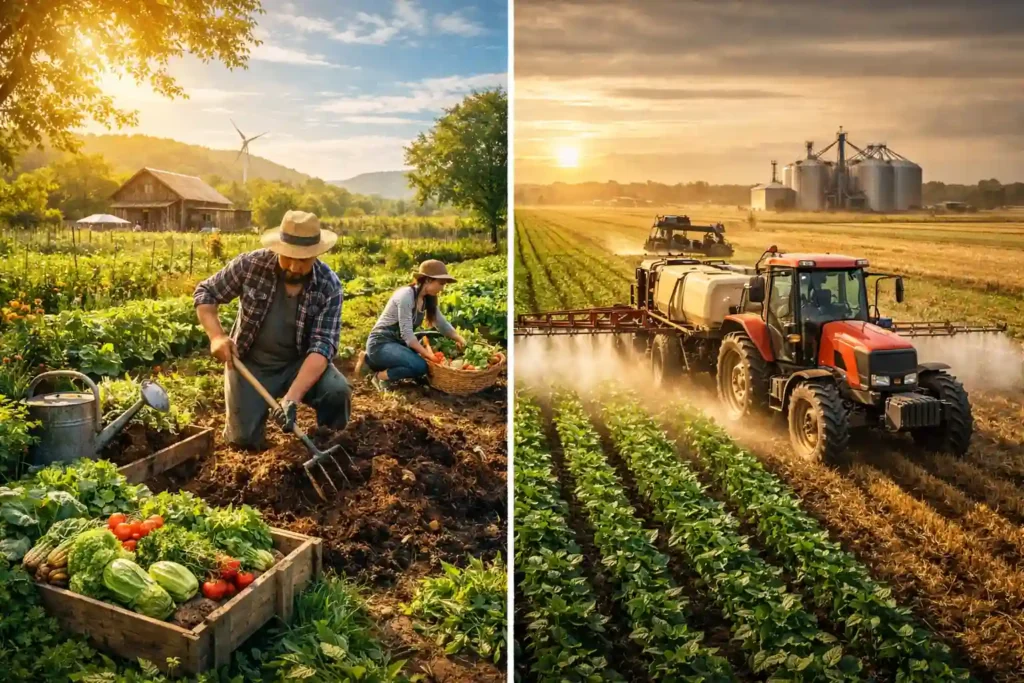
In 2026, the debate between organic farming vs conventional farming is more relevant than ever. With rising health awareness, climate change concerns, and demand for sustainable agriculture, farmers and consumers are actively comparing both methods. This guide explains the key differences in a simple, Google-friendly way to help you understand which farming method is better today.
What Is Organic Farming?
Organic farming is a natural method of agriculture that avoids synthetic chemicals, pesticides, and genetically modified organisms (GMOs). It focuses on:
- Natural fertilizers like compost and manure
- Crop rotation and biodiversity
- Soil health improvement
- Eco-friendly pest control
What Is Conventional Farming?
Conventional farming uses modern technology, chemical fertilizers, pesticides, and high-yield crop varieties to maximize production. It is widely practiced globally due to its efficiency.
Key features include:
- Use of synthetic fertilizers
- Chemical pest control
- Mechanized farming equipment
- Higher crop yields
Key Differences Between Organic and Conventional Farming
1. Crop Yield
- Conventional farming produces higher yields quickly.
- Organic farming has lower yields but improves soil fertility over time.
👉 Winner: Conventional farming (short-term production)
2. Health Benefits
- Organic food is free from harmful chemicals and pesticides.
- Conventional food may contain pesticide residues.
👉 Winner: Organic farming (healthier food choice)
3. Environmental Impact
- Organic farming protects soil, water, and biodiversity.
- Conventional farming can lead to soil degradation and pollution.
👉 Winner: Organic farming (eco-friendly farming)
4. Cost & Profitability
- Organic farming has higher initial costs and certification requirements.
- Conventional farming is cheaper and more accessible for farmers.
👉 Winner: Conventional farming (short-term profit)
5. Sustainability
- Organic farming supports long-term sustainability and soil health.
- Conventional farming may harm natural resources over time.
👉 Winner: Organic farming (long-term sustainability)
Advantages of Organic Farming in 2026
- Increasing demand for organic food globally
- Better soil fertility and water conservation
- Premium pricing and higher market value
- Supports sustainable agriculture practices
Advantages of Conventional Farming
- High productivity and faster results
- Lower cost of production
- Supports large-scale food supply
- Advanced farming technology use
Challenges in 2026
Organic Farming Challenges:
- Lower yield initially
- Certification process is expensive
- Requires more labor
Conventional Farming Challenges:
- Environmental damage
- Health concerns due to chemicals
- Soil degradation over time
Which Is Better in 2026?
The answer depends on your goal:
- If you want higher production and quick profit, conventional farming is better.
- If you focus on health, sustainability, and long-term benefits, organic farming is the best choice.
👉 In 2026, the trend is clearly shifting toward organic and sustainable farming due to rising consumer awareness and environmental concerns.
Final Verdict
Both farming methods have their pros and cons, but organic farming is gaining popularity as people prefer healthier food and eco-friendly practices. However, conventional farming still plays a crucial role in meeting global food demand.
Conclusion
In conclusion, organic farming vs conventional farming is not about which is perfect, but which suits your needs. For long-term sustainability and health, organic farming wins. For high productivity and affordability, conventional farming remains strong.
