
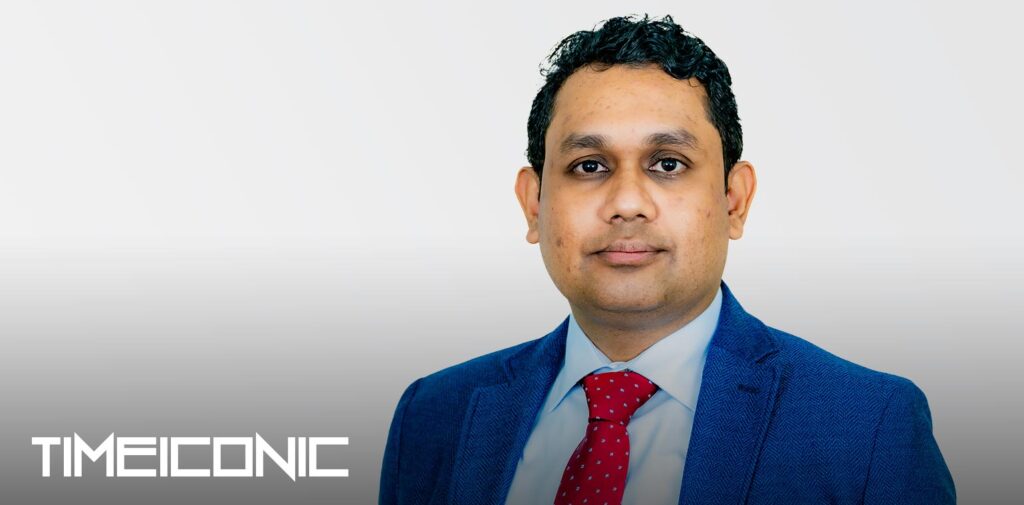
In a region where banking often moves at the pace of caution, Dowlat Parbhu has built a reputation for moving with purpose instead. As Chief Executive Officer of Demerara Bank Limited, one of Guyana’s most influential financial institutions, he has spent his career quietly reshaping what leadership in banking looks like. His story is not one of a man chasing a title. It is the story of a banker who grew into leadership by understanding people, systems and the economies they serve.
Mr. Parbhu is candid about how his journey began. He did not set out with his eyes fixed on a corner office. What drew him into banking, he says, was something simpler and more enduring: the chance to understand how businesses work, how people build them, and how financial institutions can shape the course of economic development. That curiosity became the foundation of everything that followed.
Over the decades, Mr. Parbhu moved through nearly every corner of the banking world. He worked across credit, operations, risk, technology and customer service, gathering an understanding of the industry that few executives acquire so completely. It is this breadth of experience, rather than any single achievement, that he credits for preparing him to lead. “Leadership is not about a title,” he says. “It is about taking responsibility, making decisions, building capable teams and continuously challenging yourself and the organisation to improve.”
That philosophy now defines his tenure at Demerara Bank, where he has set out to bring together everything he learned across a long and varied career into a single, coherent vision for the institution’s future.
The Weight and Reward of Growth
Ask Mr. Parbhu what has shaped him most as a leader, and he does not point to a boardroom decision or a single defining deal. Instead, he points to growth itself, and the discipline it demands. Periods of significant expansion and change, he explains, have been the most transformative experiences of his career, because growth does not simply reward an organisation. It tests it.
Systems must scale. Processes must evolve. People must be developed at the same pace as ambition. Mr. Parbhu describes this as one of the hardest truths of leadership: an executive cannot only manage the institution as it exists today. He must constantly prepare it for what it will need to become tomorrow. This forward orientation, he suggests, separates leaders who merely maintain from those who genuinely build.
Growth also taught him the value of decisiveness under uncertainty. In his own words, “you will rarely have perfect information, particularly in a rapidly changing environment. Good leadership requires listening carefully, understanding the risks, making a decision and then taking responsibility for the outcome.” It is a philosophy that rejects both recklessness and paralysis, favouring instead a disciplined confidence built on preparation.
That same instinct for staying close to the ground has shaped his approach to running the bank day to day. Mr. Parbhu believes strongly that leaders lose something valuable the moment they retreat into reports and financial statements alone. Numbers can tell you what happened, he notes, but they rarely reveal where customers are struggling or where employees can see an opportunity that leadership has missed. For that reason, his management style remains deliberately hands-on.
He encourages employees at every level to question existing processes and bring forward new ideas, creating a culture where challenging the status quo is not just tolerated but expected. At the same time, he is careful to draw a clear boundary around that openness. Innovation at a bank, he insists, must never come at the expense of discipline. Sustainable growth in banking requires strong governance, rigorous risk management, unwavering compliance and financial prudence at every step.
A Broader Definition of Banking Leadership
Mr. Parbhu is equally direct about how the job of a bank CEO has changed. The role, he argues, has become far broader than it once was. A modern banking leader can no longer succeed by understanding credit and capital alone. Today’s executives must be fluent in technology, cybersecurity, data, artificial intelligence, regulation and the shifting expectations of consumers who now compare their bank not just to other banks, but to the best digital experiences available anywhere in their lives.
This is the paradox at the centre of contemporary banking leadership, as Mr. Parbhu sees it. The task is to protect everything that has always mattered in banking, namely trust, security, sound risk management and financial strength, while simultaneously building an institution capable of innovating at the speed today’s customers now expect. Balancing those two forces, rather than choosing between them, is what he considers the defining leadership challenge of this era.
Technology as a Trust-Building Tool
If there is one idea that Mr. Parbhu returns to more than any other, it is the relationship between technology and trust. He rejects outright the notion that the two exist in tension. “I do not see technology and trust as competing objectives,” he says. “Properly implemented, technology should strengthen trust.”
For Mr. Parbhu, this is not a slogan but an operating principle. Customers, he explains, want convenience and speed, but they also need confidence that their money and their personal information are safe. That belief shapes how Demerara Bank approaches every digital initiative. Cybersecurity, fraud prevention, data protection, resilience and regulatory compliance are not treated as afterthoughts bolted onto new technology once it is built. They are built into every project from its very first stage.
This philosophy also guides how the bank thinks about digitisation itself. Mr. Parbhu is careful to distinguish between simply digitising old processes and genuinely transforming the customer experience. Demerara Bank’s ambition, he says, is not to take existing paperwork and put it on a screen. It is to rethink, from the ground up, how technology can fundamentally improve the way customers interact with the institution, all while preserving the controls expected of a regulated financial institution.
That thinking extends directly into how the bank approaches product design. Mr. Parbhu believes the starting point for any innovation should always be the customer’s journey, not the bank’s internal structure. He points out that banks have historically built processes around their own departments and hierarchies rather than around what a customer is actually trying to accomplish. Technology, in his view, finally gives institutions the tools to correct that imbalance.
Under his direction, Demerara Bank is working to make everyday activities such as onboarding, payments, transfers, lending and account management significantly simpler for customers, even as far more sophisticated technology operates quietly behind the scenes to strengthen identity verification, fraud detection and anti-money-laundering monitoring. The goal, as he describes it, is an experience where the institution absorbs the complexity so the customer never has to feel it.
Building People, Not Just Systems
For all his emphasis on technology, Mr. Parbhu is equally firm that no digital transformation can succeed without the right culture behind it. He believes strongly in accountability, empowerment and giving people genuine opportunities to lead. A chief executive, he says plainly, cannot and should not make every decision. Institutions need strong people throughout their ranks who understand the direction of the organisation and feel comfortable making decisions within their own areas of responsibility.
This extends to how Mr. Parbhu wants his teams to think about their own work. He pushes back against complacency wherever he finds it, arguing that organisations must become comfortable questioning themselves rather than defaulting to habit. “This is how we have always done it,” he says, which cannot be an acceptable reason for continuing any process. Every team, in his view, should be constantly asking whether there is a better, faster or safer way of doing things.
That mindset has become something of a cultural signature at Demerara Bank under his leadership, encouraging employees at every level to see themselves not simply as custodians of existing systems, but as active participants in building what comes next.
A Bank’s Role Beyond the Balance Sheet
Mr. Parbhu speaks with particular conviction when the conversation turns to financial inclusion. He describes it as one of banking’s most profound responsibilities, precisely because access to finance has the power to change the entire trajectory of an individual, a family or a business. But he is quick to clarify that financial inclusion means far more than simply opening bank accounts.
True inclusion, he argues, means making credit genuinely accessible. It means supporting home ownership, financing entrepreneurs and small and medium enterprises, and reaching communities located far beyond a country’s traditional commercial centres. Technology, in this context, becomes not a luxury but a tool for reach, allowing banks to extend services to people who might otherwise remain outside the formal financial system entirely. For a developing economy like Guyana, he believes banks can serve as a critical bridge, connecting growth at the national level to genuine opportunity at the individual level.
This sense of responsibility feeds directly into how Mr. Parbhu thinks about the future of the industry as a whole. He is confident that artificial intelligence will prove to be one of the most significant forces reshaping banking in the years ahead, touching everything from customer service and fraud detection to credit assessment, compliance, productivity and personalisation. Alongside it, he expects real-time payments, open banking and digital identity to continue transforming how customers interact with financial institutions.
Mr. Parbhu goes further still, predicting that the very distinction between a digital bank and a traditional bank will eventually disappear altogether, as digital capability simply becomes an expected baseline of what any bank offers. But he is careful to note that technology alone will not determine who succeeds. “The institutions that succeed will be those that combine technology with something technology alone cannot provide: trust,” he says.
Looking beyond his own institution, Mr. Parbhu identifies interoperability as one of the most important frontiers for the global financial system. He believes the movement of money, both domestically and internationally, remains needlessly fragmented, often burdened by unnecessary complexity, delays and cost. Greater interoperability between banks, payment networks and national payment systems, he argues, could meaningfully reduce that friction, provided it is implemented within appropriate regulatory and security frameworks. Such progress, he believes, would not only ease commerce but also extend financial inclusion further than it currently reaches.
Guyana’s Opportunity to Leapfrog
Much of Mr. Parbhu’s optimism is rooted in what he sees as a unique opportunity for smaller economies like Guyana. He is especially drawn to partnerships that can bring global financial technology and payment capabilities directly into the local market. For a relatively small country, he explains, technology creates the chance to leapfrog traditional stages of financial development altogether. Rather than replicating the infrastructure that larger markets spent decades building, Guyana can increasingly offer its customers capabilities that stand shoulder to shoulder with those of far larger economies.
It is a vision that positions Demerara Bank not merely as a follower of global trends but as an active participant in defining what modern banking can look like in a market its size.
Building Toward the Future
Mr. Parbhu is direct in describing the scale of transformation currently underway at Demerara Bank, calling it one of the most significant periods of change in the institution’s history. The bank is investing substantially in digital banking, payments, artificial intelligence, cybersecurity and customer onboarding, while also modernising the technology infrastructure that underpins its operations. Behind the scenes, the institution is even examining the next generation of its core banking platform, ensuring the architecture in place today can support the scale of growth it expects tomorrow.
Crucially, none of this transformation is happening in isolation from the bank’s traditional strengths. Mr. Parbhu is quick to point out that this digital evolution is unfolding alongside strong organic growth in the bank’s core business. “Our objective is therefore not to become a technology company instead of a bank,” he says. “It is to use technology to become a significantly better bank.”
In the near term, one of his clearest priorities is the continued transformation of the customer’s digital experience. Demerara Bank is preparing to launch a new mobile banking platform, while simultaneously developing digital onboarding tools and a broader digital ecosystem designed to let customers handle far more of their banking without ever needing to visit a branch. The bank is also exploring how artificial intelligence can guide customers through their entire banking journey, from choosing the right products and opening accounts to receiving support and, eventually, more personalised financial advice.
Yet even as digital channels expand, Mr. Parbhu remains firmly committed to the bank’s physical presence. He continues to invest in branches, ATMs and other customer-facing facilities, rejecting the idea that digital and physical banking are competing strategies. Instead, his goal is to give every customer the freedom to choose whichever channel suits them best, whether that means a mobile app or a conversation at a local branch.
The Legacy He Hopes to Leave
When asked what he hopes his legacy will ultimately be, Mr. Parbhu’s answer moves beyond financial metrics entirely. He hopes to leave behind an institution stronger than the one he inherited, and just as importantly, a generation of professionals capable of taking it even further than he did. Financial results matter, he acknowledges, but they represent only one measure of success. Building an institution that customers trust, that employees are proud to be part of, and that communities genuinely value, matters just as much.
There is also a distinctly generational dimension to how Mr. Parbhu thinks about his legacy. He wants young professionals within Demerara Bank to see, through his own example, that they too can challenge established thinking, introduce new ideas, and one day lead the institution themselves. It is a vision of leadership designed to outlast any single tenure, built not around one individual but around the culture and capability he hopes to leave behind.
As Demerara Bank continues to modernise while holding firmly to the fundamentals that have always defined sound banking, Dowlat Parbhu’s approach offers a clear signal of where the institution, and perhaps the wider regional banking industry, is headed. It is a future where technology and trust are not rivals but partners, where growth is pursued with discipline, and where leadership is measured not by title, but by the strength of what is built to last.
Readers interested in following Demerara Bank’s continued evolution can learn more by visiting www.demerarabank.com, or by following the bank’s official channels on Facebook, Instagram, LinkedIn and YouTube, where the institution regularly shares updates on its products, digital initiatives and community engagement.
