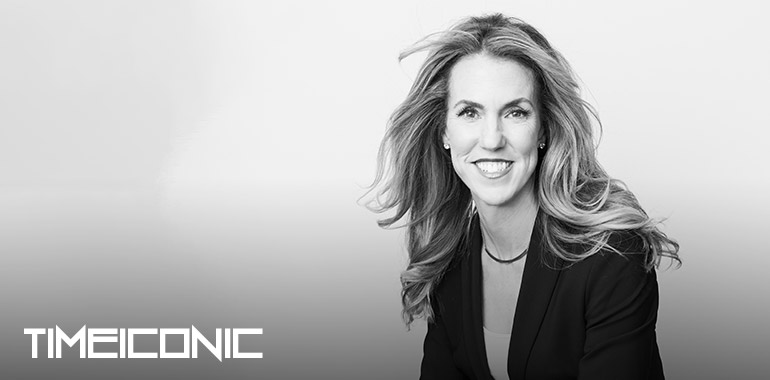
In the ever-evolving corridors of Washington, few voices carry the weight and wisdom of Marla Grossman, Partner at ACG Advocacy and one of the most respected figures in technology, competition, and trade policy. Known for her ability to bridge the worlds of law, technology, and innovation, Marla has spent her career helping shape the legislative architecture that underpins today’s digital economy. Her influence can be found in landmark acts such as the Digital Millennium Copyright Act (DMCA), the America Invents Act, the US-Mexico-Canada Agreement (USMCA), and the Music Modernization Act, each a cornerstone in the evolving balance between innovation and regulation.
“For me,” she says, “each of these major legislative efforts sat at the crossroads of technology, intellectual property, competition policy, and trade. Together, they represent the evolving architecture of innovation policy over the past two decades, and I’ve been fortunate to help shape that trajectory.”
At the Crossroads of Law and Innovation
Marla’s journey through policymaking has been marked by one defining ability: to see where technology is headed long before it arrives. During the late 1990s, when digital platforms were exploding and copyright law struggled to catch up, she played a crucial role in shaping the DMCA, one of the earliest frameworks to govern digital content and online platforms.
“The DMCA was one of the most consequential attempts to reconcile the explosive growth of the internet with the foundational principles of copyright law,” she recalls. “My role involved bridging worlds, helping traditional media industries, tech innovators, and lawmakers understand each other’s imperatives.”
That effort resulted in the safe harbor framework that still underpins the internet’s ecosystem today. It was more than a law, it was the beginning of a new digital order, balancing creativity with innovation.
From there, Marla continued to influence some of the most pivotal moments in American innovation policy. Her work on the America Invents Act helped modernize the U.S. patent system and aligned it with global standards. “The shift from a ‘first-to-invent’ to a ‘first-inventor-to-file’ system,” she explains, “was a fundamental realignment of U.S. patent law, aimed at reducing legal uncertainty and strengthening innovation pipelines.”
Her efforts also supported the introduction of post-grant review mechanisms, enhancing patent quality and curbing abusive litigation, reforms that continue to shape how innovation is protected and rewarded in the U.S. today.
Global Trade, Digital Frontiers, and the Future of Innovation
Marla’s expertise extends far beyond domestic law. As a key contributor to the US-Mexico-Canada Agreement (USMCA), she helped integrate the digital economy into trade policy, ensuring that the new generation of agreements recognized data, algorithms, and code as core components of global commerce.
“This was international trade policy as a tech strategy,” she explains. “We secured stronger IP protections, but just as importantly, we embedded commitments on cross-border data flows, limits on localization mandates, and digital platform accountability.”
For her, the USMCA wasn’t just a trade deal, it was a statement of how nations must adapt to the realities of a connected, data-driven world.
The same principle guided her leadership in helping to craft the Music Modernization Act, a landmark achievement that modernized how artists are paid in the streaming era. “What made it historic wasn’t just what it changed, but how it changed it,” she says. “It proved that collaboration is still possible, even in a polarized environment, when the goal is shared and the process is inclusive.”
Beyond Policy: Strategy, Foresight, and Integrity
Marla believes that policymaking is not just about drafting legislation, it’s about anticipating change. Over the years, she’s become a trusted strategist for clients navigating the fast-moving currents of technology and regulation. “Influencing legislation is only part of the value lobbyists bring,” she explains. “The real challenge is helping clients navigate how policy shifts over time, especially across different administrations.”
That perspective reflects her holistic approach, one that blends deep policy knowledge with strategic vision. She understands that laws evolve just as innovation does, and success often depends on anticipating how those evolutions will affect businesses, creators, and consumers alike.
Her insights into antitrust and competition policy illustrate this balance perfectly. “We’ve seen a dramatic evolution in how competition law is interpreted and enforced,” she notes. “The focus has shifted from consumer welfare alone to broader considerations of market structure, labor dynamics, and innovation itself.”
For Marla, the key lies in maintaining equilibrium. “We have to be careful,” she warns. “If we apply these frameworks too rigidly or without nuance, we risk disrupting the kinds of scale and integration that are essential to innovation, especially in sectors like AI, quantum computing, and advanced manufacturing.”
Her goal, she emphasizes, is not to penalize success but to ensure that the next generation of innovators has a fair chance to compete. It’s a philosophy rooted in fairness, foresight, and the belief that healthy competition fuels progress.
ACG Advocacy: Where Trust and Expertise Meet
In a city where influence is currency, Marla has built a reputation that transcends access. It’s grounded in credibility. As a Partner at ACG Advocacy, she leads one of Washington’s most respected teams in the field of technology and innovation policy.
“In Washington, access matters, but trust matters more,” she says. “Policymakers know we bring them credible information and thoughtful perspectives, not just talking points. That trust opens doors others can’t.”
That integrity has become ACG Advocacy’s defining feature. The firm’s experts don’t just react to policy trends; they help shape them. From platform accountability and intellectual property reform to digital trade and antitrust strategy, ACG’s team works at the forefront of every major conversation that defines the innovation economy.
“Our influence comes from deep relationships across startups, global companies, and research institutions, and from our ability to translate complex priorities into actionable, resonant policy. That dual credibility allows us to have real impact, both now and as the tech-policy landscape continues to evolve.”
“Effective advocacy is not about lobbying louder, it’s about speaking smarter. It’s about connecting people, ideas, and industries to ensure that technology policy remains grounded in both innovation and integrity,” she says.
Leadership Rooted in Purpose
Marla’s leadership philosophy mirrors her approach to policy: clear, inclusive, and purpose-driven. Recognized multiple times as one of Washington’s most influential lobbyists, she views each accolade as both an honor and a responsibility.
“In Washington, credibility is currency,” she says. “These recognitions have helped amplify my voice at the table, but influence only matters if you use it well. Leadership, to me, is about opening doors for others, elevating smart ideas, and pushing policy conversations toward solutions that actually work.”
That mindset has made her not just a leader, but a mentor, someone who champions emerging voices in policy and innovation. She’s known for her ability to make complex ideas understandable, to make clients feel heard, and to make collaboration possible in rooms where consensus is rare.
“Every piece of legislation we touch,” she reflects, “is an opportunity to make systems fairer, smarter, and more forward-looking. The real impact isn’t just in the law that’s passed, it’s in the ideas that endure.”
The Human Spark in a Digital Future
As technology races ahead, Marla remains focused on a question that lies at the heart of modern innovation: how do we protect human creativity in an age defined by artificial intelligence?
“Technology has always outpaced policy,” she reflects. “But with AI now capable of generating content, designing products, and even suggesting inventions, that gap is widening into a chasm.”
Her concern isn’t about the technology itself, it’s about what might be lost along the way. “Our current intellectual property frameworks aren’t just outdated; they risk leaving the original human creator behind altogether,” she warns.
The next great challenge of innovation policy will be rethinking how intellectual property laws protect the people behind the ideas, the researchers, artists, developers, and entrepreneurs whose creativity fuels the systems we’re now teaching machines to emulate. “If we don’t adapt,” she cautions, “we risk building a future where human ingenuity is quietly replaced, not rewarded, and where the incentive to create is dangerously diminished.”
Redefining Innovation in the Age of AI
At ACG Advocacy, this belief has evolved into a shared mission. Marla credits her partner Luke Lynch as a driving force in shaping modern thinking around AI and intellectual property. “Luke has emerged as a transformative voice,” she says. “His leadership in AI and IP policy, especially around data provenance, attribution standards, and human-centered licensing models, is not only influential, it gets results.”
Together, they’re helping redefine what innovation means in a world where machines can create, but cannot imagine. “Luke doesn’t just respond to disruption,” she explains. “He helps shape the frameworks that define how we value human creativity in an AI-driven world. His work is pushing both national and international conversations forward, reframing how we think about innovation rights in the age of generative systems.”
That shared vision, of keeping innovation human-first, runs through every project they take on. “If AI is the engine of the future,” she says, “Luke is helping ensure it runs on ethical fuel, transparency, attribution, and respect for creators.”
Keeping Innovation Human-First
Marla asserts, technology and humanity aren’t competing forces, they’re partners in progress. She believes that innovation policy must evolve to reflect that partnership. “AI will change the tools we use and the speed at which we operate,” she says, “but it should never diminish the rights of those who create.”
Her message is clear: policy must evolve not just to keep pace with technology, but to stand up for the people behind it. That human-centered approach defines her work and her legacy, one built on trust, integrity, and a relentless belief in the power of innovation to serve society, not overshadow it.
As one of Washington’s most influential strategists, Marla Grossman continues to shape the frameworks that define the global innovation landscape. But beyond her policy acumen, it’s her clarity of purpose, her ability to merge technology with humanity, that sets her apart.
Her career is a testament to the belief that the most powerful form of innovation isn’t found in algorithms or legislation, it’s found in people who have the courage to imagine, to build, and to lead with purpose.