
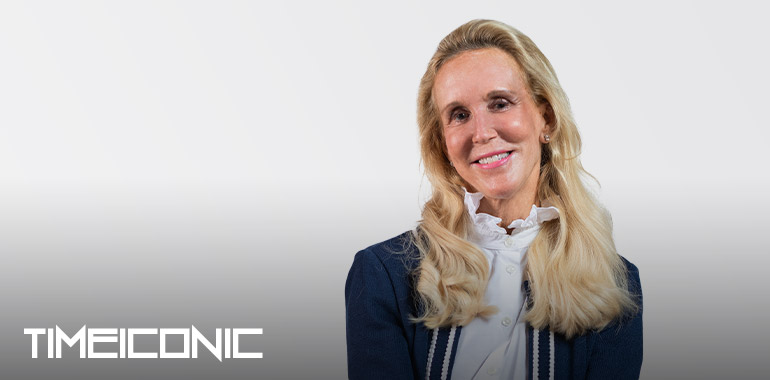
In a business landscape defined by disruption, uncertainty, and relentless transformation, leaders are often judged by their ability to deliver results. Yet the most enduring leaders understand that sustainable success is rarely driven by strategy alone. It emerges from culture, purpose, courage, and the ability to inspire people to move beyond what they believe is possible.
For more than three decades, Linda Coughlin has operated at the intersection of leadership, transformation, and human potential. As Founder and President of Great Circle Associates, she has dedicated her career to helping executives, leadership teams, and organizations navigate pivotal moments of change. Her work extends beyond traditional executive coaching. It is rooted in guiding leaders through profound departures from the status quo while helping them uncover the confidence, clarity, and purpose necessary to thrive in increasingly complex environments.
What distinguishes Coughlin is not merely her impressive career trajectory, but the philosophy that has shaped every chapter of her professional life. Whether leading major business transformations inside global organizations, advising senior executives, or mentoring emerging leaders, she has consistently focused on one central question:
“What becomes possible when people stop limiting themselves and start leading with courage?”
That question has become the foundation of a career devoted to transforming organizations from the inside out.
From Unexpected Beginnings to Executive Leadership
Coughlin’s path to becoming one of the most respected voices in leadership transformation was anything but conventional.
Before entering the corporate world, she was a professional equestrian. A serious riding accident altered the course of her life and forced her to consider a new future. What could have been viewed as a setback became an unexpected turning point that revealed her resilience, adaptability, and determination.
Armed with strong communication and organizational skills, she entered the private sector and worked tirelessly to build a new career. In the early years, she balanced multiple jobs simultaneously while creating opportunities for herself in highly competitive corporate environments.
Her persistence eventually led to a Chief of Staff position at Booz Allen & Hamilton, where she gained valuable exposure to executive leadership and organizational strategy. The experience provided a foundation that would shape the rest of her career.
From there, she continued her ascent through several of the world’s most respected financial institutions, including American Express, Citibank, and Scudder Investments.
At Scudder Investments, Coughlin achieved a series of milestones that reflected both her leadership capabilities and willingness to challenge conventional thinking. She became the firm’s youngest partner and only the second woman to attain the role of Managing Director.
Those accomplishments were significant in their own right. Yet what truly defined her tenure was her ability to lead transformational initiatives that required organizations to rethink established assumptions and embrace bold change.
Throughout her executive career, she was repeatedly entrusted with assignments involving major strategic shifts, complex integrations, organizational turnarounds, business launches, and large-scale rebranding efforts. These were not incremental improvements. They were initiatives that required organizations to fundamentally rethink how they operated, competed, and created value.
The experience provided an education that few leadership development programs could replicate.
She learned firsthand that successful transformation rarely fails because of poor strategy. More often, it falters because organizations underestimate the human dimensions of change.
People resist uncertainty, cultures defend established norms., leaders struggle to let go of familiar ways of operating, and organizations often lack the collective courage required to pursue meaningful reinvention.
Those lessons would later become central to the work she would undertake as an advisor and executive coach.
A Career Built on Transforming the Status Quo
One of the defining themes throughout Coughlin’s career has been her ability to navigate environments experiencing significant disruption.
Following Scudder Investments’ acquisition by Deutsche Bank, she was recruited into a senior leadership role within a global organizational and leadership development consulting firm. The position further expanded her understanding of large-scale transformation and exposed her to organizations facing complex strategic challenges across industries.
Soon afterward, another opportunity emerged that would once again place her at the center of major organizational change.
She joined Cendant Corporation, a multi-billion-dollar conglomerate that had completed an extraordinary volume of acquisitions within a relatively short period. While growth had been rapid, integration challenges had created complexity, inefficiencies, and organizational dysfunction.
The assignment was daunting.
The corporate services structure had become unwieldy. Costs needed to be reduced. Processes required rationalization. Teams needed alignment. Most importantly, the organization required a vision for moving forward.
Coughlin assembled and led a team of highly capable change-oriented leaders who embraced the challenge. Together, they transformed the organization, eliminated more than $100 million in annual expenses, and helped execute a value-creating restructuring that ultimately resulted in multiple successful business spin-offs and divestitures.
The experience reinforced a lesson she had encountered repeatedly throughout her career:
“Real transformation is never simply about systems, processes, or organizational charts. It is about people choosing to embrace a different future.”
That realization would eventually become the catalyst for the next chapter of her professional journey.
Founding Great Circle Associates
After years of leading large-scale transformations inside major organizations, Coughlin recognized an opportunity to make a broader impact.
She had spent decades observing what separated successful transformations from failed ones. She had worked alongside exceptional leaders. She had witnessed organizations thrive during disruption and others struggle despite having seemingly sound strategies.
Most importantly, she had developed a deep understanding of the human factors that determine whether change succeeds or stalls.
Rather than continuing to lead transformations from within a single organization, she chose to dedicate herself to helping leaders and enterprises navigate those challenges directly.
In 2008, she founded Great Circle Associates.
The firm’s mission was clear: help leaders, teams, and organizations execute strategically significant change while developing the leadership capabilities necessary for sustained success.
It was not simply a consulting practice. It was the culmination of decades of experience, observation, and insight into how transformational leadership truly works.
At the center of the firm’s approach was a powerful concept that would become one of Coughlin’s defining contributions to the field of leadership development: Change at Core™.
Change at Core™
Throughout her years as a corporate executive, Linda Coughlin observed a recurring pattern. Organizations often invested enormous resources in strategic planning, restructuring initiatives, technology upgrades, and operational improvements. Yet despite these efforts, many transformations failed to achieve their intended outcomes.
The reason, she discovered, was surprisingly consistent.
Most organizations focused on changing what people did without addressing how people thought.
Processes could be redesigned. Organizational charts could be restructured. New technologies could be implemented. But unless leaders challenged deeply rooted assumptions, behaviors, cultural norms, and decision-making patterns, lasting transformation remained elusive.
This insight became the foundation of Great Circle Associates’ signature framework: Change at Core™.
For Coughlin, true transformation involves far more than incremental improvement. It requires organizations to confront and redefine the beliefs, mindsets, systems, and cultural patterns that have become embedded over time.
These are often the most difficult changes to achieve. They require leaders to question long-standing assumptions, challenge familiar ways of working, and encourage teams to abandon comfortable habits in favor of uncertainty. Yet they are also the changes most capable of producing breakthrough results.
“Meaningful transformation begins when leaders have the courage to examine not only what needs to change, but what they themselves may need to change.”
Rather than treating change as a temporary initiative, Coughlin views it as a deliberate and disciplined process that touches every aspect of an organization’s identity.
Her methodology emphasizes the creation of a compelling future vision, stakeholder engagement, cultural alignment, leadership accountability, continuous communication, and the development of internal champions capable of sustaining momentum long after formal initiatives conclude.
The framework has become particularly valuable in environments facing significant disruption, rapid growth, market shifts, acquisitions, or strategic reinvention.
In a world where change has become constant, Coughlin’s work focuses on helping leaders make transformation sustainable rather than reactive.
Leadership Begins with Self-Awareness
While organizational transformation remains a major component of her work, Coughlin believes meaningful change always starts with individual leaders.
Before leaders can effectively transform organizations, they must understand themselves. This conviction shapes her coaching methodology, which is both highly structured and deeply personal.
Unlike many executive coaching approaches that focus primarily on performance metrics or tactical improvements, Coughlin begins with self-discovery.
She encourages leaders to explore the experiences, values, strengths, challenges, and defining moments that have shaped them throughout their lives and careers. The process often uncovers insights that executives have never fully examined despite years of professional success.
One of the most powerful tools within her methodology is the development of a Leadership Timeline. The exercise traces significant personal and professional experiences that have influenced how leaders think, communicate, respond to pressure, and make decisions.
By examining these defining moments, leaders gain a deeper understanding of both their strengths and their vulnerabilities. Patterns become visible, triggers emerge., limiting beliefs surface, and opportunities for growth become clearer.
For many clients, this level of reflection creates a breakthrough.
Rather than relying solely on external achievements as indicators of success, they begin developing a stronger internal foundation rooted in self-awareness and purpose.
“Leadership is not about becoming someone else. It is about becoming the most authentic version of who you already are.”
Purpose as a Leadership Compass
One of the themes that consistently appears throughout Coughlin’s work is the importance of purpose. She believes leaders perform at their highest level when they understand not only what they are trying to achieve but why it matters.
As part of her coaching process, clients develop what she calls a “Work Life Map,” a comprehensive framework that aligns professional aspirations, personal values, long-term goals, and immediate priorities. The objective is not merely career advancement but the creation of a meaningful path that integrates ambition with purpose.
In many organizations, leaders become consumed by operational demands, quarterly objectives, and daily pressures. Over time, they can lose sight of the deeper motivations that originally inspired their leadership journeys. Coughlin helps them reconnect with those motivations, turning purpose from an abstract concept into a practical decision-making tool that guides priorities, clarifies commitments, strengthens resilience during periods of uncertainty, and provides direction when navigating complex challenges.
The result is leadership that feels less reactive and more intentional.
The Power of Trust, Transparency, and Humility
While many leadership models emphasize authority, expertise, or control, Coughlin consistently returns to a different set of qualities: trust, transparency, and humility.
Throughout her career, she has observed that the leaders who create lasting impact are rarely those who seek personal recognition above all else. Instead, they are individuals who create environments where others can contribute, grow, and succeed. This philosophy is deeply embedded within her coaching and advisory work, where clients are encouraged to share development goals openly with managers, colleagues, and stakeholders. What might initially feel uncomfortable often becomes a powerful trust-building exercise.
For Coughlin, transparency creates accountability, accountability fosters credibility, and credibility strengthens influence. Professional humility also occupies a central role in her leadership philosophy. Humility, in her view, is not weakness or the absence of confidence. Rather, it is the willingness to remain curious, learn continuously, and acknowledge that leadership is ultimately an act of service.
Great leaders, she believes, do not seek power for its own sake. They serve a mission larger than themselves, create space for others to excel, and recognize that sustainable success is built collectively rather than individually. As organizations navigate greater complexity, uncertainty, and interconnectedness, this mindset has become increasingly important, representing a shift away from traditional command-and-control leadership toward a more collaborative and human-centered model.
Emotional Intelligence as the Leadership Differentiator
As organizations become more global, diverse, and interconnected, technical expertise alone is no longer sufficient. Coughlin argues that emotional intelligence has become one of the defining characteristics of effective twenty-first-century leadership. The ability to understand emotions, build trust, manage conflict, demonstrate empathy, and foster psychological safety increasingly separates exceptional leaders from average ones.
She has seen firsthand how emotionally intelligent leaders inspire loyalty, strengthen collaboration, and create cultures where innovation flourishes. They listen deeply, communicate authentically, remain composed under pressure, and understand that leadership is as much about relationships as it is about results.
In times of uncertainty, these capabilities become even more critical. People look to leaders not simply for answers but for reassurance, clarity, and confidence. Organizations facing disruption require leaders who can navigate both operational complexity and human emotion. For Coughlin, emotional intelligence is no longer simply a desirable leadership trait. It is an essential one and increasingly central to the future of leadership itself.
“The most effective leaders do not choose between performance and people. They understand that lasting performance is achieved through people.”
As her work with executives across industries continued to evolve, one challenge repeatedly surfaced regardless of title, experience, or accomplishment. Surprisingly, many of the world’s most successful leaders carried a hidden burden that limited their ability to fully realize their potential. That challenge was imposter syndrome, and addressing it would become one of the defining missions of Linda Coughlin’s leadership legacy.
The Hidden Barrier Holding Leaders Back
Over the course of her coaching career, Linda Coughlin has worked with hundreds of accomplished executives, entrepreneurs, emerging leaders, and leadership teams. Many had achieved impressive professional success, leading large organizations, managing significant responsibilities, and earning the respect of colleagues and stakeholders. Yet beneath those achievements, she noticed a common and often surprising pattern. Many privately questioned whether they truly deserved their success, worried they were not qualified enough, feared being exposed as inadequate, or hesitated to pursue bold opportunities despite having the capability to succeed.
The challenge had little to do with competence and everything to do with perception. It was imposter syndrome.
For Coughlin, this phenomenon represents one of the most significant yet least discussed obstacles to leadership effectiveness. She estimates that a substantial majority of leaders experience some form of imposter thinking during their careers, including highly accomplished executives whose achievements clearly demonstrate their capability. The irony, she notes, is that the very individuals who possess the knowledge, experience, and potential to create meaningful change are often the ones most likely to question themselves.
“Too many leaders spend their energy proving they belong instead of focusing on the difference they are capable of making.”
Throughout her coaching practice, Coughlin has become passionate about helping leaders recognize and overcome these self-imposed limitations. She believes imposter syndrome does far more than undermine confidence. It limits innovation, discourages risk-taking, reinforces attachment to familiar approaches, and keeps organizations trapped in the status quo. When leaders doubt themselves, they often avoid pursuing transformative opportunities, hesitate to challenge established thinking, delay important decisions, and hold back ideas that could create meaningful impact. The cost extends far beyond individual careers, as organizations lose opportunities for growth and innovation when capable leaders are constrained by fear rather than empowered by confidence.
One of the most distinctive aspects of Coughlin’s approach is her belief that servant leadership provides one of the most effective antidotes to imposter syndrome. Rather than focusing on personal validation, servant leaders focus on contribution. The internal dialogue shifts from asking, “Am I good enough?” to asking, “How can I help?” That seemingly simple change redirects attention away from self-judgment and toward service, allowing purpose to become stronger than self-doubt.
For Coughlin, authentic leadership is not built upon flawless performance but upon a willingness to contribute, learn, adapt, and grow. This perspective has helped many leaders reframe their relationship with uncertainty, encouraging them to view challenges not as threats but as opportunities to learn, create impact, and lead with greater confidence.
Addressing Toxic Cultures Before They Destroy Potential
While individual mindset is critical, Coughlin recognizes that leadership does not exist in isolation. Organizations themselves often create conditions that undermine confidence, trust, and performance. Throughout her advisory work, she has identified toxic workplace cultures as another major barrier to sustainable success.
These cultures are rarely created intentionally. More often, they emerge gradually through inconsistent leadership behavior, poor communication, lack of accountability, political maneuvering, and the absence of clearly defined values. Over time, trust erodes, collaboration weakens, innovation slows, employees become disengaged, and performance suffers.
What makes toxic cultures particularly dangerous is that they frequently become normalized. People adapt to dysfunction, stop challenging unhealthy behaviors, and begin accepting low levels of trust as inevitable. Coughlin believes organizations must actively and deliberately shape culture rather than allowing it to develop by accident.
Her approach focuses on translating organizational values into observable behaviors and measurable expectations. Values cannot simply appear on a website or office wall. They must become visible in how decisions are made, conflicts are resolved, leaders communicate, and performance is evaluated.
“Culture is not what an organization says it believes. Culture is what people experience every day.”
This belief reflects her broader leadership philosophy. Lasting transformation occurs when organizations align their values, behaviors, systems, and leadership practices around a shared purpose. Without that alignment, even the strongest strategies eventually lose momentum.
Championing the Next Generation of Women Leaders
Another defining aspect of Coughlin’s career has been her commitment to advancing women in leadership. Having built her own career in environments where women often faced significant barriers to advancement, she understands both the progress that has been made and the challenges that remain.
Despite decades of advancement, women continue to encounter obstacles that affect career progression, leadership opportunities, compensation, visibility, and access to influential networks. Many of these barriers are subtle rather than explicit, appearing through assumptions, unequal sponsorship opportunities, and organizational systems that were not designed with diverse leadership pathways in mind.
Coughlin has spent years helping high-potential women leaders navigate these realities while building the confidence and capabilities necessary to lead transformative change. Her perspective is particularly compelling because she views women as uniquely positioned to excel in environments requiring significant organizational transformation. She points to qualities frequently demonstrated by successful women leaders, including collaboration, relationship-building, community development, holistic thinking, adaptability, professional humility, and purpose-driven leadership. These capabilities are increasingly valuable in a world where organizations must constantly evolve.
According to Coughlin, the future belongs to leaders capable of bringing people together around a shared vision rather than relying solely on positional authority.
“Organizations need more change masters, and many of the qualities required to lead meaningful change are strengths that women leaders bring naturally.”
Rather than focusing exclusively on breaking barriers, she emphasizes creating opportunities. She encourages organizations to identify high-potential women leaders early, provide meaningful leadership experiences, and expose them to assignments that require navigating complex change. The objective is not simply greater representation but the development of stronger leadership pipelines capable of guiding organizations through the challenges of the future.
Preparing Leaders for Future
If Linda Coughlin’s career has taught her anything, it is that leadership can no longer be defined by traditional measures of authority, expertise, or organizational rank alone.
The pace of change is simply too great.
Organizations today face an environment shaped by volatility, uncertainty, complexity, and ambiguity. Technological disruption continues to accelerate. Artificial intelligence is transforming industries. Employee expectations are evolving. Stakeholders increasingly expect organizations to demonstrate purpose, responsibility, and transparency.
In this environment, Coughlin believes leadership must evolve as well.
The next generation of executives will not succeed solely because of their operational expertise or strategic acumen. They will succeed because of their ability to integrate business performance with human understanding.
“The future belongs to leaders who can balance logic and humanity, innovation and ethics, performance and purpose.”
Throughout her coaching and advisory work, she has identified several capabilities that she believes will become increasingly non-negotiable in the years ahead.
One is human-centered systems thinking.
Rather than viewing organizations as mechanical structures, future leaders must understand them as interconnected ecosystems of people, relationships, values, cultures, and stakeholders. Decisions can no longer be made in isolation. Leaders must appreciate the broader consequences of their actions and understand how seemingly unrelated factors influence long-term outcomes.
Another critical capability is foresight.
In an environment where disruption has become constant, leaders must develop the ability to anticipate change rather than simply react to it. Strategic planning remains important, but future success will depend increasingly on the ability to recognize emerging trends, evaluate multiple possible futures, and make decisions amid uncertainty.
This requires curiosity, adaptability, and a willingness to challenge assumptions before circumstances force change.
Technology with a Human Face
Coughlin is also clear that the rise of artificial intelligence will fundamentally reshape leadership, though her perspective differs from many technology-focused discussions. She does not see AI as replacing leadership but rather as elevating the importance of human leadership. Future executives may not need to become software engineers or data scientists, but they will need sufficient digital fluency to make informed decisions about technology’s role within their organizations.
More importantly, she believes leaders must become ethical stewards of technology. Questions surrounding privacy, trust, bias, accountability, and human impact will increasingly accompany technological advancement. For Coughlin, effective leaders must understand not only what technology can do, but also what it should do. Technology should support strategy, strengthen human capability, and create value without compromising integrity. Leaders who can balance innovation with responsibility will be best positioned to navigate the future.
At the same time, she cautions against allowing technology to erode the human qualities that define great leadership.
Empathy.
Compassion.
Authenticity.
Trust.
These qualities become even more important as workplaces become more digitally connected.
“The more technology advances, the more valuable human connection becomes.”
The Power of Storytelling and Trust
One of the most overlooked leadership capabilities, according to Coughlin, is the ability to shape meaning. Organizations are not held together by processes alone but by shared understanding, which is why storytelling remains such a powerful leadership tool. Great leaders help people understand where they are going, why change is necessary, and what role each individual plays in creating the future.
For Coughlin, facts inform, stories inspire, vision motivates, and trust sustains. In increasingly polarized and fast-moving environments, trust has become one of the most valuable forms of organizational capital. Without it, collaboration weakens, innovation slows, change initiatives encounter resistance, and performance suffers. Leaders who communicate authentically, acknowledge challenges honestly, and demonstrate consistency between words and actions create the foundation for trust to flourish.
Leadership communication, in her view, is not about managing perceptions but about creating clarity, alignment, and belief.
A Different Vision of Power
Throughout her career, Coughlin has challenged conventional assumptions about leadership. While many traditional leadership models emphasize hierarchy, control, status, and authority, her vision is fundamentally different. She believes leadership should be rooted in service, not as a slogan, but as a genuine commitment to helping individuals, teams, and organizations realize their potential.
This philosophy has shaped her work as a coach, advisor, author, speaker, and mentor. It explains her focus on developing confidence rather than dependence, her commitment to helping leaders overcome imposter syndrome, her passion for advancing women leaders, and her belief that organizations perform best when people feel valued, trusted, and empowered.
Over the years, she has helped executives navigate career transitions, lead complex transformations, rebuild trust, strengthen cultures, and unlock new levels of performance. Yet when she reflects on impact, she does not focus on titles, revenue figures, or organizational charts. Instead, she focuses on moments: moments when leaders discover confidence they did not know they possessed, when teams overcome division and unite around a shared purpose, when organizations choose courage over complacency, and when people stop limiting themselves and begin embracing possibility.
The Legacy of a Change Maker
More than thirty years after beginning her leadership journey, Linda Coughlin continues to view her work as unfinished. There are still leaders to develop, organizations to transform, cultures to strengthen, and barriers to remove.
Her vision extends beyond individual coaching engagements or consulting assignments. She envisions a future where leadership is more authentic, more inclusive, and more deeply connected to purpose. A future where organizations invest as much energy in developing people as they do in developing strategy.
She also envisions a future where women leaders occupy positions of influence in greater numbers and with greater support, and where toxic workplace cultures give way to environments built on trust, transparency, accountability, and mutual respect. Most importantly, she believes leadership should be viewed not as a position of power, but as a responsibility to serve.
“I want to be known as someone who helped leaders realize their full potential and helped organizations become the best versions of themselves.”
That aspiration captures the essence of Coughlin’s career. For decades, she has helped others embrace change, challenge limitations, and pursue possibilities beyond what they thought achievable.
In doing so, she has become far more than an executive coach or leadership advisor. She has become a catalyst for transformation, a champion of human potential, and a leader whose greatest legacy may ultimately be the leaders she has empowered to shape the future themselves.
