
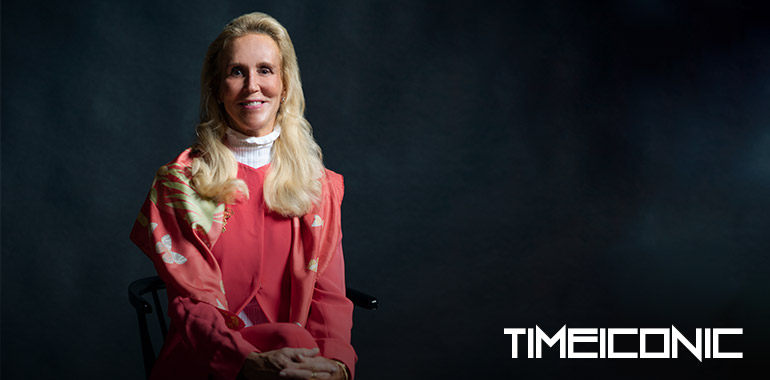
In boardrooms across industries, the conversation about leadership often centers on acceleration. Faster innovation. Faster transformation. Faster decision-making. Yet according to Lin Coughlin, Founder and President of Great Circle Associates, the most urgent work for leaders in 2026 is not acceleration. It is subtraction.
After nearly two decades advising senior executives through succession transitions, cultural redesign, growth mandates, and crisis inflection points, Lin has reached a clear conclusion. Organizations are not stalled because leaders lack new skills. They are stalled because they are operating from outdated assumptions about what leadership is supposed to look like.
“If I step back and look at what this moment is revealing,” she explains, “AI acceleration, trust gaps, skills disruption, and strategic volatility, the issue is less about learning something new and more about unlearning identities that no longer fit the environment.”
This distinction is subtle but profound. Many executives respond to complexity by adding frameworks, tools, and competencies. Lin instead invites them to examine the beliefs beneath their behavior. The assumptions that once propelled success may now be constraining it.
The End of the Answer-Centered Executive
For decades, leadership was equated with certainty. Senior leaders were expected to have the answers, to project decisiveness, and to demonstrate mastery of information. Boards rewarded confidence. Organizations elevated technical expertise. Authority flowed from perceived knowledge.
That model is increasingly misaligned with reality.
In AI-enabled environments, information asymmetry collapses quickly. Insights are distributed. Teams can generate analysis at a speed no individual executive can match. The competitive advantage no longer lies in possessing answers but in interpreting them wisely.
“Leadership in this era is less about being the smartest person in the room,” Lin observes, “and more about creating the conditions where the best thinking can surface.”
She describes this evolution as orchestration. The leader’s role shifts from expert to integrator, from problem solver to sense-maker. This requires humility, but not passivity. It demands the ability to ask catalytic questions, align diverse perspectives, and synthesize complexity into coherent direction.
The resistance to this shift is understandable. Many senior leaders built their reputations on expertise. To step back from being the primary answer-holder can feel like a loss of authority. Yet clinging to certainty in dynamic environments slows adaptation and suppresses initiative. Teams begin waiting for permission rather than experimenting. Psychological safety declines.
Lin reframes the transition clearly. “You are not relinquishing influence,” she tells executives. “You are expanding it by enabling collective intelligence.”
Control, Trust, and the Performance Paradox
Another assumption she challenges is the belief that tighter control ensures better performance. During periods of uncertainty, organizations often respond by increasing oversight. Reporting structures multiply. Approval processes expand. Compliance language intensifies.
The intention is accountability. The outcome is frequently rigidity.
Research consistently shows that trust and autonomy are strongly correlated with motivation, engagement, and discretionary effort. Yet many organizations equate accountability with surveillance. Lin sees this pattern repeatedly in transformation cycles.
“Control feels like protection,” she notes. “But in complex environments, excessive control becomes a bottleneck.”
High-performing organizations, she argues, pair clarity with autonomy. Leaders define outcomes, guardrails, and principles, then allow flexibility in execution. This model accelerates decision-making and strengthens ownership. It also requires leaders to regulate their own anxiety. Without emotional steadiness at the top, autonomy collapses under pressure.
The shift from control to capability creation is not procedural. It is psychological. It requires leaders to trust the systems and people they have built, rather than defaulting to personal intervention.
Rethinking Hierarchy in a Networked World
Traditional hierarchy promised clarity. Decisions flowed downward. Authority signaled efficiency. In stable markets, this structure functioned effectively. In today’s interconnected enterprises, it often creates friction.
Insight rarely originates exclusively in the C-suite. Customer-facing teams detect emerging patterns early. Cross-functional collaboration drives innovation. Digital tools enable rapid information exchange across boundaries.
“Speed now lives at the edges of the organization,” Lin explains. “The role of senior leadership is to ensure insight travels quickly to where it matters.”
This perspective does not dismiss structure. It reimagines it. Networked leadership emphasizes influence across functions rather than reliance on positional authority. Leaders become connectors, reducing friction and enabling faster adaptation.
The cultural implications are significant. When hierarchy dominates, cross-functional competition intensifies and information silos persist. When networks are strengthened, organizations become more responsive and less politically constrained.
Leadership, in this context, becomes less about command and more about design.
From Busyness to Impact
Perhaps the most pervasive assumption Lin challenges is the equation of productivity with visible activity. Industrial-era metrics rewarded hours worked and constant motion. Even in executive ranks, exhaustion is often worn as evidence of commitment.
In AI-augmented environments, value creation increasingly depends on judgment, creativity, and relational intelligence. These contributions are less visible but far more strategic.
“When leaders measure motion instead of impact,” Lin says, “they reward activity over thinking.”
She encourages executives to redefine performance through outcome intelligence. Instead of asking what was produced, they examine what was made possible. Did leadership strengthen team capability? Increase innovation velocity? Improve decision quality? Enhance trust?
Burnout cultures, she argues, are not high-performance cultures. They are unsustainable systems that mistake intensity for endurance.
The most resilient organizations are those that reward contribution rather than exhaustion and recognize that strategic reflection is as valuable as operational speed.
Stability of Purpose, Flexibility of Method
If there is one belief Lin believes must be retired entirely, it is the idea that stability itself is the ultimate goal of leadership. Predictability once signaled strength. Today, continuous reinvention is a baseline expectation.
Markets shift. Technologies evolve. Stakeholder scrutiny intensifies. Business models require recalibration with increasing frequency.
“Reinvention is not episodic anymore,” she explains. “It is continuous.”
Adaptive leadership anchors organizations in purpose while allowing strategies and structures to evolve. Values remain steady. Methods adjust. This creates confidence without false certainty.
Employees do not expect leaders to eliminate volatility. They expect coherence. They want to understand what will not change and what must.
Across all seven assumptions Lin frequently addresses, a unifying theme emerges. Leadership is transitioning from control to capability creation, from certainty to curiosity, from individual authority to collective intelligence.
The leaders who will define the next decade are not those who accumulate the most information. They are those who design environments where adaptation becomes embedded rather than episodic.
Redefining Success and The Inner Work
If unlearning outdated assumptions is the first discipline of modern leadership, redefining success is the second. For Lin, this is where conversations with senior executives often become most revealing. Achievement, after all, is rarely the problem. Most of the leaders she advises have already delivered measurable growth, scaled teams, and earned institutional credibility. The more difficult question is whether the way they define success is still serving the future they are responsible for shaping.
“Redefining success is not about lowering standards,” she says. “It is about expanding them.”
For decades, leadership effectiveness has been measured through output. Revenue growth, cost efficiencies, market expansion, shareholder return. These indicators remain essential. Yet in an era marked by workforce fatigue, rapid technological integration, and increasing scrutiny around culture and ethics, output alone has become an incomplete metric. Organizations that prioritize results without considering sustainability often generate short-term gains at the expense of long-term resilience.
Lin challenges leaders to examine the broader consequences of their performance models. Are they building enduring capability, or are they extracting energy from systems without replenishing it? Are they strengthening trust and succession readiness, or are they creating dependency around themselves?
The distinction reframes leadership from achievement to architecture.
From Personal Output to Systemic Impact
One of the first shifts Lin introduces is moving from measuring what a leader personally produced to assessing what their leadership made possible. This subtle recalibration changes behavior at the top.
Leaders trained in execution often focus on tangible deliverables. Targets met. Initiatives launched. Crises resolved. But at scale, the more meaningful question is whether teams have become more capable, whether decision quality has improved, and whether cross-functional collaboration has strengthened.
“Sustainable performance is a collective achievement,” she explains. “If your success depends on your constant intervention, the system is fragile.”
This perspective resonates particularly in board-level discussions around succession and enterprise risk. A leader who builds capacity rather than centralizes authority creates institutional strength that endures beyond their tenure. In contrast, a leader who remains indispensable may unintentionally weaken long-term resilience.
Lin’s advisory work frequently centers on this transition from heroic leadership to distributed capability. It requires executives to relinquish certain forms of visibility and redefine where they derive professional validation.
Sustainable Performance as Strategy
High-intensity performance can be exhilarating. It can also be corrosive. In volatile markets, urgency becomes normalized. Yet urgency sustained indefinitely evolves into exhaustion.
Lin distinguishes clearly between intensity and endurance. The former can drive breakthrough results. The latter determines whether those results can be maintained.
“High output without recovery becomes organizational debt,” she notes.
Sustainable leadership requires designing rhythms that include reflection, recalibration, and renewal. This applies not only to teams but to leaders themselves. Senior executives who operate in chronic misalignment between personal values and organizational expectations often experience diminishing clarity over time. Decision-making becomes reactive. Communication becomes guarded. Trust erodes subtly but steadily.
By contrast, leaders who integrate personal alignment with enterprise purpose tend to demonstrate greater coherence. They make more consistent choices. They communicate with clarity under pressure. They model steadiness in moments of ambiguity.
This integration is not self-indulgent. It is strategic. Personal sustainability directly influences organizational stability.
The Inner Work That Cannot Be Delegated
As complexity intensifies, Lin believes there is a category of leadership work that cannot be outsourced. Strategy can be informed by consultants. Analytics can be enhanced by AI. Self-awareness cannot be delegated.
“The more complex the external environment becomes,” she reflects, “the less leaders can outsource their internal work.”
This internal work begins with self-awareness under pressure. How does a leader respond when challenged publicly? When growth slows unexpectedly? When authority is questioned? These moments reveal default patterns that shape culture more powerfully than formal policies.
Unexamined insecurity may surface as micromanagement. Avoidance of conflict may create tolerance for underperformance. Excessive need for approval may lead to diluted strategic decisions.
Organizations absorb these signals.
“Leadership impact is not only about managing systems,” Lin says. “It is about managing yourself within those systems.”
She often describes a chain reaction that begins internally and scales outward. Inner clarity fosters emotional steadiness. Emotional steadiness builds relational trust. Trust strengthens psychological safety. Safety accelerates execution. Execution drives sustainable performance.
The reverse is equally true. Internal fragmentation spreads ambiguity. Emotional volatility creates defensive teams. Defensive teams slow innovation.
In this sense, leadership maturity becomes a performance variable.
Crisis as a Test of Character
Nowhere is inner work more visible than during moments of public failure or ethical tension. Lin has advised leaders through crises where reputations were at risk and institutional credibility hung in the balance. In her experience, the defining factor is rarely the mistake itself. It is the response.
Leaders who rise with integrity move quickly from explanation to ownership. They acknowledge impact before defending intent. They communicate transparently, even when information is incomplete. They demonstrate visible learning and link words to structural change.
“Trust is rebuilt through accountability,” she emphasizes, “not narrative management.”
By contrast, leaders who retreat into defensiveness or delayed disclosure often deepen reputational damage. Attempts to control perception can erode credibility more than the original issue.
Integrity, as Lin frames it, is the alignment between declared values and behavior when consequences are personal. It is consistency under scrutiny.
This alignment cannot be improvised in crisis. It is the product of prior internal work.
Confidence and Quiet Doubt
Even at senior levels, external composure can mask private doubt. Many accomplished leaders experience imposter feelings, particularly when stepping into expanded visibility or transformative mandates. Lin approaches these conversations with nuance.
Imposterism, she suggests, is not evidence of inadequacy. It is often a signal of growth. The discomfort of stretching beyond prior identity can manifest as self-questioning.
She encourages leaders to normalize these moments rather than conceal them. Open dialogue with trusted peers reframes isolation. Reconnecting with one’s professional journey restores perspective. Most importantly, redirecting attention from self-evaluation to contribution changes the internal narrative.
“When leaders shift from asking ‘Am I good enough?’ to ‘How can I serve effectively?’ their energy changes,” she explains.
In several high-growth contexts, she has witnessed this shift catalyze bold strategic articulation, cultural clarity, and renewed organizational momentum. Confidence, in these cases, emerges not from eliminating doubt but from integrating it.
The Hardest Reflection
Among the most challenging truths Lin offers senior leaders is this: the traits that propelled them to prominence may now be limiting their expansion.
Control, speed, personal heroics, and relentless execution were once rewarded. At scale, these same traits can suppress distributed leadership and create dependency. Growth at the highest levels requires subtraction before addition.
Reinvention demands letting go of familiar identity anchors. Moving from operator to architect, from expert to integrator, from indispensable decision-maker to system designer involves psychological transition.
“Your next chapter,” she often tells executives, “will not be built by doing more of what made you successful. It will be built by becoming someone your past success does not yet recognize.”
For leaders accustomed to mastery, this invitation can feel destabilizing. Yet it is precisely this evolution that enables legacy rather than mere longevity.
From Insight Provider to Cognitive Navigator
Historically, executive coaching emphasized awareness. Identify blind spots. Improve interpersonal effectiveness. Develop communication skills.
Those elements remain foundational. But in a landscape shaped by AI-generated analysis and rapid data flow, Lin believes the coach must now serve as something more precise.
“The modern coach helps leaders decide what deserves attention,” she explains. “Discernment is becoming more valuable than information.”
Executives are inundated with dashboards, predictive models, and scenario simulations. The challenge is no longer data scarcity. It is signal filtration.
Lin works with leaders to cultivate judgment frameworks that slow reaction without slowing progress. Strategic pause becomes a discipline. Not hesitation, but integration.
In her sessions, the emphasis shifts from What do you think? to How are you thinking?
This metacognitive focus helps leaders avoid reactive cycles. It also strengthens their ability to lead responsibly in environments where certainty is rare.
Stabilizing Identity in an Era of Reinvention
Continuous disruption carries a psychological cost. Executives are expected to reinvent constantly. New technologies. New business models. New stakeholder expectations.
Without a stable internal anchor, that constant reinvention fragments leadership identity.
“Purpose and values alignment are not abstract ideals,” Lin says. “They are stabilizers.”
Her coaching increasingly centers on helping leaders maintain coherence while navigating change. Identity becomes infrastructure. When leaders know what they stand for, they make decisions with greater consistency and courage.
This is particularly critical as AI reshapes execution layers. As machines handle portions of analysis and operational work, human differentiation shifts toward judgment, empathy, and ethical reasoning.
Lin is clear about what coaching must not become.
“Coaches who position themselves as the smartest voice in the room risk irrelevance,” she notes. “Leaders can access expertise instantly. What they cannot outsource is meaning-making.”
The coach’s differentiator is not advice. It is depth.
Human and Machine, Not Human or Machine
Artificial intelligence has not diminished the coaching profession. It has raised its bar.
Executives increasingly use AI for brainstorming, forecasting, and feedback simulations. Some coaching functions can be augmented by digital tools. But emotional nuance, moral complexity, and contextual interpretation remain distinctly human.
“The future belongs to coaches who embrace AI as a thinking partner,” Lin says, “while doubling down on uniquely human capabilities.”
Empathy. Ethical discernment. Trust-building. Identity evolution.
In many ways, AI exposes what cannot be automated. Leaders still need spaces where complexity can be processed without performance pressure.
Lin’s practice increasingly integrates conversations about technology adoption, AI anxiety, and ethical responsibility. Avoiding those topics, she argues, signals obsolescence.
Coaching must operate at the intersection of strategy and humanity. Not one at the expense of the other.
The Subtle Conditioning of Power
A significant portion of Lin’s advisory work focuses on women leaders at executive levels. Despite progress, she observes subtle yet persistent conditioning patterns.
One of the most damaging is the quiet habit of self-limitation through over-preparation and under-claiming authority.
“Many accomplished women leaders still equate credibility with perfection,” she explains. “That standard is unsustainable.”
High-achieving women often internalize the belief that they must exceed expectations before stepping into expanded influence. They wait for unassailable readiness. Meanwhile, opportunities evolve quickly.
Lin works to reframe ambition as contribution rather than validation. The shift from career advancement to legacy contribution does not require sacrificing drive. It requires expanding its horizon.
“Ambition focused only on position narrows impact,” she says. “Ambition aligned with legacy multiplies it.”
Encouraging women leaders to design systems that outlast them rather than merely ascend within existing ones is part of her broader leadership architecture philosophy.
The Hard Mirror and the Future Chapter
As Lin reflects on her own evolution, she recognizes a similar inflection point.
“At this stage of my journey,” she says, “it is less about tactical decisions and more about legacy choices.”
Her early career centered on transforming individual leaders. That remains core. But her next chapter is increasingly focused on leadership ecosystem transformation. Board dynamics. Cultural architecture. Trust as strategic leverage.
She describes the shift as moving from leadership development to leadership legacy architecture.
Instead of carrying structure for clients, she is intentionally stepping back from over-scaffolding. Instead of proving capability, she is choosing influence over execution.
“I am moving from architect-builder to architect of architects,” she explains.
That distinction matters. It reflects the same principle she teaches executives. Sustainable impact lies not in being indispensable but in designing systems that thrive independently.
She is also consciously leaving behind work that feels familiar but not evolutionary. Breadth can become a trap. Depth becomes the differentiator.
“The question is no longer can I?” she reflects. “It is should I?”
Hope in Emerging Leadership
Despite the volatility of the present moment, Lin remains optimistic about the next generation of leaders, particularly emerging women executives.
She sees greater comfort with collaboration over hierarchy, greater fluency in emotional intelligence, and a more integrated view of performance and humanity.
The behaviors that concern her most are not about competence but about self-doubt. When talented leaders under-claim authority or hesitate to challenge systems that need redesign, organizational progress slows.
Yet the overall trajectory, she believes, is encouraging. The future of leadership appears less tethered to hero narratives and more oriented toward collective capacity.
Designing What Outlasts You
Across all her work, a unifying principle emerges. Leadership is not a performance. It is a trust relationship.
Lin’s enduring message to executives is both challenging and clarifying.
“The next level of impact does not require more mastery,” she says. “It requires the courage to outgrow the identity that created your success.”
In a world defined by acceleration, noise, and reinvention, she is helping leaders build something steadier than certainty. She is helping them design leadership systems rooted in clarity, trust, and adaptive strength.
For Lin, the future of leadership is not about controlling change. It is about cultivating the capacity to evolve with integrity.
And in that evolution, the measure of success is no longer how much a leader achieves personally, but how much leadership endures because of them.
