
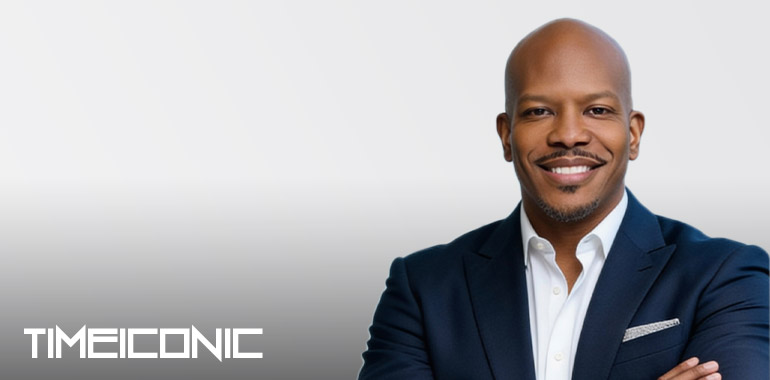
Leadership journeys are often defined by pivotal transitions, but for James W. Radford, the foundation was laid long before he entered the corporate world. His early years in the U.S. Air Force shaped not only his professional discipline but also his philosophy on leadership, execution, and responsibility. What began as a commitment to serve evolved into a broader mission to build an organization grounded in trust, performance, and purpose.
Radford’s trajectory from military service to Chief Executive Officer of Trust Consulting Services is not a conventional corporate ascent. It is a progression defined by clarity of purpose and a consistent belief that leadership is earned through action rather than title.
The military experience instilled in Radford a mindset that continues to influence every aspect of his leadership approach. Structure, accountability, and mission-first thinking were not just principles but daily practices that shaped how he viewed responsibility and execution.
Reflecting on that period, he notes,
“Leadership is about ownership, not position.”
This perspective became a cornerstone of his professional identity. In high-stakes environments where precision and coordination are critical, he learned that outcomes depend not only on strategy but on the ability to execute under pressure. These lessons would later become central to how he built and scaled his company.
Identifying Opportunity in Complexity
After transitioning from military service, Radford entered the world of government contracting. It was here that he encountered an industry marked by rigidity and transactional relationships. While many firms focused on fulfilling contractual obligations, few operated with the agility and accountability that evolving client needs demanded.
Rather than adapting to the status quo, Radford saw a clear gap in the market.
Agencies required partners who could move quickly, think strategically, and remain accountable for outcomes, not just deliverables. This realization became the catalyst for founding Trust Consulting Services, an organization designed to operate differently from the outset.
“We didn’t chase growth,” he explains. “We built systems that made growth inevitable.”
This philosophy reflects a disciplined approach to scaling. Instead of pursuing rapid expansion for its own sake, Radford focused on creating a foundation where growth would be a natural result of consistent performance and strong relationships.
Building with Intention: Growth, Structure, and Culture
From its inception, Trust Consulting Services was built on three core pillars: execution, accountability, and adaptability. However, Radford understood early on that growth without structure could quickly lead to operational inefficiencies.
“Growth without discipline is chaos.”
To avoid this, he implemented clear processes, accountability systems, and performance expectations across the organization. This structured approach ensured that as the company expanded, it maintained operational control and consistency in delivery.
Equally important is the deliberate cultivation of culture. Rather than being treated as a byproduct of growth, culture serves as a critical driver of it, reinforced through leadership behavior, consistent communication, and a shared commitment to high standards.
“If you scale without protecting culture, you lose your identity.”
This balance between discipline and culture has allowed the organization to expand while preserving the values that define it.
Operational Excellence
In a competitive and highly regulated market, differentiation often extends beyond capability alone. The true distinction lies in execution, where consistent delivery and accountability define long-term credibility. Many organizations make promises, but fewer consistently deliver on them. Trust Consulting Services has positioned itself as a partner rather than a vendor, emphasizing accountability and long-term outcomes over short-term transactions.
“Our clients don’t just get a contractor. They get a partner who is invested in outcomes.”
This approach is further strengthened by the company’s ability to integrate technology, security, and operational services. By combining these capabilities, the organization offers a comprehensive solution that aligns with the complex needs of its clients. The focus is not only on delivering services but on ensuring those services are aligned with measurable outcomes and long-term value.
This emphasis on execution is deeply influenced by experience in government contracting, where operating in highly regulated environments requires precision, compliance, and a strong understanding of risk management. Such environments demand not only technical capability but also consistency in delivery and adherence to clearly defined standards.
They also reinforce the importance of clear communication and delivering exactly what is promised. These principles are embedded in the organization’s DNA, guiding decision-making at every level. The emphasis on documentation, accountability, and execution is not simply a reflection of industry requirements but a deliberate commitment to maintaining a high standard of performance.
Decision-Making Under Pressure
Leadership in complex environments often comes down to the ability to make timely and effective decisions. For him, decision-making is guided by three key elements: clarity, speed, and accountability.
“Gather the best available information, make the decision, and own the outcome.”
He recognizes that delayed decisions can be more damaging than imperfect ones. Once a direction is chosen, the focus shifts immediately to execution, ensuring alignment across the organization.
This decisive approach reflects the influence of his military background while also addressing the demands of a fast-moving business environment.
Aligning Vision with Execution
As Trust Consulting Services expanded, the challenge was no longer simply about delivering results. It became about sustaining performance at scale while preparing for a future shaped by rapid technological and workforce transformation. This phase demanded a deeper alignment between vision and execution, supported by a strong commitment to trust and innovation.
Growth introduces complexity, and with complexity comes the risk of misalignment. Ensuring that every level of the organization moves in the same direction is not left to chance but built through structured communication and clearly defined objectives.
“Our leadership team understands the vision, and we translate that vision into measurable objectives.”
This translation from strategy to execution is where many organizations struggle. Radford approaches it with precision, ensuring that each team and individual understands not only what needs to be done but why it matters. Accountability plays a central role in this process, creating a direct connection between organizational goals and individual performance.
The result is a system where execution is not reactive but intentional, driven by clarity and reinforced through consistent measurement.
Trust as the Core Operating Principle
While strategy and systems are essential, Radford places trust at the center of both internal culture and external relationships. In his view, trust is not an abstract value but a measurable outcome of consistent behavior.
“Trust isn’t built through words. It’s built through consistent action.”
Internally, trust fosters accountability and empowers teams to perform at a high level. Employees who trust leadership are more likely to take ownership of their roles and contribute meaningfully to the organization’s success.
Externally, trust forms the foundation of long-term partnerships. Clients rely on predictability and reliability, particularly in complex and high-stakes environments. By consistently delivering on commitments, Trust Consulting Services has positioned itself as a dependable partner rather than a transactional service provider.
This dual application of trust strengthens both culture and client relationships, creating a sustainable advantage in a competitive market.
Embracing Technology and AI
As industries evolve, the integration of technology has become a defining factor for long-term success. Radford recognizes that the future will belong to organizations that can effectively combine human expertise with technological capability.
“We are actively integrating AI and automation into our service delivery and internal operations.”
This approach goes beyond adoption for the sake of innovation. It reflects a strategic investment in digital transformation, aimed at improving efficiency, enhancing decision-making, and building scalable systems.
Data-driven insights are becoming increasingly critical, enabling the organization to anticipate challenges and respond proactively. By embedding these capabilities into its operations, Trust Consulting Services is positioning itself to remain competitive in an environment where adaptability is essential.
Navigating the Challenges of Rapid Growth
With expansion comes pressure, and one of the most significant challenges Radford has faced as CEO has been maintaining operational control during periods of rapid growth.
“Growth exposes weaknesses.”
Rather than viewing this as a setback, he approaches it as an opportunity for improvement. Identifying gaps in processes or leadership structures allows the organization to strengthen its foundation and prepare for future scaling.
This phase also required Radford to evolve as a leader. Delegation became essential, as did the development of strong leadership layers within the company. Building a team capable of maintaining standards at scale ensured that growth did not come at the expense of performance or culture.
The experience reinforced a critical lesson: sustainable growth is not just about expansion but about strengthening the systems that support it.
Purpose and Performance
As a veteran-owned organization, Trust Consulting Services operates with a distinct sense of purpose rooted in service. That purpose extends beyond clients to employees and the broader community, shaping how the organization defines impact and success.
“We are here to serve our clients, our employees, and the communities we operate in.”
This mission-driven approach influences decision-making, performance standards, and organizational culture. It creates a sense of responsibility that goes beyond financial outcomes, emphasizing impact, contribution, and long-term value. In this context, purpose becomes a unifying force, aligning teams, strengthening culture, and providing clear direction as the organization continues to grow.
At the same time, performance is measured with equal clarity. In an environment where results must be consistently validated, decision-making is guided by metrics that provide an objective view of organizational health and progress. Key indicators such as revenue growth, profit margins, contract performance, client satisfaction, and employee retention offer a comprehensive perspective on both financial and operational success.
“Metrics tell the truth.”
This reliance on data ensures that decisions remain grounded in reality rather than perception. It reinforces accountability across all levels of the organization, creating a balance where purpose drives direction and performance validates progress.
Preparing for the Future of Leadership
Looking ahead, Radford sees a business landscape shaped by accelerated technological change, evolving workforce dynamics, and increased competition. For CEOs, the ability to adapt quickly and make informed decisions will be critical.
“CEOs will need to move faster, make smarter decisions, and build more resilient organizations.”
The integration of AI and automation will play a significant role in this transformation, distinguishing organizations that are able to evolve from those that fall behind. However, Radford emphasizes that technology alone is not enough. Success will depend on the ability to combine innovation with strong leadership and a clear sense of purpose.
The Mindset Behind Sustainable Success
For Radford, success is not accidental. It is the result of a deliberate mindset rooted in clarity, discipline, and an unwavering sense of purpose. While many professionals approach their careers with interest or ambition, he draws a clear distinction between passive intent and active commitment.
“Success starts with desire. Not interest, not curiosity. Desire.”
This concept of desire goes beyond motivation. It is about the internal drive that fuels consistency, resilience, and execution over time. In his view, talent and opportunity alone are not enough. Without the discipline to act and persist, potential remains unrealized.
Radford also recognizes that this drive can diminish over time, often influenced by setbacks or changing circumstances. Part of his mission, both within his organization and beyond, is to help individuals reconnect with that sense of purpose and translate it into tangible results.
Advice to the Next Generation of Leaders
Having navigated both structured military environments and the complexities of entrepreneurship, Radford offers practical and direct advice to emerging leaders. His guidance reflects the principles that have shaped his own journey.
“Take ownership early. Don’t wait for permission to lead.”
Ownership, in this context, is not tied to authority or position. It is about accountability, initiative, and the willingness to step forward when responsibility is required. Radford emphasizes that leadership opportunities are often created, not assigned.
He also highlights the importance of discipline and consistency. Success, as he describes it, is built through repeated execution rather than isolated achievements. Leaders who focus on maintaining standards over time are more likely to create lasting impact.
Equally important is the idea of building with purpose. While financial success is a natural objective, Radford encourages leaders to think beyond profit and consider the broader value they create.
“Build something with purpose, not just profit.”
This perspective aligns with his own approach to business, where impact and service are integral to long-term success.
Resilience in an Unpredictable Journey
No leadership journey is linear, and Radford is candid about the challenges that come with growth and transformation. Setbacks, uncertainty, and pressure are inevitable, particularly in high-performance environments.
“Stay resilient, because the path to success is never linear.”
Resilience, for him, is not just about enduring challenges but about learning from them and adapting. It is the ability to maintain focus and momentum even when outcomes are uncertain.
This mindset has been critical in navigating the complexities of scaling a business, managing change, and maintaining high standards under pressure. It reinforces the idea that leadership is as much about perseverance as it is about strategy.
Defining a Legacy Beyond Titles
When reflecting on his long-term impact, Radford’s perspective on legacy is clear and grounded. It is not defined by titles, recognition, or individual success but by the value created for others.
“I want my legacy to represent impact.”
This impact takes multiple forms. It includes building a company that delivers excellence, creating opportunities for employees, and inspiring others to pursue their potential. It also reflects a broader commitment to elevating standards within the industry and contributing to the communities the organization serves.
For Radford, leadership is ultimately about what is built and who is elevated along the way. It is a perspective that shifts the focus from personal achievement to collective progress.
A Leadership Philosophy Rooted in Service
Underlying every aspect of Radford’s journey is a consistent theme of service. From his time in the military to his role as CEO, this principle has remained constant.
Service, in this context, is not limited to fulfilling responsibilities. It is about creating value, supporting others, and contributing to something larger than individual success. It shapes how decisions are made, how teams are built, and how success is measured.
This philosophy reinforces the organization’s mission-driven approach and provides a clear framework for future growth. It ensures that as Trust Consulting Services continues to expand, it remains aligned with the values that defined its foundation.
The Road Ahead
As industries continue to evolve and new challenges emerge, Radford’s approach offers a blueprint for sustainable leadership. It is a model built on discipline, accountability, trust, and purpose, supported by a willingness to adapt and innovate.
His journey illustrates that leadership is not a destination but an ongoing process of growth, learning, and contribution. It is about maintaining clarity in moments of uncertainty and staying committed to the principles that drive long-term success.
In a business environment increasingly defined by change, Radford stands as a leader who combines structure with vision and discipline with purpose. His story is not just about building a company but about shaping a culture where performance, accountability, and impact are inseparable.
And in that intersection, his legacy continues to take form.
