
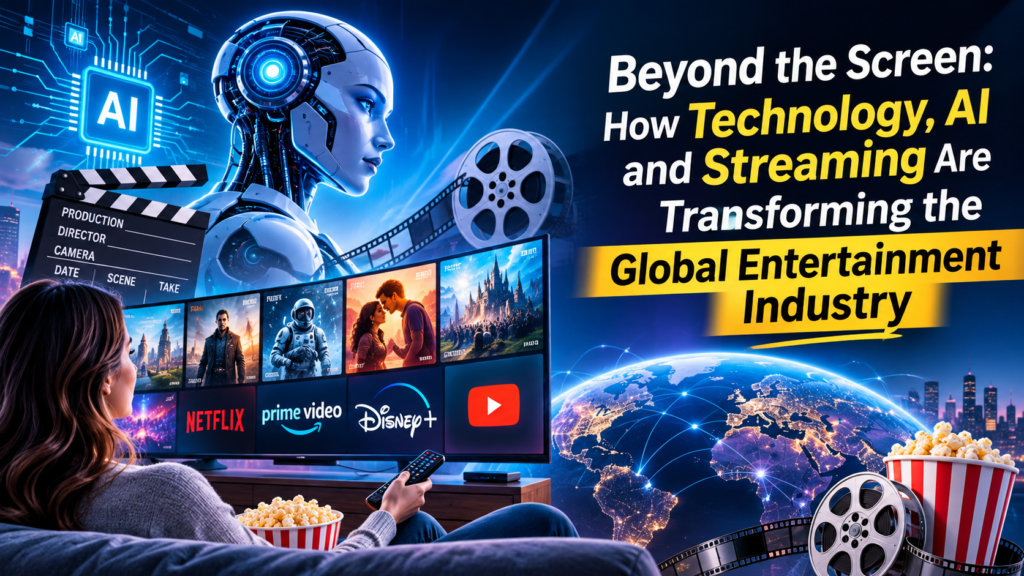
The global entertainment industry is experiencing a major transformation driven by technology, artificial intelligence (AI), and streaming platforms. From watching movies online to creating digital content with advanced AI tools, the way people produce, distribute, and consume entertainment is changing rapidly. Traditional television, cinema, and media businesses are adapting to a digital-first world where audiences expect convenient access, personalized experiences, and high-quality content.
As digital innovation continues to grow, technology is creating new opportunities for filmmakers, content creators, streaming companies, and media businesses. The future of entertainment will depend on how effectively the industry combines creativity with technological advancements.
1. The Rise of Streaming Platforms and Digital Entertainment
Streaming platforms have transformed the way audiences watch movies, television shows, documentaries, and web series. Instead of depending on traditional television schedules or cinema releases, viewers can now access entertainment whenever and wherever they want.
Subscription-based streaming services, video-on-demand platforms, and digital entertainment applications have made global content more accessible. Audiences can explore international films, regional productions, and original series through a single platform.
This shift has also changed the entertainment business model. Streaming companies are investing in original productions, exclusive content, and international markets to attract subscribers. As competition increases, quality storytelling and audience engagement are becoming essential for long-term success.
2. Artificial Intelligence Is Changing Content Creation
Artificial intelligence is becoming an important technology in the entertainment and media industry. AI-powered tools are helping professionals improve creative processes, analyze audience preferences, and streamline production activities.
In filmmaking, AI can support script analysis, visual effects, animation, video editing, and production planning. Content creators can also use AI tools to generate ideas, improve sound quality, and develop digital marketing materials.
Another major development is AI-powered content recommendations. Streaming platforms analyze viewing habits and audience interests to suggest relevant movies and television shows.
However, AI also creates challenges involving copyright, content ownership, data privacy, and creative authenticity. The industry’s success will depend on using artificial intelligence responsibly while protecting human creativity.
3. Social Media Is Expanding the Entertainment Industry
Social media platforms have become powerful distribution channels for entertainment content. Short-form videos, live streaming, influencer collaborations, and digital communities are changing how audiences discover celebrities, music, films, and television programs.
Platforms such as YouTube, Instagram, and TikTok allow independent creators to reach international audiences without depending entirely on traditional media companies.
This transformation has created new opportunities for digital influencers, musicians, filmmakers, and emerging artists. Personal branding, audience engagement, and creative storytelling are now important elements of entertainment marketing.
For entertainment businesses, social media is no longer just a promotional tool. It has become an essential part of audience development and digital growth.
4. Virtual Production and Advanced Visual Effects
Modern filmmaking is increasingly benefiting from virtual production, computer-generated imagery (CGI), augmented reality (AR), and virtual reality (VR).
These technologies allow filmmakers to create realistic digital environments, improve visual storytelling, and develop experiences that were previously difficult or expensive to produce.
Virtual production techniques can also help production teams visualize scenes before filming is completed. This improves creative collaboration and can make certain production processes more efficient.
As these technologies become more accessible, filmmakers and entertainment studios will have new opportunities to experiment with storytelling and visual experiences.
5. The Future of Digital Media and Entertainment Business
The future of the global entertainment industry will be shaped by innovation, changing consumer expectations, and new digital business models.
Streaming platforms will continue competing for audiences through original content and personalized viewing experiences. Meanwhile, AI-powered production tools, immersive entertainment, and creator-driven platforms will create new revenue opportunities.
Entertainment companies will also need to focus on content quality, digital marketing, audience trust, and responsible technology adoption.
Businesses that successfully combine creative talent with modern technology will be better positioned to compete in an increasingly connected global marketplace.
Conclusion
Technology, artificial intelligence, and streaming platforms are redefining the global entertainment industry. From personalized content recommendations to advanced filmmaking and social media distribution, digital innovation is changing every stage of entertainment production and consumption.
Although challenges involving copyright, competition, and responsible AI adoption remain, the opportunities are significant. The next generation of entertainment will not simply be about what audiences watch but also how content is created, delivered, and experienced.
Beyond the screen, the future of entertainment belongs to those who combine creativity, innovation, and technology to connect with audiences around the world.
