
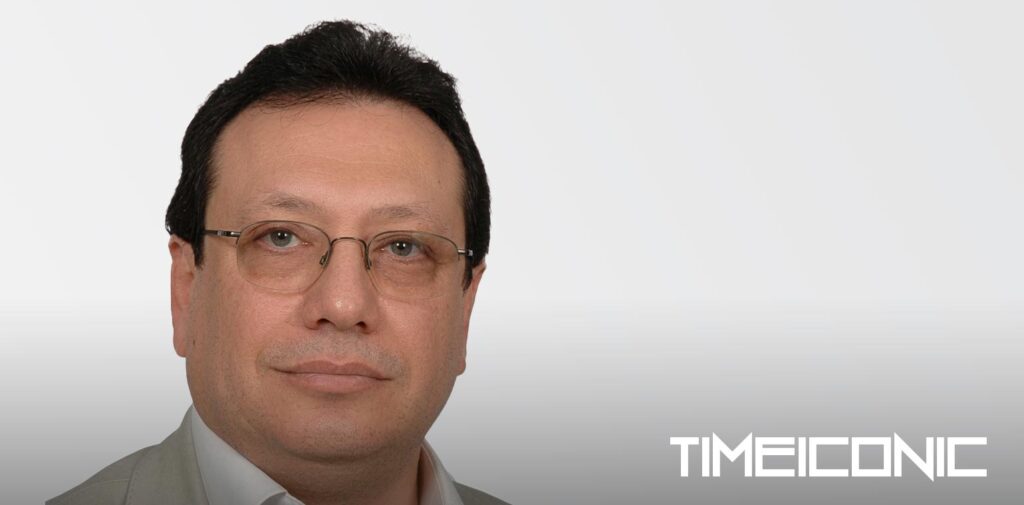
From a doctor’s diagnostic table to boardrooms on five continents, Dr. Sam M Attia has spent half a century proving that judgment, not size, is what separates an enterprise built to last from one built to impress. As Chairman and CEO of SMA Group, and now as the founder of his own publishing house, he is doing something few global business leaders ever attempt. He is writing the method down.
There is a particular kind of executive who cannot easily be filed under a single job title. Dr. Sam M Attia is one of them. He is a trained physician who has not practised clinical medicine in decades, yet he still speaks about business the way a doctor speaks about a patient, in terms of symptoms, root causes and long-term prognosis. He is the Chairman and CEO of a group that ships pallets across nearly two hundred countries, manufactures SMART kitchen appliances, guards physical premises across the Middle East, and advises some of the world’s largest companies, and yet when asked what he is proudest of, he does not begin with any of that. He begins with a shelf of books he has written himself, under a publishing house he founded at an age when most executives are already planning retirement.
Dr. Attia traces a specific turning point in the Group’s own history, the moment SMA stopped being merely a collection of business activities and became, in his words, a concept guided by method, structure and purpose, with a long and deliberately diversified horizon. That combination, a builder who has also become a chronicler of his own method, is what makes Dr. Attia worth watching closely as global business enters a period defined by artificial intelligence, geopolitical fragmentation and a widening gap between companies that merely react and companies that endure. Over more than fifty years spanning medicine, logistics, manufacturing, security, consultancy and now publishing, he has arrived at a small number of convictions that he repeats with the consistency of a man who has tested them under real pressure. This is the story of how those convictions were formed, how they operate inside SMA Group today, and why, at a stage in his career when he could simply enjoy what he has built, he has chosen instead to write it all down.
A DIAGNOSIS BEFORE A DECISION
Long before Dr. Sam M Attia signed his first commercial contract, he was trained to look past symptoms. As a young doctor, he learned a discipline that would later define every enterprise he built: never treat what is visible while ignoring what is actually wrong underneath. It sounds like a simple idea. In practice, it became the operating principle behind five decades of business, and the thread that connects a courier van in London to a chapter in a bestselling book.
Dr. Attia often describes his career as the product of three defining experiences rather than one single breakthrough. The first was medicine itself, which taught him to diagnose before acting. The second was the founding of the SMA Group of Companies in 1982, a venture that began in the United Kingdom and grew, over four decades, into Cairo, Dubai, Houston and Ningbo. The third, and in his own words the most defining, was the decision he made in 2025 to found SMA Books and begin codifying what he had learned into a structured body of work.
Building across four continents did not teach him that one clever decision changes everything. It taught him the opposite.
“Sustainable success is rarely the result of one brilliant decision. It is the outcome of consistent judgment repeated over time,” Dr. Attia says, and the line could serve as the epigraph for his entire career.
That belief was tested early. In 1999, while advising a global courier company and a major media group, Dr. Attia and his team identified structural gaps that the companies’ own scale prevented them from fixing internally. Rather than filing a report destined for a drawer, he chose to act on the diagnosis himself. The result was SMA Worldwide Logistics, built from a blank canvas and designed to be client-centric from its very first shipment.
That same instinct now shapes how he thinks about risk. Every major decision at SMA passes through what he calls a structural, human and legacy test, a framework drawn directly from his medical training. Speed, he insists, has never been the point. Seeing further than the immediate horizon has.
The lesson he draws from his cross-industry career is that it trains a leader to notice patterns that a single-industry executive might miss. Medicine taught him diagnosis, logistics taught him precision under time pressure, security work taught him risk discipline, and consultancy taught him to see other organisations’ blind spots before they became visible to the organisations themselves. Each sector sharpened the others, and growth, he cautions, becomes dangerous the moment it outruns culture, governance and clarity.
ONE BUSINESS, SEVERAL LANGUAGES
On paper, SMA Group looks like a conglomerate stitched together from unrelated industries. It runs international logistics and freight. It manufactures SMART small domestic appliances under the OTM, or OnTrendMaker, brand. It operates security services across the Middle East. It advises blue-chip clients across six continents through strategic consultancy. And, since 2025, it publishes books.
Dr. Attia rejects the word diversification entirely. He describes the portfolio instead as one coherent method, applied to different arenas.
“A portfolio built on one coherent method is not diverse at all. It is one business, expressed in several languages,” he explains.
The logic becomes clearer once each business is examined for what it actually shares with the others rather than what separates it. Diagnosis before action, coherence before scale, and legacy before applause are three principles first tested in medicine and later formalised in his book The SMA Code, and they run underneath every SMA venture regardless of sector. Writing forced him to test whether the principles he preached were genuine convictions or simply habits he had never questioned.
The synergy between these businesses, he is careful to note, is never automatic. It has to be engineered. OTM’s SMART appliances reach international markets through SMA’s own logistics backbone, moving via express delivery to nearly two hundred countries, palletised freight through one of Europe’s largest networks, pick-and-pack fulfilment, and secure, monitored warehousing operating around the clock. The security division and the logistics arm share a single culture around chain of custody, access control and risk protocol rather than operating as separate disciplines. Consultancy work keeps the wider group intellectually honest, exposing SMA’s own operations to lessons learned advising other companies. And publishing binds the whole structure together, because SMA Books codifies the method that every division runs on, giving a manager in Cairo and a manager in London the same operating language. “One method, several expressions,” is how Dr. Attia sums up the whole arrangement.
Client focus sits at the centre of that language. When SMA Worldwide Logistics was founded, Dr. Attia built it deliberately around a level of personal, bespoke service that he felt the large logistics integrators had long since abandoned, and paired it with modern technology rather than choosing between the two. He points to the company’s Dangerous Goods clients as the clearest proof of that standard in practice, noting that customers who rely on SMA for urgent, time-critical shipments such as dry-ice consignments consistently praise deliveries that arrive on time and without incident, a small but telling signal of a much larger operating discipline.
“Together, We Deliver A Better Business,” has been the company’s slogan for more than five decades, and Dr. Attia treats it less as a marketing line than as an operating instruction. The group’s credentials reflect that discipline in concrete terms: ISO 9001 and ISO 14001 accreditation, IATA and ICAO registration, FORS silver approval, Lloyd’s-approved marine insurance, and licensed capability to handle Dangerous Goods from Class 1 through Class 9. For a company serving blue-chip clients in close to two hundred countries, these are not decorative certificates. They are the infrastructure of trust.
VALUES BEFORE EVERYTHING
Underneath the certificates sit four values that Dr. Attia insists apply to every venture under the SMA name without exception: accountability, passion, integrity, and the belief that success is the only acceptable aim. Beyond those values, he points to three disciplines that matter most to him wherever in the world SMA operates. The first is clarity, built on the recognition that complexity in business usually comes from ambiguity rather than scale, which is why priorities, decision frameworks and key performance indicators are defined in terms every employee can remember and repeat. Alignment, in his view, is never achieved through a memo. It is designed through disciplined communication, visible accountability and behaviour that people can trust, because employees take their cues far more from what is tolerated and rewarded than from what is written down. The second discipline is keeping the client at the centre of every decision, which he describes as SMA’s entire reason for existing. The third is family, a word he uses without irony to describe his own relationship to the people who work across SMA’s businesses.
“I describe my role as the father of the SMA family rather than simply a corporate leader,” he says, adding that after more than fifty years across business and medicine, he credits the people around him for shaping these lessons far more than he taught them himself.
A WORLD WITHOUT UNIFORMITY
Running operations across the United Kingdom, Cairo, Dubai, Houston and Ningbo taught Dr. Attia a lesson that many global executives learn only after a costly failure. Alignment, he came to believe, is not the same thing as uniformity. A global business collapses, in his analysis, in one of two ways. It either imposes rigid central control and loses the local intelligence that makes it competitive in each market, or it fragments into disconnected regional operations that no longer share a common identity.
His answer to that dilemma became a formal framework, which he calls the Global Multi-Domestic Dynamic Model, set out in his book SMA GMD. The model rests on a simple premise: clear central standards, values and decision principles can coexist with genuine local adaptation, provided the centre defines its expectations in language simple enough for every region to remember and apply.
“People cannot align with what has not been defined properly,” Dr. Attia says, describing why SMA defines its mission, operating standards and key performance indicators in plain, memorable terms before allowing each region to express them in its own cultural context.
Dr. Attia believes tomorrow’s markets will operate under conditions that bear little resemblance to today’s, and that the organisations built to survive that shift will be the ones that stay dynamic, coherent and locally fluent at the same time. That conviction, he says, is precisely why he committed the model to paper rather than leaving it as an unwritten instinct passed down informally to his regional managers.
This philosophy extends to how SMA chooses its partners and suppliers. Dr. Attia has long argued that genuine progress in international business comes from cooperation rather than protectionism, since the right partnerships build trust, shorten learning curves and combine complementary strengths in ways that no single organisation can achieve alone. That conviction is why SMA maintains what he describes as strict audit standards for every supplier and partner across each of its enterprises, regardless of the market in which they operate.
Looking at the industries in which SMA competes, Dr. Attia identifies four forces that he believes will reshape global supply chains over the coming decade: intelligent automation and applied artificial intelligence, real-time business intelligence, reputational trust, and resilience in an increasingly fragmented geopolitical and economic environment. His message to fellow leaders is that competitiveness begins with preparedness rather than prediction, since the future is too fluid for rigid thinking to survive contact with it. SMA, he notes, prepared for that fluidity years ago, building real-time traceability of every parcel and pallet around the clock, securing Platinum membership of Europe’s largest pallet network, and obtaining the accreditations that allow the company to serve nearly two hundred countries without compromise. He is quick to add a warning to leaders tempted to treat automation as a shortcut. Businesses that automate badly, he argues, simply become inefficient at a higher speed, while those that pair technology with disciplined leadership widen the gap between themselves and everyone else in the market.
JUDGMENT IN THE AGE OF MACHINES
Ask Dr. Attia about artificial intelligence and he answers with a mix of enthusiasm and caution that sets him apart from many of his peers. He believes technology can accelerate decisions. He does not believe it can replace judgment.
“The real value of technology is not the tool itself, but the quality of clarity it creates,” he says, a distinction he returns to repeatedly across every business under the SMA banner.
He illustrates the point with a product rather than a theory. Through the OTM e-commerce platform, SMA builds award-winning SMART small domestic appliances designed to put applied artificial intelligence quietly into everyday life, supported by the OTM Members Club that keeps customers connected to the brand long after purchase. The company’s SMART Egg boiler, for example, uses embedded chip-level AI to alert the user the instant an egg reaches soft, medium or hard consistency, solving what Dr. Attia calls a very basic human problem with precision rather than spectacle. That, in his view, is what good innovation looks like.
“AI should disappear into usefulness,” he says.
The same philosophy runs through the rest of the group. In logistics, technology delivers visibility, forecasting and real-time coordination, including a client portal built entirely in-house because nothing available on the market matched what SMA needed. In security, it enables early detection. In strategy, it accelerates intelligence gathering. But Dr. Attia is emphatic that data on its own does not constitute intelligence. Information becomes intelligence, in his framing, only once it is interpreted in context and converted into action. Numbers do not manage organisations. Leaders do.
It is on this point that Dr. Attia is willing to take a position he knows runs against the prevailing trend. He remains convinced that video conferencing tools connect computers, while only human, physical meetings genuinely produce great ideas. It is a deliberately unfashionable stance, and he holds it without apology, arguing that the leaders who will define the coming decade are the ones who combine technological literacy with ethical, strategic and human judgment rather than substituting one for the other. He has devoted three full chapters of SMA Decision Code to this subject alone, working through what artificial intelligence will and will not change about how leaders should think.
This conviction extends into how SMA approaches every new technology across its businesses. Before any innovation is adopted, it is measured against three questions: does it solve a real problem, does it strengthen the company’s long-term position, and can it be integrated without weakening reliability, culture or service quality. Only when the answers are positive does SMA pilot the innovation, learn from the results, and scale it responsibly.
“Innovation without discipline becomes disruption for its own sake. At SMA we innovate with discipline,” he says.
He is careful to distinguish SMA’s posture from that of a company chasing every emerging trend. The group does not consider itself an early adopter, he says, but rather a fast learner willing to test new tools quickly and scale them only once they have proven themselves under real operating conditions. It is a deliberately unglamorous approach in an era when many companies rush to announce artificial intelligence initiatives before they have worked out what problem those initiatives are meant to solve, and it reflects the same diagnostic instinct that has shaped every other part of his career. Ask what is actually wrong, or what is actually needed, before reaching for a tool simply because it exists.
WRITING THE METHOD DOWN
If Dr. Attia’s businesses represent fifty years of practice, his books represent the decision to make that practice transferable. “Most business leaders leave behind companies. Very few leave behind a method,” he says, and it is that distinction that pushed him, in 2025, to found SMA Books, his own publishing house based at smabooks.com, with the stated goal of codifying decades of experience across medicine and global business for other leaders to use.
Dr. Attia is unambiguous about why this matters more to him than any single business result.
“The businesses are my work. The books are my method, preserved,” he says. “To me personally, they will be my only legacy.”
That belief extends into how he distinguishes true visionary leadership from conventional management. A conventional executive, in his view, manages activity. A visionary leader builds a method, and eventually an identity that can scale without becoming diluted. He believes visionary leaders think in decades rather than quarters, favour preparedness over prediction, treat innovation and stability as partners rather than opposites, and are willing to take clear positions even when consensus feels safer. Above all, he argues, they codify what they know.
“The conventional executive’s wisdom retires with him. The visionary writes it down so it can be challenged, refined and applied by others,” he says.
THE SMA CODEX
Most business leaders leave behind companies. Very few leave behind a method, and closing that gap is why Dr. Attia founded SMA Books in 2025. What began as a specialised publishing house is now a codex in progress, a planned library of more than forty titles, each preserving a different dimension of fifty years spent across medicine and global business.
The project began with a trilogy. The SMA Code, subtitled A CEO’s Playbook for Total Business Mastery, distils leadership into a repeatable operating discipline. SMA Vibes, subtitled A Journey Through the Universe’s Invisible Symphony, explores the human and unseen dynamics behind clarity, calm and performance. SMA GMD sets out his Global Multi-Domestic Dynamic Model for the markets of tomorrow.
Since then, the codex has grown further. My Trumpology, running more than seven hundred and sixty pages, offers what Dr. Attia describes as an anatomy of modern power, examining the machinery behind how influence is built, communicated and sustained. SMA Medicine Unboxed returns to his original profession, offering a plain English operating system for understanding symptoms, tests and the future of longevity and health. His most recent work, SMA Decision Code, published in September 2026, examines what he calls the science of better choices, ranging from the morning cup of coffee to the fate of nations.
The books are already available on Amazon and across more than forty e-commerce bookshelves worldwide, evidence Dr. Attia takes as proof that the appetite for codified leadership thinking extends well beyond his own boardrooms. He is careful to frame the whole project as instruction rather than memoir.
“I am writing not to describe my journey, but to preserve the principles that helped shape it,” he says, a fitting note on which to close the story of a man who spent fifty years building businesses, and then decided the real work was making sure someone else could build them too.
LESSONS FOR THE NEXT GENERATION
Pressed on what he hopes the next generation of entrepreneurs will take from his own journey, Dr. Attia offers what he calls five lessons tested over fifty years, with a sixth added almost as an afterthought. Do not confuse ambition with capability, since ambition is what a person wants while capability is what allows others to rise alongside them. Think in decades, not quarters, because institutions outlive impulses. Study systems, people and consequences, and let diagnosis precede intervention. Be bold enough to take clear positions, even unfashionable ones, in the way he has done with his own views on artificial intelligence and human connection. And codify your thinking through writing, so that principles are preserved and transferable beyond a single career.
“Never mistake urgent movement for progress,” he adds. “The real work of leadership is not control. It is building teams, asking better questions, and developing coherent, dynamic models that are true to the environment you are building within.”
He is careful to frame all of this as instruction rather than memoir. “My goal is practical impact, not personal recognition. I hope my journey demonstrates the value of building substance first,” he says, a line that captures why the books exist at all.
THE NEXT CHAPTER
Behind every principle in his books, Dr. Attia insists there is a person, not merely a policy. He speaks of his role within SMA less as that of a chief executive and more as what he calls the father of the SMA family, crediting the people he has worked alongside for teaching him more than he ever taught them. He is equally direct about his personal foundation, naming his wife and children as the steady presence behind every venture the group has built, and describing the loyalty of SMA’s wider staff and stakeholders as something that will stay with him, in his words, to his last breath.
As SMA Group moves into what Dr. Attia calls its next chapter, four priorities sit at the centre of his plans. The codex will continue to grow toward more than forty titles, translating five decades of practice in business and medicine into frameworks other leaders can apply directly. The OTM brand will expand its intelligent home product lines across kitchen, office, home cinema and outdoor living categories. The logistics network will deepen its investment in technology-enabled visibility, resilience and sustainability as global supply chains continue to fragment and re-form. And the security division will extend its use of artificial intelligence while keeping people, rather than machines, at the centre of the model.
“With SMA, people are more important than PCs. PCs are the tools but will never be the drivers for us,” he says.
Underneath all four priorities sits a single, quieter ambition that Dr. Attia returns to whenever the conversation turns to legacy. He wants SMA to complete its transformation from a successful business into what he calls an enduring institution, one capable of absorbing shocks, detecting change early, responding with discipline, and transferring its principles intact to the generation that follows his own.
“Change must strengthen the entire system. The objective is not change for its own sake, but intelligent evolution,” he says, closing the thought in the same measured tone that has carried him from a doctor’s diagnostic table to the head of a business spanning five continents.
