
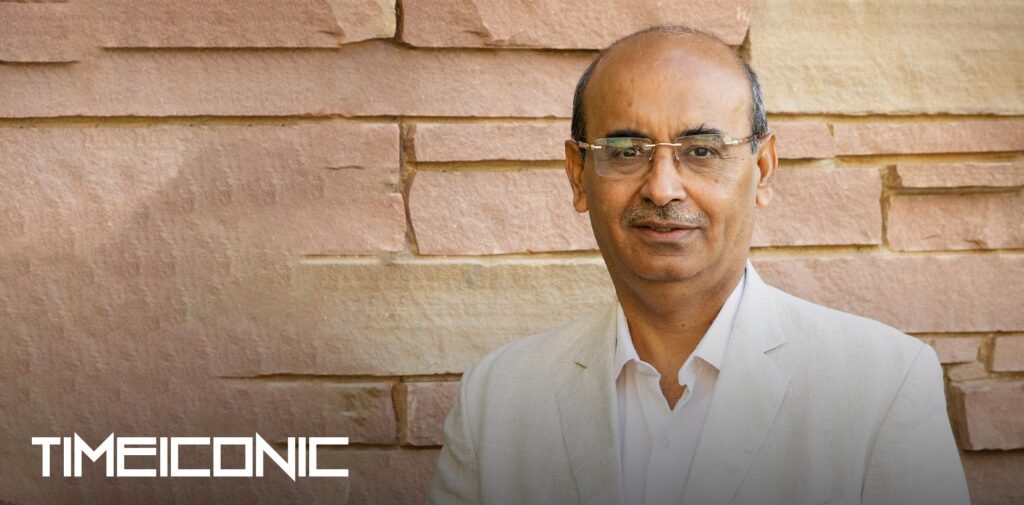
As a pharmaceutical R&D leader, Dr Madhuresh Kumar Sethi has spent more than thirty years turning laboratory breakthroughs into medicines that reach patients across the globe. From his first patents in 1999 to his current work on peptide therapeutics and AI-driven drug discovery, his career offers a rare blueprint for disciplined, patient-first science.
There is a particular kind of scientist who measures success not in molecules discovered but in lives touched. Dr Madhuresh Kumar Sethi belongs firmly to that category. Over a career that now spans more than three decades, he has moved through some of the pharmaceutical industry’s most respected laboratories and boardrooms, from JK Pharma and Wockhardt to Aurobindo, Matrix Laboratories, Mylan, and Viatris, where he led chemical research and works at the intersection of science, strategy, and patient care.
To speak with him is to encounter a rare combination of technical depth and human warmth. He speaks about spectroscopy and quantum chemistry with the same ease as he speaks about mentorship and trust. That duality, colleagues say, is the foundation of his leadership style and the reason his teams have produced results that stretch across therapeutic areas, geographies, and generations of scientists.
What emerges across a conversation with him is not a single defining breakthrough but a pattern of steady, deliberate progress. Each organisation he has worked with, each product he has helped bring to market, and each scientist he has mentored fits into a larger picture, one built on the belief that pharmaceutical research is ultimately a service industry disguised as a technical one. The laboratory, in his telling, is never the final destination. The patient is.
A Chemist by Accident, a Scientist by Calling
Dr. Sethi’s entry into chemistry was not the product of a carefully plotted plan. He had set his sights on medicine, but his admission letter to an MBBS programme arrived too late, after the admission window had already closed. Rather than treat the setback as a detour, he walked into the Department of Chemistry at Panjab University, Chandigarh, and found something that would define the rest of his life.
It did not take long for him to realise that chemistry was far more than a subject of equations and reactions. It was, in his words, a discipline capable of solving problems that mattered to real people.
“Chemistry was not merely about reactions and molecules. It was a powerful tool for solving real-world challenges.”
What followed was an unusually broad scientific education. He immersed himself in advanced spectroscopy, quantum chemistry, nuclear chemistry, semiconductor chemistry, bioorganic chemistry, inorganic chemistry, organic chemistry, and physical chemistry, building a foundation that few pharmaceutical scientists can claim today. That range would later prove essential, allowing him to move fluidly between disciplines as his career carried him from bench science into process development, intellectual property strategy, regulatory affairs, and commercial manufacturing.
It was this early curiosity, he explains, that pulled him toward pharmaceutical research in particular. Here was a field where scientific innovation did not remain confined to journals and patents. It reached patients directly, changing outcomes in ways that could be measured in improved health and extended lives. That conviction, formed decades ago in a university laboratory, has never left him.
Looking back on those early years, Dr. Sethi describes a period of realisation rather than a single dramatic turning point. During his student years, he came to understand that science carried the power to transform human lives, a simple observation that quietly reset the direction of his career. The missed MBBS admission, which might easily have felt like a closed door, instead opened a much longer one. It is a detail he returns to with a certain quiet gratitude, aware that the discipline he stumbled into by circumstance became the discipline he would spend a lifetime mastering by choice.
Thirty Years Across the Pharmaceutical Value Chain
Few scientists can claim to have worked across the entire pharmaceutical value chain, but Dr. Sethi’s résumé reads like a map of the industry itself. His journey through JK Pharma, Wockhardt, Aurobindo, Matrix Laboratories, Mylan, and Viatris has given him a vantage point that spans early-stage research, process development, intellectual property strategy, regulatory submissions, and commercial manufacturing.
The milestones along the way are considerable. At JK Pharma, in 1999, he secured his first ten patents, an early marker of the prolific inventor he would become. At Wockhardt, he and his team began work that eventually culminated in a breakthrough in antibacterial resistance, a project that received United States FDA approval in May 2026. At Matrix Laboratories and later Mylan, his teams successfully defended complex patent litigation, helped launch products in the American market, and contributed to regulatory approvals in the United States and Europe for IV iron complex products, peptides, and other pharmaceutical technologies.
Among the achievements he considers most significant is his contribution to the development and commercialisation of complex products, including intravenous iron therapies and advanced pharmaceutical technologies, work that has expanded access to quality healthcare for patients around the world.
Yet when he reflects on more than three decades in the industry, Dr. Sethi is quick to point out that the lessons he values most are not always about the science itself. The pharmaceutical industry, he notes, has transformed from a chemistry-driven business into a highly integrated ecosystem that combines science, technology, data, regulation, and global collaboration. Within that transformation, one lesson stands above the rest.
“Innovation alone is not enough. It must be scalable, affordable, and accessible to patients worldwide.”
Resilience is another theme he returns to often. Scientific setbacks, regulatory challenges, intellectual property disputes, and market disruptions are, in his view, simply part of the terrain. The organisations that thrive, he argues, are the ones that treat these obstacles as opportunities to learn and adapt rather than as reasons to retreat. And running beneath every technical achievement is a conviction he holds just as firmly as any scientific principle: that people, not technology, remain the true engine of sustainable innovation. Talented scientists, capable leaders, and committed collaborators, he says, are what ultimately carry breakthroughs from the laboratory to the patient.
What is striking about Dr. Sethi’s account of these three decades is how little weight he gives to any single employer or product. He speaks of Matrix Laboratories, Mylan, and Viatris not as separate chapters but as continuous instalments of the same long-running project: bringing affordable, high-quality medicines to patients who need them, regardless of geography or income. The through-line, as he describes it, is not a company name but a commitment that has simply travelled with him from one organisation to the next.
The Discipline of Leadership
Ask Dr. Sethi how he approaches high-stakes scientific decisions, and he does not reach for a management framework. He reaches for a single question, one he says he asks himself before every significant call.
“Does it improve patient care while maintaining the highest standards of quality, safety, and integrity? I ask this because my family and I are also users of these medicines.”
That personal stake, he explains, is what keeps scientific excellence and patient responsibility from ever becoming competing priorities in his mind. To him, they are inseparable. His decision-making process draws on continuous observation, rigorous data analysis, multidisciplinary review, and transparent communication, all held together by a strong culture of compliance. When uncertainty creeps in, as it inevitably does in drug development, patient safety takes precedence without exception. The pharmaceutical industry, he believes, runs on public trust, and every decision made inside it should reinforce that trust rather than erode it.
This philosophy has been tested by what Dr. Sethi describes as the greatest leadership challenge of his career: guiding organisations through periods of rapid change without losing scientific productivity or team morale. Industry consolidation, shifting regulatory requirements, and the growing complexity of drug development have demanded constant adaptation, often under pressure and often with little room for error.
Navigating those pressures reshaped how he thinks about leadership itself. He came to see that effective leadership has less to do with directing people and more to do with enabling them. Building trust, communicating a clear vision, and empowering teams to work through complex problems on their own terms, he found, consistently produced better outcomes than top-down control ever could. That experience left him with a conviction that now anchors his approach to every team he builds: the best leaders create environments where people accomplish more than they believed possible.
That belief extends directly into how he thinks about team culture. High-performing scientific teams, in his view, are built on trust, respect, accountability, and a shared sense of purpose. Scientists do their best work, he says, when they understand exactly how their individual contributions serve a larger mission. He makes a deliberate effort to encourage open dialogue, cross-functional collaboration, and continuous learning, believing that diversity of expertise is often what produces the most innovative solutions. Recognising achievement and creating room for professional growth matter just as much, he adds, because teams sustain their energy only when their work is seen and valued.
Innovation, in his experience, flourishes when people are encouraged to question assumptions and explore new ideas, but in pharmaceuticals that creative freedom must always be anchored to scientific evidence and rigorous validation. He pushes his teams to experiment and to learn from failure while never loosening their grip on quality and regulatory discipline, because the most meaningful breakthroughs, he has found, tend to emerge exactly where scientific curiosity meets disciplined execution.
Intellectual property occupies a similarly central place in his thinking. Rather than treating patents as a legal formality to be handled after the science is done, Dr. Sethi encourages his teams to see intellectual property as a strategic asset in its own right, one that determines whether an innovation can create lasting value. He works to build awareness among his scientists about patents, freedom-to-operate analysis, competitive intelligence, and emerging technology trends, helping them connect scientific breakthroughs directly to commercial impact. Protecting innovation in this way, he believes, is what allows organisations to keep investing in the discoveries that come next.
The Next Decade of Medicine
Dr. Sethi’s gaze is fixed as firmly on the future as it is on the milestones behind him. He believes the coming decade will be defined by a handful of powerful, converging forces. Artificial intelligence and machine learning, in his assessment, will accelerate drug discovery and development in ways the industry has not yet fully absorbed. Precision medicine will make personalized treatment approaches far more common, while advances in biologics, biosimilars, peptides, new therapeutics, and cell and gene therapies will open entirely new categories of treatment. On the manufacturing side, he expects digitalisation and advanced process technologies to strengthen quality, efficiency, and supply chain resilience, even as sustainability becomes a strategic priority across the pharmaceutical value chain.
“The future of healthcare will be defined by the convergence of biology, chemistry, engineering, and data science.”
That conviction is already shaping his own priorities. His current work centres on advanced pharmaceutical technologies, peptide therapeutics, obesity-related treatments, process innovation, intellectual property strategy, and the integration of artificial intelligence into pharmaceutical research and development. He is also actively pursuing collaborations with industry partners, academic institutions, startups, and healthcare organisations, driven by a belief that accelerating innovation and improving the affordability and accessibility of medicines are, at their core, the same goal.
Across a career that has produced more than one hundred publications, patent applications, and granted patents spanning multiple therapeutic areas, Dr. Sethi remains notably unsentimental about counting achievements for their own sake. What matters more to him is what those achievements have made possible: global teams that have carried complex pharmaceutical products through development, regulatory approval, and commercialisation, and a body of work in advanced drug development technologies, process innovation, peptide-based therapeutics, and intellectual property strategy that continues to support innovation well beyond his own desk.
He is equally direct about how that work should continue. Innovation, he insists, thrives through collaboration, and he welcomes the opportunity to work with pharmaceutical companies, biotechnology firms, academic institutions, startups, investors, healthcare providers, and policymakers alike. His areas of interest read like an agenda for the industry’s next chapter: pharmaceutical research and development, process chemistry, peptide technologies, intellectual property strategy, technology evaluation, regulatory sciences, artificial intelligence applications in drug development, and scientific leadership initiatives. As he puts it, the healthcare challenges facing the world today are too complex for any single organisation to solve alone, and meaningful progress will come only from partnerships that combine scientific expertise, technological innovation, and a shared commitment to improving patients’ lives.
This openness to collaboration is not a late-career pivot so much as a natural extension of how Dr. Sethi has always worked. Even at the height of his focus on process chemistry and intellectual property litigation, he made a habit of looking outward, toward academia, toward emerging technology, toward the next generation of scientists entering the field. That instinct now finds a clear outlet in his interest in artificial intelligence, a technology he views not as a replacement for scientific judgement but as a powerful accelerant for it, capable of compressing years of discovery work into a fraction of the time while leaving the essential human judgement calls exactly where they belong.
A Legacy Measured in People
When asked what single leadership principle has guided him most consistently, Dr. Sethi does not hesitate.
“Focus on long-term value rather than short-term success.”
He elaborates that scientific excellence, ethical conduct, continuous learning, and an unwavering commitment to patients are what create impact that lasts. Short-term pressures, he acknowledges, are inevitable in any organisation. But decisions rooted in integrity and long-term thinking, he has found, consistently deliver better outcomes for organisations, employees, and society alike.
That same long view shapes how he thinks about the legacy he hopes to leave behind. He is candid that he does not want to be remembered solely for scientific achievements, patents, publications, or successful products, significant as those are. What he hopes future generations of scientists and leaders will remember instead is the people he has mentored and inspired along the way.
If those who follow him remember him as someone who encouraged curiosity, upheld scientific integrity, promoted innovation, and helped expand access to quality medicines, he says, he would consider that the most meaningful achievement of his career.
It is a fitting way to sum up a career built less around individual triumphs and more around the systems, teams, and patients that outlast any single discovery. For Dr Madhuresh Kumar Sethi, chemistry was never only about molecules. It was always about the mission those molecules could serve.
