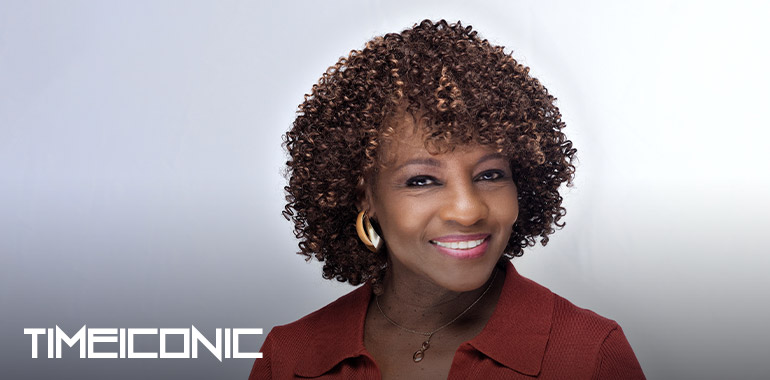
Some leaders arrive at their purpose through degrees and titles. Others arrive through lived moments that quietly shape the heart long before the mind can explain them. For Dr. LaVerne Hanes Collins, leadership in multicultural mental health was not chosen. It was formed.
Her story begins in the 1960s, in a steel town in Pennsylvania, where a young Black girl learned early what it felt like to belong and to be invisible at the same time. She grew up moving between two very different worlds. One was rich with culture, faith, and warmth inside her Black church community. The other was marked by isolation as the only Black child on her street. These early contrasts did not come with language or theory. They came as feelings. Confusion. Quiet questions about identity and worth.
One small moment stayed with her for life. As a child, she noticed that her monogrammed towels showed the picture of a little White girl, even though her own name was stitched beneath it. When she asked why, the answer was simple and painful. “They don’t make things like that for us.”
That moment became more than a memory. It became a message. Long before she would sit in counseling rooms or stand at training podiums, Dr. Collins learned what it means to be unseen. And with that, a purpose began to form. She would spend her life creating spaces where people are fully seen, culturally, emotionally, and spiritually.
From Early Invisibility to a Life of Purpose
Education gave her the tools. Life gave her insight.
As she moved into formal training and professional practice, Dr. Collins quickly realized that many traditional mental health models were never built with People of Color in mind. The theories were sound, but the lens was narrow. Real lives, real grief, real faith, and real cultural pain often had no place in the framework. What was missing was not intelligence. It was context.
Her career took a defining turn when she became Program Director for the National Board for Certified Counselors Minority Fellowship Program. The role placed her at the center of research, advocacy, and education for future counselors committed to serving underserved communities. What she witnessed there changed everything.
Doctoral students were producing deep, meaningful research on trauma, race, identity, and systemic harm. The work was powerful. But it was staying locked inside academic spaces. It was not reaching the counselors who needed it most. It was not reaching the communities living the reality behind the data.
That gap became her calling.
“I realized that specialized research existed but it was not getting from research to practice.”
Building a Bridge Between Culture, Care, and Counseling
Instead of accepting the disconnect, Dr. Collins built a bridge. She began developing continuing education programs that translated multicultural research into real-world counseling tools. She wrote books and articles that named what many professionals sensed but could not articulate. Her writing did not soften the truth. It illuminated blind spots.
Her books, Overlooked and The Fruit of Your Pain, emerged from years of witnessing how grief, trauma, faith, and culture quietly intersect in people’s lives. These were not abstract ideas. They were lived realities. Stories that often went unheard even in spaces meant for healing.
Over time, her role as counselor, educator, author, and trainer began to merge into one clear form of leadership. Not leadership rooted in authority, but leadership rooted in responsibility.
That responsibility eventually led to the founding of New Seasons Counseling, Training and Consulting, LLC.
New Seasons was born from what Dr. Collins describes as a deep inner unrest. A sense that the field needed more human, more honest, and more whole models of care. She envisioned a place where clinical excellence and cultural respect could exist together. Where faith could be honored without pressure. Where dignity was not optional.
New Seasons was never meant to be just a practice. It was designed as a system of change.
At its core, it operates through a three-part model. First, culturally centered counseling for individuals, couples, and families. Second, continuing education that strengthens multicultural understanding among counselors. Third, the Multicultural MasterClass, a program that trains counselors to become educators themselves.
“It’s not just a practice,” Dr. Collins says. “It’s a pipeline. A movement.”
Through this structure, New Seasons does something rare. It does not only serve clients. It multiplies impact by shaping the professionals who serve them.
Her work across multiple states including Virginia, North Carolina, South Carolina, Georgia, and previously Pennsylvania further deepened her understanding of how culture shows up differently across regions. Multicultural mental health, she learned, cannot be reduced to surface knowledge. It lives in history, geography, faith traditions, and unspoken trauma.
She observed how growing up in the 1960s carried different meanings depending on where one lived. She saw how history was taught differently, remembered differently, and felt differently. And she learned that healing often begins when those hidden stories are finally brought into the room.
“People don’t come to counseling as blank slates,” she explains. “They carry generations with them.”
Rather than avoiding difficult conversations around race and history, Dr. Collins learned to bring them forward with care. Not to divide, but to heal. Not to assign blame, but to name truth.
This approach shapes how she defines multicultural work today. She prefers the term multicultural responsiveness rather than competency. To her, responsiveness is active. It requires humility, historical awareness, inclusive practice, real-world relevance, trauma-informed care, and a willingness to step outside dominant models that do not serve everyone.
“Multicultural responsiveness is not a checkbox,” she says. “It is a lifelong posture.”
That posture is visible in every part of her work. In how she listens. In how she teaches. In how she leads.
At the heart of it all is a simple message she often shares with those who are struggling quietly.
“You do not have to be strong alone. You deserve care, comfort, and a place to exhale.”
For Dr. Collins, mental health is not just about healing pain. It is about restoring vision. Helping people see themselves clearly, often for the first time.
And for communities that have long been overlooked, that clarity can be life changing.
Healing That Honors the Whole Person
In her counseling work, Dr. Collins has sat with countless stories of loss, trauma, and silent suffering. What she has learned over decades is simple but powerful. Pain is rarely just personal. It is often historical, cultural, and layered with things people were never taught how to name.
Many of the individuals she serves have spent years being strong for everyone else. They arrive exhausted, carrying grief they minimized, trauma they normalized, and emotions they were told to suppress. Dr. Collins does not rush them toward solutions. She creates space first.
She reminds them that pain is not a failure. “Your pain is not an interruption of your story,” she often says. “It is a part of your becoming.”
This belief shapes her approach to healing. She does not separate grief from identity or trauma from culture. Instead, she helps people understand how their life experiences, family history, faith, and social realities are connected. For many, that understanding alone brings relief.
Healing, in her view, begins when people no longer feel the need to perform strength.
“You do not have to be strong alone. You deserve care, comfort, and a place to exhale.”
Those words have become a lifeline for people who have spent too long surviving quietly.
Faith as a Source of Strength, Not Pressure
Faith has always been a part of Dr. Collins’ life, but she is careful and respectful in how it enters the counseling space. She does not impose belief. She listens first. When clients invite faith into their healing process, she honors it as a powerful source of meaning and resilience.
For many clients, faith provides language for pain when words feel limited. It offers hope when logic feels exhausted. Dr. Collins sees faith not as a replacement for clinical work, but as a companion to it.
“Healing can be both a psychological and a spiritual journey,” she explains.
By allowing clients to integrate faith on their own terms, she helps them reconnect with parts of themselves that were never meant to be divided. This approach has been especially meaningful for individuals from cultural backgrounds where spirituality and emotional wellness are deeply connected.
Her leadership reflects that same balance. Faith shapes how she treats people, how she leads teams, and how she makes decisions. To her, leadership is stewardship. It requires humility, accountability, and compassion.
Training the Counselors Who Will Change the Field
While her counseling work changes lives one person at a time, Dr. Collins’ training work reshapes the field itself. Through continuing education and professional development, she challenges counselors to look beyond surface-level multicultural knowledge.
She teaches that cultural work is not about memorizing facts. It is about curiosity, humility, and historical awareness. It is about understanding how systems, oppression, and generational trauma show up in the therapy room.
Among her most impactful initiatives is the Multicultural MasterClass Program. What began as a training evolved into a transformation pipeline. The program equips experienced clinicians to become trainers, speakers, and leaders in multicultural mental health education.
Watching counselors step into their voices has been deeply meaningful for her.
“Seeing seasoned clinicians become national trainers,” she shares, “and watching them build platforms and change conversations has been one of the most rewarding parts of my work.”
The MasterClass does more than educate. It multiplies influence. It ensures that culturally responsive care reaches more communities than one person ever could alone.
A Moment in Ghana That Changed Everything
One of the most defining moments in Dr. Collins’ life did not happen in a classroom or conference hall. It happened in Ghana, during her first visit to the African continent in 2001.
There, she met a retired schoolteacher named Mamma Christiana. The woman looked directly into her eyes and spoke words that carried generations of meaning.
“We have been watching you,” she said. “We know you built Europe, and we know you built America. And we are so proud of you.”
That moment stopped time.
For the first time, Dr. Collins felt the weight of history and the warmth of recognition at once. In those words, she felt seen not just as an individual, but as a descendant of a people whose contributions had been erased or minimized.
“It restored something I didn’t realize had been bruised,” she reflects.
That recognition continues to fuel her work. Every time she advocates for the overlooked. Every time she teaches cultural humility. Every time she helps someone feel seen. She remembers that moment.
It reminds her why this work matters.
A Must Change
Despite progress in awareness, Dr. Collins is clear about one thing. Mental health access is still deeply unequal. For many communities of color, care remains limited, misunderstood, or out of reach. She believes the issue is not only about access, but about how care is designed.
Too often, systems treat cultural context as secondary. Dr. Collins argues that it should be central.
She calls for more counselors of color, stronger and more meaningful multicultural training standards, and required continuing education in multicultural care for licensure renewal in every state. She also stresses the need for affordable services, trauma informed systems in schools and workplaces, and funding models that actually reach underserved communities.
Most importantly, she believes policies must stop pathologizing culture.
“When we ignore cultural context, we mislabel pain instead of understanding it.”
Her advocacy is not loud, but it is firm. She works within systems while also challenging them. Her goal is not disruption for attention, but reform for healing.
Counseling Heals, Coaching Builds
In addition to counseling, Dr. Collins also works as a coach for leaders, entrepreneurs, and professionals. While the two roles are different, they complement each other.
Counseling focuses on healing wounds from the past. Coaching focuses on building structure and vision for the future. In coaching, she helps clients clarify purpose, regain momentum, and create lives that support their values and goals.
“Counseling heals wounds. Coaching builds futures.”
This distinction allows her to serve people at different stages of their journey. Some need space to grieve and process. Others are ready to move forward with intention. Dr. Collins respects both seasons and helps clients recognize where they are without shame.
Leading With Faith, Grace, and Accountability
Faith shapes how Dr. Collins leads, but it does not overpower her leadership. Instead, it grounds it. She believes leadership is not about control. It is about stewardship.
Her faith informs how she treats people, how she handles conflict, and how she remains accountable. Grace, in her view, does not remove responsibility. It strengthens it.
This approach has earned her trust across professional, academic, and community spaces. People feel safe with leaders who listen, reflect, and act with integrity. Dr. Collins leads in a way that allows others to grow rather than shrink.
Advice to the Next Generation
For young professionals entering mental health and coaching, especially women of color, Dr. Collins offers advice rooted in experience and care.
“Own your voice. Protect your peace,” she says.
She encourages them to study the field deeply, but never to let the field silence their intuition. She reminds them that cultural identity is not a limitation. It is a strength.
“You belong in every room your gift carries you into.”
Her words are both permission and protection. She knows how easy it is to shrink in systems not built with you in mind. Her leadership invites the next generation to stand fully present.
What Brings Her Peace
Outside of her professional life, Dr. Collins finds peace in simplicity. Quiet mornings. Sunsets. Waterfalls. Time with people she loves. Creating and teaching. Hearing someone say, “Now I see what I couldn’t see before.”
She is also an avid traveler, and travel plays a deeply restorative role in her life. Visiting new places allows her to slow down, reflect, and reconnect with herself beyond the demands of her work. She has traveled to all seven continents, a lifelong dream she is proud to have fulfilled.
These moments of stillness and exploration restore her. They remind her why she does this work and help her remain grounded while carrying the heavy stories entrusted to her.
What Comes Next
Looking ahead, Dr. Collins shows no signs of slowing down. Her upcoming projects reflect both personal reflection and professional expansion.
She is working on her memoir, Thrive, Black Woman: My Multicultural Journey to Emotional Healing. The book promises to blend lived experience, cultural insight, and healing wisdom.
She is also expanding multicultural training webinars, developing certification for the Multicultural MasterClass, and growing the reach of the Multicultural Mindset Podcast.
Each project carries the same mission. To make what was once overlooked visible.
The Legacy She Is Building
When Dr. Collins reflects on her journey, legacy matters to her, but not in a self-centered way. She hopes to be remembered for clarity, compassion, cultural understanding, and courage.
She wants people to say that she helped them see themselves and each other more clearly. That she built pathways for counselors of color. That she honored stories that had been ignored. That she used her voice to illuminate blind spots and lift those who needed lifting.
In a field that often separates theory from humanity, Dr. Collins stands as a reminder that healing begins with being seen.
And for countless individuals, professionals, and communities, her work has done exactly that.