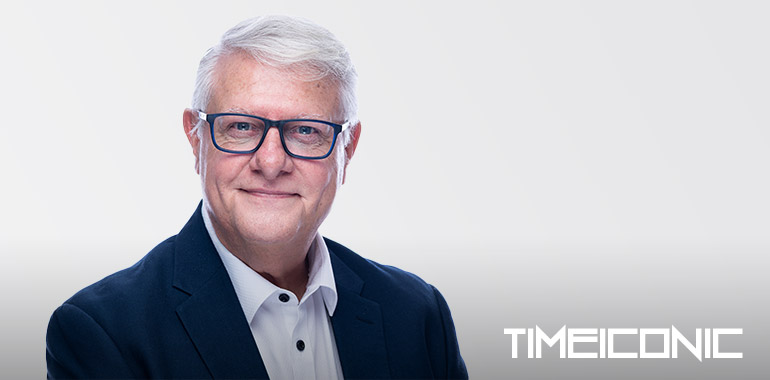
The global conversation around energy security, advanced manufacturing, and national resilience is increasingly tied to one essential factor, access to critical minerals. As governments and industries reassess supply chains that have long depended on concentrated sources, the need for disciplined leadership in the resources sector has never been greater. At the center of this shift stands Andre Booyzen, a mining executive whose career has been shaped by operational depth, strategic oversight, and an unwavering commitment to building resilient organizations.
As the Managing Director of American Tungsten and Antimony Ltd, Booyzen is steering a company positioned within a sector that is rapidly gaining geopolitical and industrial significance. Tungsten and antimony, once viewed primarily through a commodity lens, are now recognized as strategic materials essential to defense systems, high performance technologies, and modern infrastructure. For Booyzen, leading in this environment requires far more than technical expertise. It demands a leadership philosophy rooted in operational discipline, long term thinking, and a deep respect for the people and systems that drive the mining industry forward.
His career reflects precisely that combination.
From the Ground Up
Before occupying executive and strategic roles, Booyzen built his foundation where many of the mining sector’s most important lessons are learned, on the ground.
Early in his career he worked directly with mining operations, leading improvement teams and participating in the day to day realities that define resource development. These formative years provided insights that continue to influence his leadership today. Mining, as he sees it, is ultimately a people driven industry supported by systems and technical execution.
“People, systems and operational excellence form the foundation of any successful resources business,” Booyzen explains. “When individuals are given the space and support to perform at their best, organizations can achieve remarkable results.”
Working closely with operational teams reinforced a principle that would shape his leadership style. Sustainable performance does not originate in boardrooms alone. It is created at the intersection of safety culture, workforce engagement, and disciplined technical execution. By understanding the operational environment firsthand, Booyzen developed a practical perspective on what it truly takes to deliver results in the field.
This grounding would later prove essential as his responsibilities expanded.
Expanding Perspective Through Executive Leadership
As Booyzen moved into executive roles, his vantage point widened significantly. Operational execution remained critical, but he was now responsible for navigating broader organizational challenges including capital allocation, growth strategy, and stakeholder management.
The transition required balancing competing priorities across multiple dimensions of the business. Capital intensive projects had to be evaluated with discipline. Regulatory frameworks demanded careful attention. Investor confidence required transparency and credibility.
These experiences sharpened his understanding of how complex organizations function and how leadership decisions ripple across the entire enterprise.
Executive leadership, Booyzen notes, is not simply about driving growth. It is about ensuring that strategy, financial discipline, and operational capability remain aligned.
In industries such as mining, where projects can span decades and require substantial investment, misalignment between these elements can quickly erode value. Maintaining that balance became a central element of Booyzen’s leadership philosophy.
Strategic Thinking at the Governance Level
Another defining stage of his career came through governance and board level involvement. Serving in advisory and board roles allowed Booyzen to step further back from daily operations and evaluate the broader forces shaping the resources sector.
From this vantage point, he observed how industry trends, policy developments, and geopolitical shifts influence long term strategy. Critical minerals, in particular, sit at the intersection of global trade, national security, and technological advancement. Understanding these dynamics is essential for companies seeking to build lasting relevance.
Boardroom experience also reinforced the importance of structured decision making. In environments where leaders often face high stakes choices with incomplete information, governance processes provide a framework for disciplined evaluation.
This perspective continues to influence how Booyzen approaches leadership today. Decisions must be grounded in rigorous analysis, balanced risk assessment, and a clear understanding of long term consequences.
A Vision Shaped by Cross Functional Experience
The breadth of Booyzen’s experience across operational, executive, and governance roles ultimately informs his vision for American Tungsten and Antimony Ltd.
Few leaders have had the opportunity to observe the full spectrum of mining operations as closely. From the technical realities at a mine site to the strategic discussions that take place in boardrooms, Booyzen understands how decisions at every level of an organization connect.
“I have seen how what happens at the face of a mine ultimately connects to how capital is allocated in the boardroom,” he explains.
This perspective shapes a leadership approach built on three central principles. The first is organizational strength driven by capable people who are empowered to execute. The second is operational excellence supported by systems and disciplined processes. The third is strategic growth pursued with financial responsibility and regulatory awareness.
Together, these principles guide the company’s development as it advances within the rapidly evolving critical minerals sector.
Leadership Anchored in Discipline and Integrity
As the resources sector evolves, the leaders shaping its future will need to operate at the intersection of technical expertise, strategic awareness, and responsible governance.
Booyzen’s leadership philosophy reflects precisely that blend.
Grow with discipline.
Lead with integrity.
Execute with operational excellence.
Those principles guide his decisions as he leads American Tungsten and Antimony Ltd through a period of significant opportunity in the critical minerals market.
And as the global demand for secure supply chains continues to accelerate, the strategic importance of companies operating in this space will only increase.
For Booyzen, the challenge ahead is not simply to participate in this transformation. It is to help shape it.
From Resource Company to Strategic Supplier
At the core of Booyzen’s leadership philosophy lies a fundamental shift in how companies in the resources sector must position themselves. In the past, mining organizations were often measured primarily by production volumes or commodity pricing cycles. Today, that framework is rapidly changing.
Minerals such as tungsten and antimony have moved into a new category of strategic importance. Their applications extend far beyond conventional industrial uses, supporting sectors that include advanced manufacturing, defense technologies, and energy infrastructure. As governments across North America and allied economies look to strengthen supply chain resilience, securing access to these materials has become a national priority.
For Booyzen, this shift fundamentally shapes the long term ambition for American Tungsten and Antimony Ltd.
“My objective is to build a company that is recognized not just as a producer, but as a trusted contributor to the sovereign supply of critical minerals,” he explains.
The distinction is important. Being a producer is about extracting resources. Being a strategic supplier requires reliability, transparency, and alignment with broader economic and geopolitical priorities.
Strategic Role of Tungsten and Antimony
Few materials illustrate the changing dynamics of global supply chains more clearly than tungsten and antimony. Both minerals are essential to a range of modern technologies and industrial applications, yet their supply has historically been concentrated in limited geographic regions.
This concentration has increasingly raised concerns among governments and industry leaders seeking to reduce supply chain vulnerabilities.
Antimony plays a critical role in flame retardants, battery technologies, and military applications, while tungsten’s exceptional hardness and heat resistance make it indispensable in aerospace components, defense systems, and industrial tooling. Together, they represent materials that are essential for modern infrastructure and national security.
As global demand continues to rise, the pressure to develop alternative sources of supply is intensifying.
Booyzen believes this transition will unfold over time but will ultimately reshape the structure of the global market.
“There is a clear shift underway from reliance on concentrated sources toward the development of domestic supply in Western economies,” he says. “North American production will play a crucial role in strengthening supply security.”
Within this context, companies capable of responsibly developing these resources will occupy an increasingly important position in the broader industrial ecosystem.
The Opportunity
When Booyzen chose to lead American Tungsten and Antimony Ltd, it was not simply the market dynamics that attracted him. It was the combination of strategic opportunity and asset potential.
The company’s portfolio includes projects such as the Antimony Canyon, Dutch Mountain and Tennessee Mountain properties, all of which represent significant mineral resources positioned within the United States. These assets provide the foundation for what Booyzen believes could become an important domestic supply source in a market that currently relies heavily on imports.
“I saw the opportunity to build a meaningful U.S. based supplier of critical minerals,” he explains. “These projects give us the ability to supply responsibly sourced materials to a market that has historically lacked domestic production.”
For Booyzen, the importance of these projects extends beyond resource potential alone. Their location within North America aligns closely with the broader movement toward supply chain independence and secure sourcing.
By focusing on technically sound project development and responsible environmental practices, the company aims to position itself as a credible partner within the evolving critical minerals ecosystem.
Growth Anchored in Discipline
In an industry known for its cyclical nature and capital intensity, Booyzen emphasizes that growth must be pursued carefully. Rapid expansion without disciplined planning can expose companies to significant financial and operational risks.
His strategy for American Tungsten and Antimony Ltd therefore centers on measured development supported by strong financial and governance structures.
Mining projects require substantial investment and long development timelines. As a result, every major decision must be supported by rigorous technical evaluation and realistic assumptions about market conditions.
“Growth should be strategic, not reactive,” Booyzen notes. “Capital must be allocated with discipline and supported by clear data and risk frameworks.”
This philosophy extends across all aspects of the company’s development strategy. From project planning and permitting to infrastructure investment and stakeholder engagement, each stage must be approached with careful analysis and accountability.
The goal is not simply to grow quickly, but to build a company capable of sustaining its operations across commodity cycles.
Responsible Development and Long Term Credibility
In today’s resources sector, technical capability alone is not enough to ensure long term success. Companies must also demonstrate responsible environmental stewardship and maintain transparent relationships with communities and regulators.
For Booyzen, responsible development is not merely a regulatory requirement. It is an essential component of building lasting credibility.
Engaging with local stakeholders early in the development process helps establish trust and reduces uncertainty for communities that may be affected by mining operations. At the same time, maintaining rigorous environmental standards ensures that projects remain sustainable over the long term.
“Responsible development is not only the right approach,” Booyzen explains. “It is essential for securing long term operating stability.”
By integrating environmental and social considerations into project planning from the outset, the company aims to build operations that are both economically viable and socially responsible.
Disciplined Execution and Strategic Risk Management
Within the resources industry, opportunity and risk are often inseparable. For Booyzen, effective leadership lies in the ability to translate strategic ambition into disciplined execution while managing uncertainty with clarity and structure.
In advancing high-potential projects, operational discipline begins with rigorous planning and measurable milestones. Every phase of development, from technical studies and permitting to construction and commissioning, must be guided by clear accountability, realistic timelines, and strong engineering standards. Without this level of structure, even promising assets can face delays, cost overruns, or operational setbacks.
For Booyzen, disciplined execution means ensuring that strategy is not simply articulated but implemented through systems that measure progress, control spending, and maintain unwavering standards for safety, compliance, and quality.
At the same time, risk management must not become a barrier to innovation. In a sector where new technologies, processing methods, and project models can unlock significant value, leadership must create an environment where calculated experimentation is possible.
“Risk management should not act as a brake on progress,” Booyzen explains. “It should provide the framework that allows teams to move forward with confidence.”
This philosophy is reflected in a structured development approach that separates strategic risks from unacceptable operational risks. Strategic risks, such as exploring new processing pathways or adopting emerging technologies, can create long-term advantages. Execution risks, including safety shortcuts or weak project controls, are simply unacceptable.
By advancing projects through stage-gated development, the company ensures that capital deployment is supported by technical validation and reliable data. Pilot programs, technical reviews, and controlled testing environments allow innovative ideas to be evaluated without exposing the organization to disproportionate downside.
Through this balance of discipline and adaptability, Booyzen believes companies can maintain momentum while protecting long-term value.
Building Teams That Perform Under Pressure
While strategy and systems are essential components of any organization, Booyzen believes that the most important factor in long term success remains people.
Mining projects operate in environments where uncertainty is inevitable. Market conditions shift, technical challenges emerge, and decisions often must be made with incomplete information. Under such circumstances, the strength of the leadership team and the culture within the organization become decisive advantages.
For Booyzen, building resilient teams begins with selecting individuals who possess both technical expertise and strong professional judgment.
Technical skill is necessary, but leadership in dynamic environments requires the ability to evaluate risk, prioritize competing demands, and make informed decisions under pressure.
“Sound judgment is just as important as technical knowledge,” he explains.
Equally important is creating an organizational structure where individuals feel empowered to act within clearly defined parameters. Decentralized decision making allows site leadership and technical teams to respond quickly to operational challenges without waiting for layers of approval.
This balance of accountability and autonomy strengthens both agility and ownership across the organization.
Creating a Culture of Accountability and Safety
Culture is often discussed in corporate environments, yet few industries rely on it as deeply as mining. Safety standards, operational procedures, and team coordination all depend on a shared understanding of responsibility.
For Booyzen, culture is not created through slogans or internal campaigns. It is established through consistent leadership behavior and transparent systems.
“A strong culture is built through daily actions and visible accountability,” he says.
Safety, in particular, must remain a constant priority. Mining environments present inherent risks, and maintaining safe operations requires continuous vigilance. Leadership presence in the field, open communication channels, and clear reporting systems help ensure that safety remains embedded within daily operations.
At the same time, performance expectations must be clearly defined. Every team member should understand their responsibilities, the metrics used to measure progress, and the impact of their work on the organization’s broader objectives.
When accountability and empowerment exist together, performance becomes sustainable rather than sporadic.
Preparing for the Next Phase of Growth
As American Tungsten and Antimony Ltd continues to advance its portfolio, Booyzen’s leadership priorities remain focused on disciplined development and long term resilience.
The coming years will involve advancing core projects through technical studies and permitting pathways while strengthening the organizational capabilities required for larger scale operations. Capital discipline will remain central to these efforts, ensuring that growth aligns with market conditions and shareholder interests.
Equally important will be building strategic partnerships across the supply chain. Tungsten and antimony occupy a unique position within industries ranging from defense to advanced manufacturing. Establishing relationships with regulators, end users, and government stakeholders will help position the company as a reliable supplier within allied markets.
Responsible development will continue to guide every stage of project advancement. Transparent engagement with communities and regulators remains essential for building long term operational stability.
A New Era of Resources Leadership
Looking ahead, Booyzen sees the critical minerals sector entering one of the most transformative periods in its history. Governments around the world are recognizing that resources such as tungsten, antimony, lithium, and rare earth elements are not merely commodities, they are strategic assets.
The intersection of geopolitics, industrial policy, and technological innovation is reshaping how mineral supply chains are built and managed.
Advances in automation, data analytics, and mineral processing are also unlocking resources that were once considered uneconomic. As these technologies mature, they will further reshape how mining companies explore and develop assets.
For leaders in the sector, this environment requires a broader perspective than ever before. Operational expertise must be combined with geopolitical awareness, technological adaptability, and financial discipline.
“The leaders who will define the next decade are those who can connect mine site execution with global supply chain strategy,” Booyzen observes.
A Leadership Legacy Built on Integrity
As his career continues to evolve, Booyzen remains focused not only on the projects he helps develop but on the broader impact of his leadership.
In an industry often defined by cycles of growth and contraction, reputation is built through consistency. Delivering projects safely, honoring commitments to investors and communities, and maintaining integrity through periods of uncertainty are the qualities that define enduring leadership.
When reflecting on the legacy he hopes to leave behind, Booyzen’s perspective remains grounded in both operational achievement and human impact.
“I hope to be remembered as a leader who built strong teams, empowered people, and developed technically sound operations,” he says.
Equally important is the strategic contribution he hopes to make to the critical minerals sector. By recognizing the importance of materials such as tungsten and antimony and helping strengthen Western supply chains, Booyzen aims to contribute to a more secure and resilient global resource landscape.
Ultimately, leadership is measured not only by the projects completed or the capital raised. It is measured by the strength of the organizations built and the trust earned along the way.
For Booyzen, that principle continues to guide both his decisions and his vision for the future of American Tungsten and Antimony Ltd.