
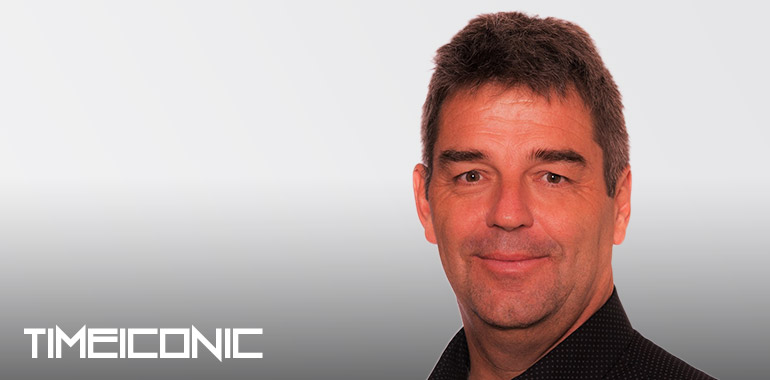
Global logistics rarely rewards short-term thinking. It demands patience, precision, and leaders who can see several years ahead — long before the rest of the industry catches up. Martin Hubert, Founder and CEO of Freightgate, has spent decades building the digital foundations that now power some of the world’s most complex supply chains.
Rather than chasing visibility, Hubert has focused on building systems that quietly deliver results at scale. His work sits at the intersection of technology and logistics, where thoughtful design, long-term strategy, and operational reliability matter more than speed — and where enduring value consistently outweighs short-term gains.
Early Vision, Built on Technology
Martin Hubert’s journey into global logistics began long before the industry spoke the language of cloud platforms or digital transformation. At just 16, he wrote and sold his first software program — an experience that revealed how powerful well-designed systems could be. While completing his computer science degree, he continued building custom software solutions, driven by curiosity and a practical mindset rather than entrepreneurial ambition.
A brief engagement with a freight company in New York became a defining moment. Hubert was exposed to the operational realities of global logistics: disconnected systems, heavy manual processes, and limited visibility across international shipments. What many accepted as “industry norms,” he saw as solvable problems.
When he stepped into the role of Director of IT, the opportunity became clear. In 1994 — well before digitalization became mainstream — Hubert developed one of the earliest internet-based track-and-trace platforms, integrating carriers through EDI. It was a forward-looking move that hinted at a future where logistics could be coordinated through intelligence rather than paperwork.
As Hubert reflects, “That experience made it clear to me how transformative the right technology could be — not just for efficiency, but for decision-making at a global level.”
Founding Freightgate: A Long-Term Play
In 2000, Martin Hubert founded Freightgate with a vision that was ahead of its time: to create a unified, cloud-native platform capable of orchestrating global logistics end-to-end. While much of the industry was still dependent on siloed systems, Freightgate was designed to scale, adapt, and integrate from day one.
Today, the platform supports complex global operations for leading shippers and logistics providers, helping them move from reactive execution to intelligent orchestration. Looking back, Hubert sees consistency rather than coincidence in Freightgate’s evolution.
“Every phase of this journey has been about the same goal,” he says. “Using technology to make supply chains smarter, more resilient, and ultimately more human-centered.”
Leadership with Clarity, Not Control
Operating at the intersection of technology and global logistics requires more than technical expertise, it demands the ability to create alignment across geographies, cultures, and constantly shifting market conditions. For Martin Hubert, leadership is not about control — it is about clarity.
His leadership philosophy rests on three core principles: innovation, transparency, and empowerment. Together, they form the foundation of how Freightgate operates and scales in an increasingly complex global environment.
Innovation, for Hubert, is not a buzzword. It is a mindset rooted in questioning legacy processes and challenging assumptions that no longer serve the industry. Rather than preserving outdated workflows, he encourages teams to explore new approaches, test ideas, and learn continuously.
“Logistics is complex by nature. If you’re not constantly questioning how things are done, you’re already falling behind.”
Why Clarity Matters at Global Scale
In a sector where a single decision can impact multiple regions, clarity becomes essential. Hubert believes that when teams understand the reasoning behind decisions and not just the outcomes, they operate with greater confidence and accountability.
At Freightgate, this translates into open communication, transparent decision-making, and clearly defined objectives. Teams are empowered to act independently because they understand the broader context in which they operate.
“When people understand the ‘why,’ they make better decisions — even when you’re not in the room,” he notes.
This emphasis on clarity has proven critical in managing complex logistics networks, where speed and precision must coexist with alignment.
Empowerment Over Micromanagement
Perhaps the most defining element of Hubert’s leadership style is empowerment. Rather than directing every outcome, he focuses on building systems, processes, and cultures that enable people to perform at their best.
He views his role as an enabler — attracting strong talent, removing obstacles, and trusting teams to execute. This approach has allowed Freightgate to scale globally without sacrificing agility or accountability.
One principle he frequently returns to captures this philosophy clearly:
“People don’t rise to the level of your expectations, they fall to the level of your systems.”
By investing in robust systems and frameworks, Hubert ensures that high performance is repeatable, not dependent on individual heroics.
Values That Guide Critical Decisions
Behind Freightgate’s growth is a consistent set of values that guide every major decision.
Customer-centricity remains non-negotiable. Every initiative is evaluated through its impact on customer efficiency, visibility, and competitiveness. If the value is not clear, the initiative does not move forward.
Integrity is equally central. In an industry built on trust, Freightgate commits only to what it can deliver. Limitations are communicated openly, trade-offs are acknowledged, and execution is treated as a promise — not a possibility.
Long-term thinking ties these values together. While short-term gains may offer quick results, Hubert focuses on building platforms and partnerships designed to last. Global supply chains, he believes, reward patience and consistency far more than speed alone.
“Quick wins are tempting but lasting value is what truly moves the industry forward.”
Leadership That Scales with the Industry
As global logistics continues to evolve, Hubert’s leadership approach has allowed Freightgate to grow without losing focus. By combining innovation with clarity, and empowerment with accountability, he has built an organization capable of navigating change while remaining grounded in its purpose.
This balance — between vision and execution, technology and people — is what positions Martin Hubert not just as a technology leader, but as a defining voice in the future of global logistics.
While many logistics platforms evolve incrementally, Freightgate’s growth under Martin Hubert’s leadership has been defined by deliberate, structural transformation. Rather than layering new features onto legacy systems, Hubert has consistently focused on building an architecture capable of scaling with the increasing complexity of global supply chains.
One of the most significant milestones in Freightgate’s evolution was the transition to a microservices-based architecture supported by a global data ecosystem. This shift allowed the platform to become more flexible, resilient, and integration-ready — capable of adapting to diverse operational requirements across regions, modes, and partners.
“We didn’t want a system that simply processed transactions. We wanted a platform that could orchestrate decisions across the entire logistics lifecycle.”
From Manual Execution to Intelligent Automation
Automation has played a central role in this transformation. Freightgate introduced zero-touch dispatch and exception-driven workflows that fundamentally changed how customers manage day-to-day operations.
By automating rule-based tasks and routine decision-making, logistics teams were freed from manual execution and reactive firefighting. Instead, they could focus on oversight, strategic planning, and exception management — areas where human judgment adds the greatest value.
This shift from task-based execution to orchestration marked a turning point for many Freightgate customers, particularly those operating at global scale.
Enterprise Partnerships That Shaped the Platform
Freightgate’s collaboration with enterprise clients has been instrumental in shaping the platform’s capabilities. Working with organizations such as Bedgear, DHL, BDP International, and Ascenia exposed the platform to real-world complexity — multi-leg routing, regional regulations, fluctuating capacity, and dynamic cost structures.
These partnerships did more than validate Freightgate’s technology; they pushed it to evolve. Each deployment strengthened the platform’s flexibility, robustness, and ability to operate under real supply-chain pressure.
“Our customers don’t come to us with simple problems,” Hubert notes. “They come with complex, global challenges — and that’s exactly where our platform proves its value.”
rateCloud™ and Data-Driven Decision Intelligence
A major breakthrough in Freightgate’s journey was the evolution of rateCloud™, its dynamic, multi-leg rating and routing engine. Designed to reflect the realities of modern logistics, rateCloud™ evaluates variables such as MQCs, sailing schedules, port congestion, routing alternatives, and sustainability considerations — all in real time.
Rather than relying on static rate tables, customers can make optimized routing decisions at scale, balancing cost, service levels, and operational constraints.
This level of decision intelligence has helped organizations move from reactive routing to proactive planning — a critical advantage in today’s volatile logistics environment.
A Platform Defined by Breadth and Longevity
Today, Freightgate offers one of the industry’s most comprehensive logistics cloud platforms. With modules such as visibilityCloud, complianceCloud, rateCloud™, and orchestration layers, the platform supports end-to-end logistics coordination within a single, unified environment.
Yet, for Hubert, technology alone is not the ultimate measure of success. One of Freightgate’s most meaningful achievements is customer longevity. Many of the company’s earliest clients remain active partners decades later — a rare distinction in a fast-changing technology landscape.
That continuity reflects more than satisfaction; it reflects trust built through consistent delivery, long-term thinking, and a relentless focus on customer value.
Beyond a TMS: A Different Way to Think About Logistics
In a market crowded with transportation management systems and point solutions, Freightgate has deliberately chosen a different path. Under Martin Hubert’s leadership, the company has positioned itself not as a tool for managing shipments, but as a logistics orchestration ecosystem — designed to handle the real complexity of global trade.
At its core, Freightgate brings together rating, routing, visibility, compliance, and orchestration within a single, configurable platform. Rather than forcing customers to adapt their operations to rigid software, the platform is built to adapt to each organization’s unique workflows, regions, and business rules.
This flexibility has become a defining advantage in an industry where no two supply chains look the same.
Proven Impact Across Global Operations
Freightgate’s differentiation is best understood through the outcomes it delivers in real-world operations.
For Bedgear, dynamic routing, deep ERP integration, and automation helped significantly reduce manual workload while improving planning accuracy and execution speed. The result was a more efficient operation with greater visibility and control.
Global operators such as DHL and BDP International rely on Freightgate’s real-time visibility and routing intelligence to coordinate complex, multi-regional flows. By reducing blind spots and enabling faster decision-making, the platform supports smoother execution across continents.
Meanwhile, Ascenia leveraged Freightgate to streamline multi-leg shipments and complex data integrations, allowing teams to move away from fragmented systems and toward centralized, data-driven decision-making at scale.
A Culture of Problem-Solving, Not Product-Selling
What truly separates Freightgate from its competitors is not a single feature or module — it is mindset. Each customer engagement is approached as a unique puzzle, requiring deep understanding, creativity, and collaboration.
Rather than selling a predefined product, Freightgate works alongside customers to design solutions that reflect operational reality. This problem-solving culture is deeply embedded in the organization and reinforced by its leadership.
“Every logistics operation has its own constraints, priorities, and trade-offs,” Hubert explains. “Our job is not to simplify those realities, but to orchestrate them intelligently.”
Built for Complexity. Trusted at Global Scale.
Freightgate’s true strength lies in its ability to handle complexity without creating friction. Designed from the ground up to support global-scale operations, the platform enables organizations to grow, adapt, and evolve without constantly rebuilding their logistics infrastructure.
As volumes increase, regions expand, and regulations shift, Freightgate maintains operational consistency while allowing flexibility where it matters most. Its configurable architecture supports diverse workflows, multi-leg routing, and region-specific compliance — ensuring that complexity becomes manageable rather than overwhelming.
This capability has positioned Freightgate as a mission-critical platform for organizations operating at global scale. Customers rely on it not merely to execute shipments, but to coordinate decisions, align stakeholders, and maintain control across distributed supply-chain networks.
Trust, in this context, is not claimed — it is earned. Freightgate’s long-standing relationships with global operators reflect years of consistent performance under real-world pressure. By delivering visibility, intelligence, and reliability across diverse environments, the platform has become deeply embedded in customers’ operational ecosystems.
For Martin Hubert, this trust is the ultimate measure of success. It confirms that Freightgate is not just built to manage logistics — it is built to support long-term growth, resilience, and confidence in an increasingly unpredictable global landscape.
Challenge Us With Your Toughest Logistics Puzzle.
We thrive where complexity meets scale. Let’s turn your toughest constraints into your greatest advantages.
