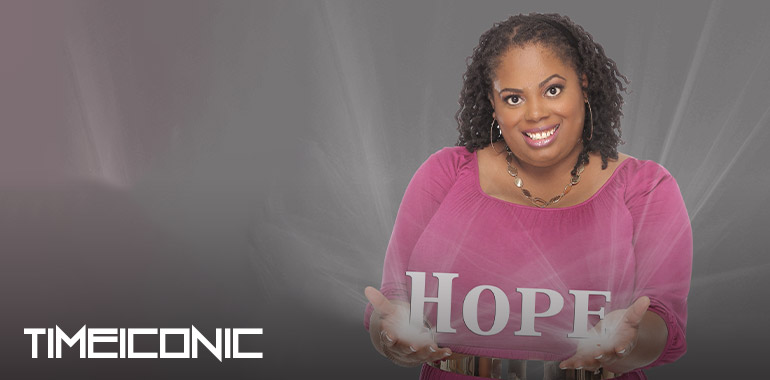
In a world still learning how to heal from its divisions, some voices rise not in anger but in grace. Among them stands Alicea Joy Davis: a faith-driven artist, author, and visionary whose words reach beyond the stage to touch the human spirit. Through poetry, painting, and purpose, she has dedicated her life to guiding others toward peace, understanding, and reconciliation. Her journey is not just about art; it’s about transformation, faith, and finding light in places once filled with pain.
Alicea Joy Davis writes like someone who has lived inside her lines and then stepped out to invite the rest of the room in. A Detroit native, Davis first began writing poetry in childhood and has spent more than two decades shaping her work into a single mission: to use art and faith to heal racial wounds and restore human dignity. Her purpose is clear: to help America move toward racial reconciliation in our lifetime through personal growth and faith in Jesus Christ.
The moment that made this mission personal came later in life. In her questionnaire, Davis remembers a painful turning point at age 24 when she realized she had internalized society’s contempt for natural Black hair. She says she “hated my OWN hair texture because society wanted me to,” and that confronting that shame became part of her path toward healing. “I now understand this esteem came from God because it takes centuries to have self hate like that.” That private breakthrough is the emotional engine that drives much of her work.
From that inner reckoning Davis shaped a creative practice that mixes spoken word, painting, ministry, and advocacy. She describes the creative process as prayer in motion. “When I create my mind is praying to God and the healing subject matter is in my work, that is how they come together,” she told us. The result is performances that read like sermons and paintings that feel like prayers. Those pieces travel the spaces between churches, campus auditoriums, conferences, and corporate events, all with the same core message: heal first, then let the art reflect that light.
In 2019 Davis launched the March Forth movement, a national initiative and holiday meant to be observed on March 4 each year. The idea is simple and symbolic: a yearly reminder to “march forth” toward unity and racial healing. The movement began as grassroots work and has grown into an organized effort that invites communities to celebrate cultural meals, declare unity, and take a pledge for reconciliation. She hopes March Forth will grow into a widely observed civic moment that nudges real social change.
Why does her work land?
Audiences often respond to Davis with long silence followed by visible emotion. She recounts moments when an audience would sit still during a poem, then queue up afterward to ask for hugs and to share tears. “There was a still moment with one audience with silence, then afterwards when the event was over there was a line of 10 people crying and wanting hugs,” she said. Those moments are the clearest evidence she offers that healing is happening. For Davis, poetry is not entertainment. It is a vessel for reconciliation.
Her signature program Open Mic Church combines a handpicked talent showcase with a short keynote and a Q and A. The format is designed to bring people together, celebrate creativity, and spark honest conversation in a safe space. Davis shares the same foundational poems across settings, adjusting sparingly only when needed to honor the context. “I share the same poems at churches and corporate spaces,” she says, adding that many of her poems echo biblical books like Esther and Song of Solomon in tone and structure while keeping language accessible to a mixed audience.
A Calling, Not a Career
For Alicea, creativity has never been about performance; it has always been about obedience. Every project—whether a poem, a book, or a painting—begins as an act of prayer and ends as an act of service. “When I create my mind is praying to God and the healing subject matter is in my work,” she says. That rhythm of prayer in and healing out defines her artistic identity.
Davis moves easily between art forms—spoken word, painting, ministry, and advocacy—because to her they are all part of one calling. Whether she is speaking at a church, a women’s conference, or a university seminar, her message stays consistent: healing and esteem through Jesus. “Each message is under the same subject of healing and esteem through Jesus,” she says. Her books are meant for learning spaces, her paintings create an atmosphere of light, and her poems echo the biblical spirit of Esther and Song of Solomon. Each verse carries God’s presence even when His name is never mentioned.
Healing the Soul Wound
Much of Davis’s work centers on what she calls the “soul wound”—the deep emotional scar that racism leaves behind. Her art does not hide from pain; it transforms it. She recalls a performance where silence filled the room before people began to cry. “Now it’s standing and crying across the churches, so I know the soul is healing,” she reflects. For Davis, that reaction is the true sign of transformation: hearts softening, reconciliation beginning.
Like any visionary, she faces challenges that test both patience and faith. “My toughest challenge has been painting what I envision from God,” she admits. Translating divine vision into color and form requires courage, especially when resistance comes from those who would rather keep division alive. Yet she continues to write and paint, believing that perseverance itself is a form of worship. Her art becomes faith in motion; her persistence, a declaration of hope.
Culture, Joy and Legacy
Her theology is simple but deep. “God loves culture. Especially in Revelations 7:9—He created it!” she says with conviction. That truth allows her to speak comfortably about faith in spaces of every background, where cultural difference becomes a reflection of divine design.
Looking ahead, Davis dreams of reshaping how art is taught. She imagines schools where young people are encouraged to “draw what they want to see in their community and pray to God that it will happen if it is good.” To her, creativity and compassion must grow together. She envisions a curriculum of “Hope and Change,” where art is taught not only as expression but as healing. Through poetry workshops, she wants to show others they are poets too—voices capable of mending hearts.
When asked what advice she would leave for future artists, her answer is as gentle as it is firm: “Heal first, then there will be light in your art and poetry.” Healing the heart, she believes, is the first step to healing the world. She often quotes Psalm 100, reminding others to keep joy at the center of creation.
And when she speaks about legacy, her words widen beyond herself. “I hope to have seekers choose peace and reconciliation,” she says. “I have the intent to heal America—at least millions—and they make light shine in their places of influence.”
Through every poem and every brushstroke, Alicea continues to offer that light—inviting a fractured world to rediscover peace, culture, and the quiet power of faith in art.
The Birth of a Movement
The story of Alicea’s movement, March Forth, began as a whisper from God. “God gave me inspiration so I cannot take credit for it, I was just obedient,” she says with humility. What started as a spiritual prompting grew into a nationwide call for unity and healing. Each year on March 4, Davis encourages people to “march forth” by celebrating meals of different cultures, sharing stories, and committing to reconciliation within their own communities. Her hope is that this annual observance becomes more than a date—it becomes a rhythm of restoration that reminds America to move forward together.
She sees cultural diversity not as a problem to solve but as divine design. “God loves culture. Especially in Revelations 7:9—He created it!” she emphasizes. By embracing this truth, Davis uses March Forth to bridge cultural gaps through love, conversation, and shared humanity. It’s a movement that transforms ordinary gatherings into spaces of hope and understanding.
Beyond the Stage
While Davis is widely known for her powerful spoken word performances, her work extends far beyond the microphone. She founded Friends of Reconciliation, Inc., an organization that continues her mission to unite hearts through faith, education, and art. Alongside that, she launched her apparel line at www.AliceaDavis.com, where each shirt carries messages of courage and change. “There are so many silent people who want change, who are warriors in their hearts. I have a vision for the silent to speak through my shirts,” she says. The apparel line gives voice to those who may not stand on a stage but still long to stand for justice.
Her digital presence, once paused during a difficult season of illness, is slowly returning. “There is enough content for people to read and grow from if they scroll down the pages,” she explains. Even in moments of rest, her message continues to reach people searching for healing.
Faith in Action
For Davis, faith and activism are inseparable. She often reminds audiences that reconciliation begins with personal transformation. “I healed, and that’s what increased my faith,” she says. Her recovery from health challenges deepened her conviction that the same God who heals bodies can also heal a nation. “God is a miracle worker. I know He can heal our land. He can do anything.”
In her vision for the future, she imagines a generation of artists who blend creativity with compassion. “I see schools inspiring youth to draw what they want to see in their community and praying to God that it will happen if it is good,” she says. Through her eyes, art becomes a curriculum of Hope and Change—a tool for teaching empathy, courage, and vision.
A Legacy of Light
Davis’s message to others is timeless: “Heal first, then there will be light in your art and poetry.” It is a principle she hopes every artist will live by—a reminder that creativity grounded in healing carries lasting power. She encourages young people to keep joy at the center of their work, quoting Psalm 100 as her guide: “Make a joyful noise unto the Lord.”
When she speaks about legacy, her voice carries both peace and purpose. “I hope to have seekers choose peace and reconciliation. I have the intent to heal America—at least millions—and they make light shine in their places of influence.” She envisions generations saying with conviction, we don’t believe in racism, no matter what history once taught.
Through March Forth, her art, and her unshakable faith, Alicea continues to lead a quiet revolution of the heart—a movement of healing, culture, and grace that invites us all to take the next step forward together.
Cover Story Spotlight
In every poem she writes and every movement she leads, Alicea reminds us that healing is holy work. Her voice rises from the soul of a woman who has turned pain into poetry and faith into action. Whether through her March Forth movement, her art, or her ministry, Davis stands as proof that one person’s healing can ignite a nation’s hope. She is not asking the world to be perfect—she is simply asking it to keep moving forward. And in her world, that forward motion begins with love, prayer, and a willingness to see one another as God intended: whole, beautiful, and free.
As she often says, the journey toward reconciliation starts inside each heart. “Heal first,” she reminds, “then there will be light in your art and poetry.” It is a message that carries beyond stages and galleries, finding its way into classrooms, homes, and churches. In her quiet strength and radiant vision, Alicea invites us all to do the same—to march forth, to love deeply, and to live as if healing is possible for everyone.