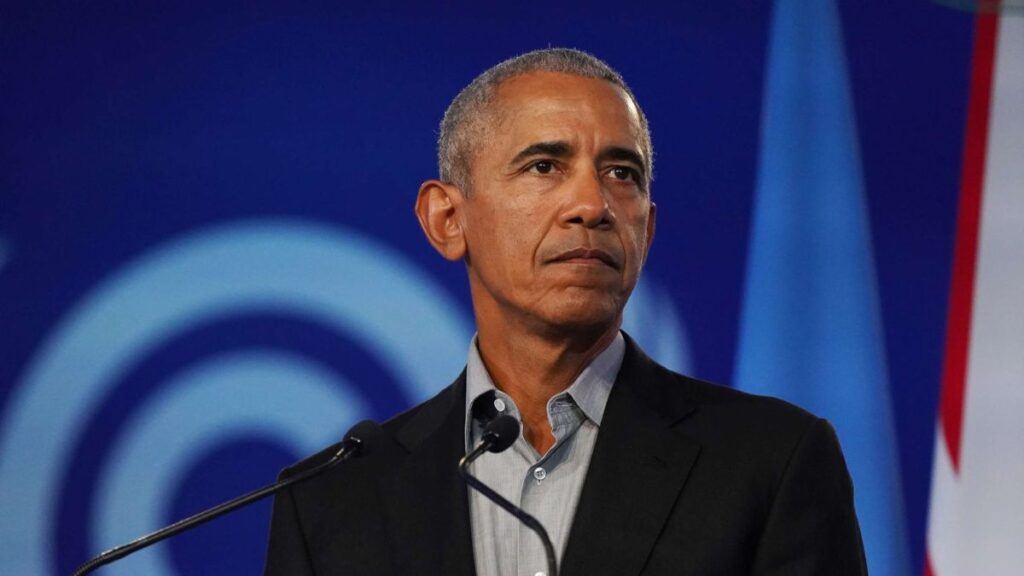
Former U.S. President Barack Obama has openly criticized Donald Trump for worsening political polarization in America. Obama argued that Trump’s rhetoric after the Charlie Kirk shooting focused on blaming and creating division instead of encouraging unity.
The Charlie Kirk shooting — which shocked U.S. politics — has become a flashpoint in debates about political violence, extremism, and how leaders shape national discourse. Obama suggested that instead of addressing violence responsibly, Trump pushed a narrative of finding an “enemy,” thereby deepening divides.
Key Points:
-
The Shooting Context:
-
Conservative activist Charlie Kirk was shot recently (details are still unfolding in news cycles).
-
The incident has sparked nationwide debates about security, political rhetoric, and extremism.
-
-
Obama’s Criticism:
-
Obama accused Trump of using the tragedy as an opportunity to inflame tensions.
-
He said Trump is “too quick to identify an enemy” rather than focusing on solutions or unity.
-
Obama linked this behavior to broader patterns in Trump’s leadership style since 2016—capitalizing on division for political gain.
-
-
Impact on U.S. Politics:
-
The U.S. is already polarized, with deep rifts between conservatives and liberals.
-
Obama’s comments highlight concern that leaders are fueling distrust and hostility rather than addressing root causes of violence.
-
Political violence is increasingly being discussed as a threat to democracy and civil society.
-
-
Public & Political Reactions:
-
Democrats and centrists largely agree with Obama’s view.
-
Trump’s supporters, however, frame his rhetoric as “strong leadership” and accuse critics of exploiting tragedies.
-
The debate underscores how narratives around violence are weaponized politically.
-
Why It Matters:
-
For the U.S.: The issue reveals how fragile democratic discourse has become, with leaders shaping violence into partisan weapons.
-
Globally: The incident reflects a larger trend where political violence, misinformation, and divisive rhetoric are threatening democracies worldwide.
-
For 2025 elections & beyond: This could influence voter perceptions of Trump’s leadership and affect how Republicans and Democrats frame their campaigns.