
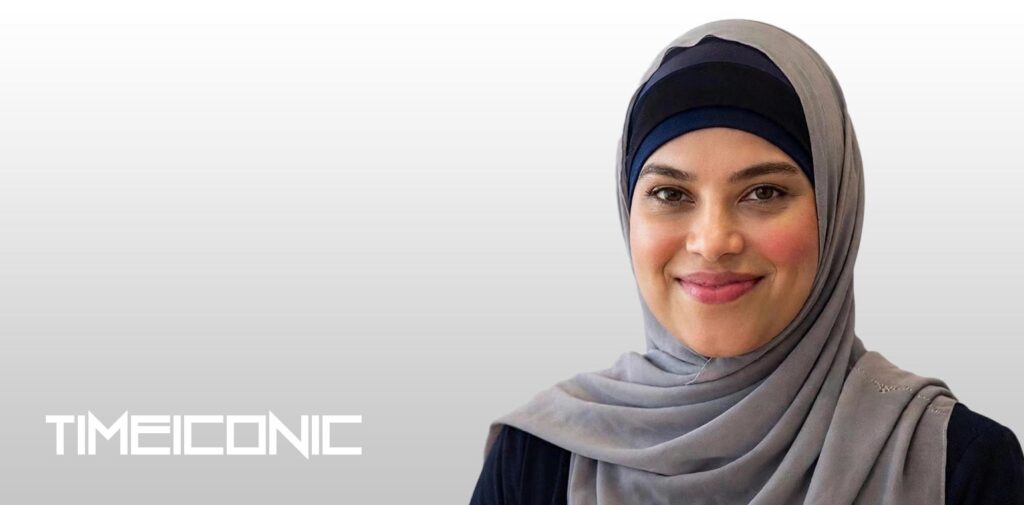
In many parts of the world, the road out of poverty begins in a classroom, yet too many children never reach it. Some are held back by an empty stomach, others by the need to earn or carry something home for the family. Aid has long tried to answer these problems one at a time, with a meal program here and a school project there, and families have often been left in the space between them. A new generation of leaders is asking a different question: what happens when hunger, learning and the land that sustains a community are treated as one challenge, and the people who live there are trusted to solve it? One of the clearest answers is coming from Rizwana K., Executive Director of The SOL Foundation, a nonprofit named after the sun.
Her own path to that answer did not follow a blueprint.Rizwana’s career did not follow a blueprint. It took shape through an MBA, years of work and volunteering across several fields, and the lived experience of coming from a minority background. Each of these gave her a different way of seeing the world, yet none of them pointed to a single destination. What finally gave her path a direction was something she noticed in underprivileged neighborhoods, where she volunteered early in her working life. “My path was never a straight line. It was built on witnessing a gap and deciding to fill it,” she says.
The gap she saw was not a lack of ambition among families. Children in those neighborhoods were missing school, but not because they or their parents undervalued learning. They were hungry, or they needed to work so that their households could get through the day. Hunger and limited access to education were locking families into cycles that repeated across generations, and the two problems fed each other with remarkable consistency.
What troubled her even more was how the response was organized. Food programs and education initiatives rarely spoke to one another. Donors tended to fund one without looking at the other, and families were left to survive in the space between them. That observation stayed with her for years. Eventually it stopped being a concern and became a decision, and that decision became The SOL Foundation.
A Name That Means Light
The name carries the thinking behind the organization. SOL stands for Seed of Life, and the word also means sun in several languages. Rizwana likes the double meaning because it describes the conditions under which anything grows: light, warmth and a patient environment. The Foundation is a 501(c)(3) nonprofit built around a single conviction, that no child should have to choose between a meal and an education.
The Foundation began modestly, with local partnerships and programs designed together with the communities they served. Over time it has grown into a global network spanning multiple regions. Its mission statement reads like a short creed: Restore Nature, Plant Trees, Honor a Life, Give Hope, Living Legacy. Education and engagement run through each of those phrases, and together they show that the organization sees food, learning and the natural world as parts of one picture.
Rizwana is candid about where the deepest lessons have come from. She started with an MBA’s habits of planning and measurement, and she credits the communities themselves for the most important corrections. They taught her something no program manual contains. “Sustainable change is never delivered to people, it is built with them,” she says. That sentence now acts as a filter for nearly every decision the Foundation makes, from where to work to how to staff a project.
Two Problems, One Solution:
The Foundation’s central idea is that hunger and education cannot be treated separately. Its mission is to eliminate hunger through education, and Rizwana is precise about the word “through.” Education is not an extra benefit attached to a feeding program. In her view it is the primary pathway out of poverty, and the meals are what make that pathway usable.
The logic is easy to follow once it is laid out. A fed child can concentrate. A child who is in school does not have to work to survive that particular day. A child who becomes literate and skilled changes the trajectory of the whole family, and she believes this is especially true for girls. An educated girl, she notes, tends to reinvest in her family, her community and the next generation. The flagship program therefore pairs daily nutrition with safe learning spaces, school supplies and community engagement.
Rizwana is quick to say that keeping children in classrooms today is only half the aim. The other half is leaving communities with the tools to sustain their own educational future. She also draws on the wider public conversation about school meals. Citing Minnesota Representative Ilhan Omar, she points to a line that matches what she has seen in the field: “When our children have empty stomachs, they cannot learn. They have more trouble concentrating. They are more likely to be absent or tardy.” For Rizwana, the point is simple and has been borne out repeatedly. A hungry child cannot learn, and a child who must work cannot attend, so treating the two problems separately produces only partial results.
Listening First, Building Together
Before the Foundation launches anything in a new region, its team arrives with questions rather than answers. The process begins with trusted local leaders, women’s groups and grassroots organizations, who help the team understand what actually exists in a place instead of what worked somewhere else. The next step is to examine the barriers that overlap. Low attendance might come from hunger, but it might equally come from a lack of safe water, the cost of supplies or the distance to the nearest school. Only after that does the team co-design a response, with outcomes that the community itself cares about and can measure.
The resulting model is integrated by design. Daily nutritious meals are sourced from local farmers. Community members are trained to manage gardens and to track data. Learning spaces are made safe and accessible. Because money and responsibility stay in the neighborhood, the program creates a local economy around itself instead of bypassing the people it is meant to serve. Rizwana believes this is the real reason some programs outlast their funding. As she puts it, ownership is what lets a program survive long after outside support steps back.
This approach also shapes how success is defined and reported. Rizwana says the Foundation does not judge itself by how many meals it delivers. The measures that matter to her are classrooms filled, literacy rates improved, nutrition levels sustained and families building stability over time. “We don’t measure success by meals delivered. We measure it by classrooms filled, and by communities that no longer need us,” she says. The organization also commits to sharing its results openly, including its failures, on the view that credibility built on honest reporting lasts longer than credibility built on managed appearances.
Sustainability as the Foundation
For Rizwana, environmental work is not a separate program line. It is the ground the rest of the work stands on. “You cannot talk about community development without talking about the environment that sustains that community,” she says. The Foundation puts that belief into practice in three ways.
The first is local sourcing. Ingredients for the meal programs come from nearby farmers, which reduces the carbon footprint of each plate and strengthens local food sovereignty at the same time. The second is a set of regenerative practices that includes community gardens, reforestation, plantation drives, clean-up initiatives, fresh water conservation and wildlife conservation awareness. Communities manage these resources themselves, so the environmental gains belong to the people who live with them. The third is education for stewardship. Nature-based lessons teach children and families that caring for the environment and securing a livelihood are closely linked.
Rizwana describes the combined effect as a double impact. A locally driven environmental project restores an ecosystem, and it also creates income, improves nutrition and builds a sense of pride in what a community has made. A garden is a useful example. It feeds children, supplies the kitchen, teaches the next generation about the land and can generate surplus income for families. In her experience, a project that delivers all of those things at once is far more likely to be protected by the people around it than one that delivers only a single benefit.
Women at the Center
If one group sits at the heart of the Foundation’s strategy, it is women and girls. Rizwana is direct about why. “Empowering women is not charity. It is the most effective sustainability strategy we have,” she says. The approach is organized under the banner #SOLEmpowerment on four ideas.
The first is access, which means giving girls from underserved and underprivileged communities the education, resources and skills they would otherwise lack. The second is a set of leadership pathways. Through the Community Leadership Training Program, the Foundation invests specifically in women, preparing them to manage gardens independently, track data, lead community engagement and run programs. Rizwana stresses that the aim is not to include women as participants. It is to place them in decision-making roles. The third is economic independence, since community-based environmental initiatives led by women can create income while restoring local resources. The fourth is mentorship and visibility. When girls see women from their own community in charge, she says, leadership becomes something they can imagine for themselves.
The strategy is not abstract, and the clearest evidence comes from Kenya. When the Foundation replicated its model in a new region, it did so in partnership with local organizations, among them Awaken A Dream. It began with a small pilot that combined meals with a learning space. Rather than hiring outside staff, the team trained local mothers, grandmothers, daughters and sisters to run the kitchen and the garden, and trained local youth to track attendance and nutrition data in the open. Within months, school retention rose and the garden surplus began producing income for families. That community now runs its own program, which is the outcome the Foundation was designed to reach.
Recognition, Reach and the Art of Leaving
The Kenya experience marked a turning point because it showed that the model could hold beyond its first community. It also widened the Foundation’s circle. Its work in Kenya has included a collaboration with the United Nations, and its network has grown to more than 50 partners, among them grassroots groups such as CRUCDEV in Cameroon and community-based organizations in Kenya. Rizwana says the lesson from those early partnerships now shapes every new one: solutions built with communities hold, and solutions delivered to them do not.
Public recognition has followed the growth. Under Rizwana’s leadership, The SOL Foundation was named Nonprofit of the Year 2025 in both the United Kingdom and the United States. She was personally honored as Women of the Year 2025 USA by the Stevie Awards, recognized as an Entrepreneur Women USA achiever for 2024 and 2025, and named a Global Top 100 Leader Disruptor for 2026. She speaks of these honors with more humility than ceremony. “We are humbled by the momentum of the last two years,” she says, and she is quick to steer the conversation back to the work that earns them.
That work is still expanding. New partnerships are being launched in underserved regions where food insecurity is directly suppressing school attendance, and each is built around local sourcing and community ownership from the first day. The Community Leadership Program for women is growing. The Foundation is also building a stronger impact measurement platform to track school retention, literacy gains and household resilience with greater precision, so that the case for an integrated model can be made well beyond its own results.
Then comes the part of the plan that most nonprofits would not write. Rizwana’s five-year vision is not about size. Many organizations measure their growth, she observes, while the Foundation measures its ability to step back. The goal is to open-source its models, train other organizations and see communities thrive long after the Foundation is gone. “My five-year vision is not about building something larger. It is about building toward a point where the Foundation is less needed, and making sure that point actually arrives,” she says.
She knows how unusual that sounds. The deepest measure of success, in her telling, is the first communities the Foundation worked with fully owning and operating their programs, with data showing children thriving long after the team stepped back. She accepts that this is an unconventional definition of success for a nonprofit. It is also, she says, the only honest one. A sun does not stay in the field to keep the seed alive. It provides the conditions for growth, and then the plant does the rest.
