
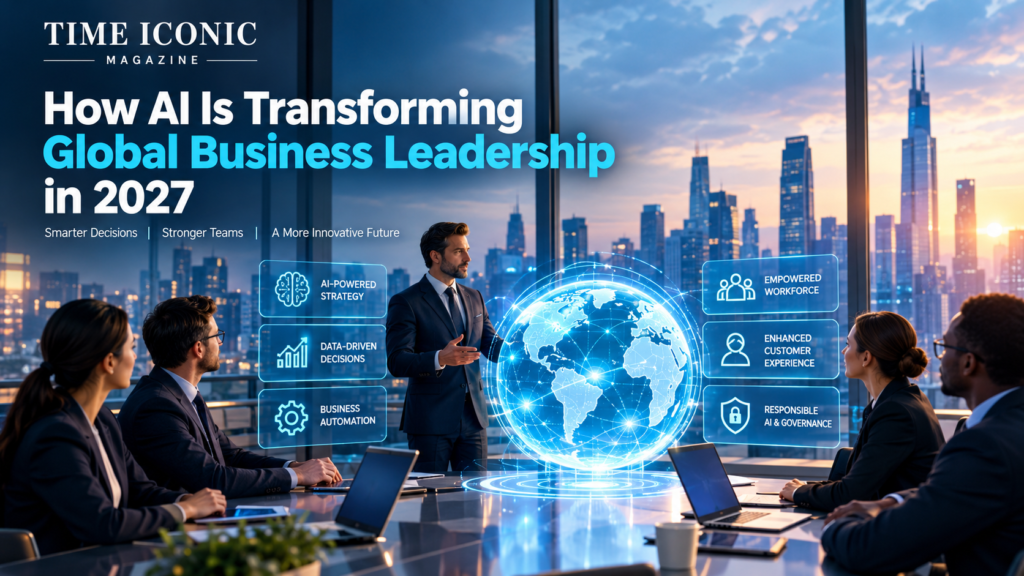
Artificial intelligence (AI) is rapidly changing how businesses operate, compete and grow. As organisations worldwide embrace digital transformation, AI is becoming more than a technology investment—it is a strategic priority for modern business leaders. In 2027, successful leadership will increasingly depend on how effectively executives integrate artificial intelligence into business strategy, decision-making, workforce development and innovation.
From multinational corporations to emerging startups, AI is reshaping traditional management practices and creating new opportunities for global business growth.
1. AI Is Becoming Central to Business Strategy
Business leaders are moving beyond experimenting with AI tools and increasingly integrating artificial intelligence into their core operations. AI-powered systems can analyse large datasets, identify patterns and generate insights that help executives make more informed strategic decisions.
Companies are using AI to understand customer behaviour, evaluate market opportunities, forecast demand and improve operational efficiency. This shift is encouraging CEOs and senior executives to treat AI as an essential part of long-term business planning rather than simply an IT initiative.
2. Smarter Decision-Making Through AI
One of the biggest advantages of artificial intelligence in business is its ability to support faster, data-driven decision-making.
AI-powered analytics platforms can process complex information and identify trends that may be difficult to recognise through traditional analysis. Business leaders can use these insights to improve financial planning, manage risks, optimise supply chains and respond to changing market conditions.
However, AI should support executive judgement rather than replace it. Human experience, strategic thinking and accountability remain essential when making important business decisions.
3. AI Automation Is Reshaping Business Operations
Business automation is becoming an important driver of productivity across industries. AI-powered automation can handle repetitive administrative tasks, assist customer service teams, analyse documents and support operational workflows.
Emerging agentic AI systems are taking this development further by performing multi-step tasks and coordinating activities with limited human intervention.
In 2027, leaders will increasingly focus on redesigning business processes around collaboration between employees and intelligent AI systems. This approach can help organisations improve efficiency while allowing employees to concentrate on creativity, problem-solving and strategic responsibilities.
4. The Future of Leadership Requires AI Skills
The rise of artificial intelligence is changing the skills expected from business leaders. Executives no longer need to understand only traditional management principles; they also need AI literacy, digital awareness and an understanding of emerging technologies.
Effective leaders must recognise where AI can create business value, evaluate technology investments and guide employees through organisational change.
Leadership development programmes are therefore expected to place greater emphasis on digital transformation, data literacy, responsible AI and technology-driven innovation.
5. AI Is Transforming Customer Experience
Customer expectations continue to evolve as digital services become faster and more personalised.
AI-powered chatbots, virtual assistants and recommendation systems are helping businesses provide round-the-clock support and more relevant customer experiences. Advanced analytics can also help organisations understand purchasing behaviour and anticipate customer needs.
For global companies, these technologies offer opportunities to improve customer engagement across different markets, languages and time zones.
Nevertheless, maintaining trust, privacy and meaningful human interaction will remain important competitive advantages.
6. Responsible AI and Business Governance
As organisations adopt more advanced AI systems, responsible AI governance is becoming a major leadership responsibility.
Companies must address challenges involving data privacy, cybersecurity, algorithmic bias, transparency and accountability. Autonomous AI agents also introduce new questions about permissions, monitoring and human oversight.
Business leaders should establish clear AI policies, assess potential risks and ensure that technology decisions comply with relevant regulations.
Responsible AI adoption will be essential for building stakeholder confidence and achieving sustainable business growth.
7. The Next Era of Global Business Leadership
The future of business leadership will be shaped by the relationship between human intelligence and artificial intelligence.
AI can improve productivity, support innovation and provide valuable insights, but successful transformation requires more than implementing advanced software. It demands a clear strategy, skilled employees, effective governance and a culture that supports continuous learning.
In 2027, the most effective business leaders will be those who combine technological capabilities with human judgement, creativity and ethical responsibility.
Conclusion
Artificial intelligence is transforming global business leadership by changing how organisations make decisions, manage employees, serve customers and compete internationally. As AI adoption accelerates, executives must develop the skills and strategies needed to lead technology-driven organisations responsibly.
The future will not belong simply to businesses that use the most AI. It will belong to those that use artificial intelligence intelligently, empower their people and turn technological innovation into meaningful business value.
