
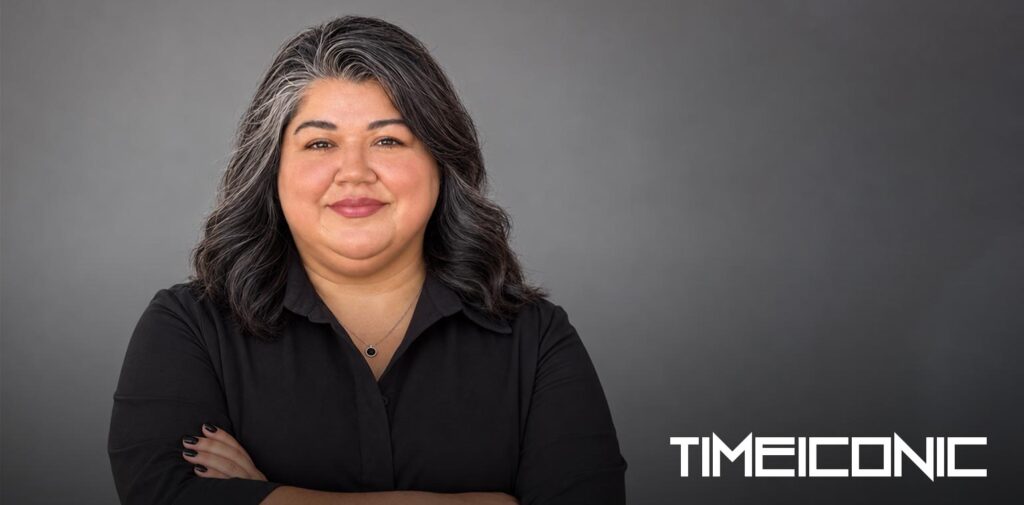
Some leaders learn their craft in business school. Victoria Cruz, Director of Customer Service at Quantix learned hers by working with what was in front of her. Growing up with very little, she developed an instinct that still defines her: look at the resources available, ask the right questions, and find a way forward. “Resourcefulness shaped me long before I entered logistics,” she says. It is an unusual opening line for a director’s biography, yet it explains a great deal about how she works today.
That instinct found a formal outlet in the U.S. Army, where Cruz served as a parts specialist supporting a maintenance platoon. The job placed her inside a quiet truth of logistics: vehicles do not move because someone wants them to. They move because a part is in the right place, a record is accurate and a dozen small decisions were made correctly before anyone noticed. Watching that chain operate from the inside changed the direction of her career. “Seeing everything it took to keep vehicles moving got me hooked on logistics,” she recalls.
In a maintenance environment, a missed part or an unclear request has consequences that are immediate and visible, and that sense of accountability followed her out of uniform and into the commercial supply chain. It is a valuable habit in a field where the margin between a smooth shipment and a stranded container can be a single overlooked detail.
A Climb Built on Trust
Cruz joined Quantix four years ago as a Drayage Account Manager, a role that placed her at the point where customers, drivers, ports and rail yards meet. Drayage is often described as the short first or last leg of a container’s journey, but anyone who has worked in it knows that short does not mean simple. Appointment windows, equipment availability and port congestion can turn a routine move into a puzzle by lunchtime. It was an ideal training ground for someone who liked to understand every moving part. It also taught her how customers judge a logistics partner, which is rarely by the grand plan and almost always by whether the container showed up when promised and whether someone told them the truth when it did not.
From there she became Export Services Integration Manager, a position that asked her to connect the many functions an export shipment depends on. Today she leads Customer Service for Export as Director, responsible for a team that coordinates shipments from the first booking to final delivery. The rise from account manager to director in four years is quick by any standard, and Cruz is careful about how she explains it. She credits the people who made room for her. “A leader who recognized my strengths gave me room to grow in each role,” she says, and she treats that sentence as an obligation as much as a compliment. She has tried to offer the same opening to others.
Her path also runs through every level of the work. She describes her approach as one that has served her “at every level, from clerk to director,” and that range matters. A leader who has done the entry-level tasks understands where processes break, which requests are reasonable and which instructions only look good on paper. Her team notices the difference. They are led by someone who remembers what the work feels like from the desk.
Direct, but Never Dismissive
Supply chain and logistics have long been male-dominated, and Cruz does not pretend the industry has stopped being that. What she describes instead is a leadership style built to work in any room. She has learned that directness and respect can coexist. “I can be direct and still make people feel heard,” she says. In practice that means setting clear expectations, asking uncomfortable questions when they are needed and inviting colleagues into the work of solving the problem rather than handing down answers.
Four principles anchor that style: accountability, integrity, humility and courage. Each shows up in ordinary behavior rather than slogans. Accountability means she owns the outcome, including the parts that went wrong. Integrity means telling the truth when it would be easier to soften it. Humility is the willingness to say, in her words, “I missed that,” without defensiveness or delay. Courage is the refusal to avoid a difficult conversation simply because it is difficult.
This willingness to be plain-spoken carries weight in a business where customers depend on honest timelines. A vague answer about a delayed vessel or a missing document may feel polite in the moment, yet it often creates a larger problem a few days later. Cruz would rather deliver the uncomfortable update early and pair it with options, because it gives the customer time to adjust and signals that her team is working on their side of the table.
Her influences are plain. She points to leaders who set clear expectations, made hard decisions and supported their people through the consequences. From them she took a lesson that many managers find difficult to apply: good leadership includes knowing when to change course and when to stand by a sound decision. Reversing too quickly erodes confidence, and holding on too stubbornly does the same. Cruz treats the judgment between the two as the real work of leadership, and she is open about the fact that it requires listening before deciding.
The Problem Behind the Problem
Every career has a defining test, and Cruz’s came when she was asked to repair an area that everyone believed was failing. The assignment arrived with a conclusion already attached. Colleagues and stakeholders had decided where the fault lay, and the expectation was that she would act on it. Her first move was to question that premise.
She and her team put the data in front of both the customer and the internal group. The numbers told a different story from the one in circulation. The issue was not poor effort or a broken relationship. People simply needed a stronger foundation in a new line of business. With that diagnosis, the solution became practical. She clarified expectations, standardized workflows and built a more consistent base of knowledge. Response times improved, and errors and rework declined.
The episode left her with a rule she now applies almost automatically. “Before assigning blame or designing a fix, make sure everyone is looking at the same facts,” she says. Once a team shares the same picture, she explains, the conversation changes character. People stop defending themselves and begin learning, and progress follows. It is a modest principle with large consequences. A great many operational failures are really disagreements about what happened, and Cruz has built her reputation on settling that question first.
Moving the Chemical Supply Chain, Together
To understand the stakes of her work, it helps to understand the company around it. Quantix, which unified its operations under a single brand in 2021 after years as A&R Logistics, serves the chemical industry from a network of more than 80 locations across the United States. Its roots in chemical customer service stretch back more than 50 years. Cruz describes the mission in direct terms: “Quantix is the complete chemical supply chain solution.”
The company’s footprint reflects that ambition. Its warehousing and storage sites span the Gulf Coast, Midwest, Northeast and Southeast, and its acquisition of CLX Logistics, now Quantix Managed Solutions, added managed transportation and global logistics capability. It also partners with Operation Clean Sweep, an industry initiative that works to prevent plastic pellet loss, a reminder that safety and sustainability sit inside the business model rather than beside it.
The service list is long. Quantix offers dry and liquid bulk transportation, ISO solutions, distribution centers and in-plant support, export, import and drayage, environmental services and managed solutions. Cruz is candid about what that breadth means for customers. “There are a lot of moving parts,” she says. The answer is to connect people, expertise, technology and network so that customers are not left to manage every handoff alone. The guiding phrase, “The Quantix Way” is something she defines in practical terms: communicating clearly across teams and solving the same problem together.
What separates Quantix from other providers, in her view, is that chemical logistics demands more than moving freight from one point to another. Transportation, facilities, safety, compliance, technology and customer service must operate as a single system. “We ask questions, set clear expectations, and speak plainly when a plan needs to change,” she says. “Then we stay with the problem until we have a workable path forward.” She believes the combination of specialized expertise and consistent follow-through is what earns a customer’s confidence, and that confidence is difficult to win in an industry where safety and compliance are not optional.
Where Export Gets Tested
Export logistics adds another layer of complexity. Documentation, compliance, ports, transportation and customer expectations must all line up, often across time zones and regulatory systems. Cruz’s team sits at the center of that alignment. In her description, they do far more than answer questions or process requests. They coordinate across the business so shipments can move from start to finish, particularly when plans change, and that work calls for operational knowledge, good judgment and empathy in equal measure.
To give the team a consistent base, Cruz and her colleagues centralized training and standardized workflows. The results echo the lessons of her earlier turnaround: faster responses and fewer errors and rework. “Customers can feel the difference when the work behind the scenes runs well,” she says. Customers rarely see the standardized process itself, but they notice its effects in the form of fewer surprises and clearer updates.
Her approach to relationships begins before a shipment ever moves. She asks customers what matters most, what they expect and how they will measure performance. “I’d rather have that conversation early than leave expectations in a gray area,” she says. Service levels are agreed in advance, and customers are kept informed about shipments, inventory and changes. When something goes wrong, the team tells them promptly and works through options with them. Technology has made visibility easier, she notes, but it cannot replace human perception. Some customers need a quick update, while others need someone to guide them through a new process. “Trust comes from knowing the difference and following through consistently,” she says.
The hard days make the point clearly. A canceled vessel sailing, material that must be diverted, equipment sitting too long and a crowded staging area can all arrive at once. That is the moment, Cruz says, when the idea of moving as one is truly tested. People need to speak honestly, bring their strengths to the table and solve the problem together. Her aim is for customers to describe Quantix as proactive, responsive and easy to work with, “even when the logistics behind the scenes are anything but easy.”
Technology in Service of Judgment
Cruz is an enthusiastic but disciplined observer of the technology wave reshaping global trade. She expects AI, automation and predictive analytics to have a major influence on the industry because they help teams identify risks sooner and act before customers feel the effects. Quantix is investing in that direction, and she welcomes the prospect of automation taking repetitive work off her team’s plates. Freed from routine tasks, they can spend more time improving processes and anticipating what customers will need next.
Her enthusiasm comes with a filter. She asks whether a given tool helps someone make a better decision or merely adds noise. In export logistics, she points out, people still have to interpret information, coordinate across teams and make the call when a plan changes. “The best tools give our teams timely information and leave room for the judgment and conversations that solve real problems,” she says. It is a view that treats software as support for expertise rather than a substitute for it, and it fits the company’s broader technology approach, which pairs transportation management systems and analytics with experienced people.
Advice, Legacy and the Work Ahead
Asked what she would tell young professionals, and women in particular, Cruz begins with listening. “Listen first, and don’t assume the textbook answer fits what is happening in front of you,” she advises. She encourages newcomers to ask questions, learn the operation and seek out people who know the parts they do not. For women entering logistics, her message is equally direct: speak up, even when you are new or the room looks different from you. You do not need every answer before you contribute. Bring your perspective, question an assumption and keep improving. Her closing instruction is the simplest: “Don’t make yourself smaller to fit the room.”
When she considers her legacy, she answers with a question of her own: “Is it too ambitious to say all of it?” She hopes to be remembered for developing people, improving customer service and leaving an operation stronger than she found it. Yet she places one measure above the rest. “What matters most is how people felt working with me,” she says. She wants colleagues to remember that she listened, told them the truth and helped them see a path forward. Results matter to her, but so does the way people are treated while those results are achieved.
Her legacy, in other words, is likely to be measured in people as much as in metrics. Colleagues who learned from her will carry her habits into their own teams, and customers who experienced her team’s follow-through will remember the calm of dealing with someone who told them the truth. In an industry that prizes speed, she offers a reminder that trust is built through consistency.
That balance may be the clearest summary of Victoria Cruz as a leader. She came to logistics through scarcity and service, learned its details through hands-on work and rose by pairing candor with respect. As Quantix expands its capabilities and technology, she intends to keep the human element at the center of the operation. The tools will improve and the shipments will grow more complex, but the formula she describes will not change: ask the right questions, share the same facts and stay with the problem until it is solved.
