
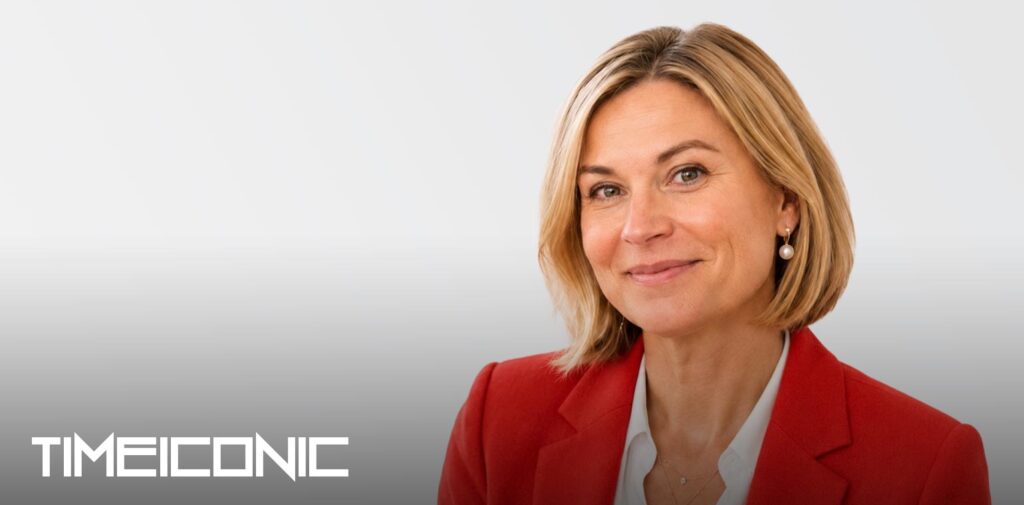
There is a particular kind of executive who talks about artificial intelligence the way most people talk about weather: as something to react to, manage, or survive. Melissa Van Dyke is not that executive. As Senior Vice President of Technology and Data at Creative Group, Inc., she talks about AI the way a builder talks about lumber and steel: as raw material for something better, provided a human being with judgment is still holding the blueprint.
Melissa’s career does not read like a typical technology résumé. She has moved through consulting, behavioral research, experience design, operations, innovation, and now enterprise technology and data leadership, refusing at every stop to let the discipline define her. What connects those chapters, she says, is not a job title but a question she has carried since childhood: why do people do what they do, and how can something be designed better because we understand it.
That question has made her one of the most closely watched leaders shaping how a major event experience agency thinks about intelligence, both artificial and human. It has also placed her among the most impactful women in technology leadership this year, a recognition that fits a career built less on climbing a predictable ladder and more on repeatedly choosing the harder, less charted path.
What sets her apart is not simply the breadth of her résumé, though that breadth is real. It is the consistency of the lens she has applied to every role she has held. Whether she was studying consumer behavior, redesigning an operational process, or now shaping a technology and data strategy for one of the industry’s most established agencies, Melissa has approached the work with the same underlying question: what does this mean for the person on the other side of the decision. That consistency is rare in a field that tends to reward specialization over range, and it is precisely what makes her perspective valuable at a moment when most organizations are struggling to decide how much of their future to hand over to intelligent systems.
To understand why Melissa has become such a distinctive voice in the AI conversation, it helps to start where she does: not with technology, but with people.
THE QUESTION THAT STARTED IT ALL
Melissa traces her fascination with technology back further than any job title, back to a classroom computer she fought her way toward as a child. “I’ve loved the potential technology posed,” she says of those early years, a sentiment that has followed her from the classroom PC to the executive suite. She wrote her first program in middle school, but even then, the code itself was never the attraction.
“I was never really interested in technology for technology’s sake,” she says. “I was interested in what it makes possible: a better decision, a simpler process, a more meaningful experience, an entirely new source of value.”
That distinction, between technology as an end and technology as a means, has quietly shaped every move in her career. Instead of following a straight technical path, she wandered deliberately through consulting, research, behavioral insights, experience design, and operations before arriving at technology and data leadership. Each discipline added a different lens for understanding human behavior, and each one taught her something the others could not.
Rather than viewing this winding route as a detour, Melissa sees it as the foundation of her leadership today. It gave her the ability to move fluidly between the language of strategy, the language of design, and the language of engineering, a fluency that becomes increasingly rare and increasingly valuable as organizations try to make sense of what AI actually changes.
“Technology is most powerful,” she says, “when we stop making the technology the point, and put humans at the center.”
That single idea, simple on its surface, turns out to be the thread that ties together everything else about how she leads.
LEADING WITHOUT KNOWING EVERYTHING
Ask Melissa to name the defining moments of her career, and she does not point to a promotion or a product launch. She points to the moments she was asked to do something she had never done before.
Over the years, she has crossed boundaries that most organizations keep firmly separate, moving between research, strategy, operations, marketing, design, product development, technology, and data. She has built products from the ground up, helped scale global operations, led significant process transformation, and now helps shape the technology, data, and AI foundation for what Creative Group becomes next.
That constant reinvention taught her a lesson she now considers central to her leadership identity. “You do not have to be the person in the room who knows the most about every subject,” she says. “In fact, you shouldn’t be. You have to surround yourself with people who know more than you do.”
For Melissa, that is not a comfortable admission so much as a strategic advantage. Leadership, in her view, is less about accumulating expertise and more about accumulating the right questions, along with the humility to learn quickly from people who know more. That posture requires a willingness to take responsibility for outcomes even when the knowledge behind them belongs to someone else on the team.
It also explains why she describes herself as more interested in building something that lasts than in preserving what already exists. That orientation is not always the comfortable choice. Protecting the status quo rarely requires courage, while building something new almost always does. But Melissa sees no alternative if leaders are serious about what she calls taking good future care of the people they are asked to lead.
That phrase, future care, captures something important about her style. It suggests an obligation that extends beyond today’s org chart and into the kind of organization a team will inherit years from now. It is a leadership philosophy built for change rather than stability, which happens to be exactly the environment most technology leaders find themselves in today.
PUTTING HUMANS AT THE CENTER OF DATA
If there is a single principle that separates Melissa’s approach to technology leadership from a purely technical one, it is this: she starts with the human, not the tool.
Before she asks what a piece of technology can do, she asks a different set of questions. What is the problem being solved for the people involved, whether talent or client? What behavior needs to change? What friction can be removed? What new value becomes possible once the right tool is in place? Only after those questions are answered does the conversation turn to which technology might help.
Data plays a critical role in that process, but Melissa is careful not to romanticize it. She describes herself as someone who loves data, someone her team knows well for that enthusiasm, but she is equally clear about its limits.
“Data without context can be just as misleading as instinct without evidence,” she says.
That balance, between data and context, between evidence and feeling, defines how she thinks about insight. She calls herself a big feeler who also loves a good data story, a combination that turns out to be more useful than either instinct or analytics alone. Data can explain what happened. Technology can help scale the response. But it takes human insight to understand why something actually matters.
“Humans, tech, and data should all work together to tell a powerful story,” she says. “That combination is where I believe the most meaningful transformation happens.”
This same philosophy carries into how she thinks about the relationship between technology, data, and human connection more broadly, a subject she returns to often. The industry she works in now has the ability to measure experience at a level of detail that would have been almost impossible only a few years ago, from how people engage to what resonates to where friction quietly erodes an otherwise good idea.
The danger, she warns, is mistaking the measurement for the experience itself. “A dataset cannot replace the feeling of belonging in a room,” she says. “An algorithm cannot fully understand the significance of a conversation between two people. AI cannot experience anticipation, surprise, trust, joy, or connection.”
What technology and data can do, in her view, is create the conditions for more of those human moments to happen, and then help teams understand whether those moments actually succeeded. She points to a tech-enabled music festival as a familiar example of the two forces working in harmony rather than in competition, technology amplifying a human experience rather than replacing it.
THE TRANSLATOR’S BURDEN
As artificial intelligence accelerates past the pace most organizations can absorb, Melissa believes the job of the technology leader has fundamentally changed. It is no longer enough to implement new tools. Leaders now have to help entire organizations rethink how work itself gets done.
She credits a friend in technology leadership with a test she has adopted as her own standard: never implement a technology you cannot explain to your eighty-year-old mother. The best technology leaders, in her words, are translators and builders, people who understand enough about the technology to see what is becoming possible, enough about the business to know what actually matters, and enough about people to bring an entire organization along with them.
Of those three capabilities, she believes the last one may matter most right now. “AI is advancing faster than most organizational operating models, governance structures, and job definitions,” she says. Clients and talent, she points out, do not care what large language model or retrieval system sits behind a solution. They care whether their problem gets solved.
That means technology leaders have to do more than deploy tools. They have to help organizations rethink the work itself: what machines should do, what humans should do, where decisions should sit, how data should move, and where new value can be created.
“Our job as technology leaders is no longer simply to manage technology,” she says. “It is to help redesign the enterprise around what technology now makes possible.”
This philosophy plays out in how Melissa thinks about the difference between organizations that succeed with AI and those that struggle. The successful ones, she says, move beyond asking which AI tool to buy and start asking how work should operate differently now that the tool exists. That shift, from deploying AI to redesigning work around it, is where the real transformation happens.
Meaningful implementation, in her experience, requires good data, thoughtful architecture, clear governance, defined use cases, redesigned processes, and people who understand exactly where human judgment still matters most. It also requires something less technical: permission. Organizations need permission to build, test, discover what does not work, adjust, and try again.
At Creative Group, that builder mentality has a name. They call it Creative Mindset, an approach built around experimenting, learning, and challenging assumptions with the goal of creating new value rather than simply attaching AI onto processes that already exist. “AI strategy should not be about software implementation and governance alone,” she says. “It should be a full organization-wide operating model change discussion.”
That distinction matters more than it might first appear. Many organizations treat an AI rollout as a procurement decision, a matter of selecting a vendor and training employees on a new interface. Melissa’s approach asks leadership to treat it instead as a redesign of the organization’s operating model, one that touches governance, decision rights, workflow, and culture at the same time. It is a slower, harder path than simply buying a tool, but she believes it is the only path that produces lasting value rather than a short-lived productivity bump.
REDEFINING WHO BELONGS IN THE ROOM
Melissa’s career has unfolded in a field that has historically lacked equal representation for women, a reality she addresses directly and without hesitation. Her hope for the future is not simply more representation within the existing definition of a technology leader, but a broader definition altogether.
Some of the most important capabilities in technology today, she argues, are curiosity, systems thinking, communication, empathy, commercial judgment, pattern recognition, and the ability to connect disciplines that rarely speak to each other. None of those require a perfectly linear technical career path, and yet a narrow definition of what counts as a technical background continues to convince talented women that they do not belong in the room.
“Do not confuse not knowing something yet with not belonging in the room,” she tells the next generation of women considering careers in technology leadership.
She is quick to point out a fact she considers both inspiring and underappreciated: the original coders of all technology were women. That history, she believes, should embolden rather than intimidate women who worry they lack the right background to lead in tech.
Her advice is practical rather than abstract. Learn aggressively. Ask questions without apology. Get close to the technology rather than keeping a comfortable distance from it. Find people who know things you do not, and treat that gap as an opportunity rather than a disqualification. Most importantly, be brave enough to build something, even if the first attempt is far from perfect.
“There is enormous confidence that comes from moving from ‘I understand this’ to ‘I helped create this,'” she says.
That single distinction, between understanding and creating, runs through nearly everything Melissa believes about leadership, representation, and the future of the industry she has helped shape. It also explains why she is unwilling to separate the conversation about women in technology from the broader conversation about how organizations define talent in the first place. A field that only rewards one type of background will always struggle to attract a diverse range of thinkers, regardless of how many recruiting initiatives it launches. Broadening the definition of what a technology leader looks like, in her view, is not a side project alongside the real work of digital transformation. It is part of the real work.
THE 49/51 PHILOSOPHY: BUILDING CREATIVE GROUP’S FUTURE
Ask Melissa where she believes AI has its greatest potential, and she will tell you the efficiency story, while important, is the least interesting part of the conversation. The larger opportunity, in her view, is amplification.
AI can dramatically expand the amount of information a person can consider, the number of possibilities they can explore, and the speed at which they can move from question to insight to action. In an industry built on institutional knowledge, audience insight, program history, behavioral data, creative thinking, and business objectives, that amplification changes what a single talented person can accomplish.
“I really believe the biggest promise of AI isn’t fewer humans,” she says. “It’s more capable and empowered humans with a broader span of impact.”
That belief has crystallized into a framework Creative Group now uses to guide nearly every conversation about AI and human judgment. They call it the 49/51. The 49 percent defines what gets done in a given role, the tasks and outputs that increasingly intelligent systems can analyze, synthesize, predict, generate, automate, and even act upon. The 51 percent defines how it gets done, and how the people involved are made to feel throughout the process.
“I want humans to own the deciding 51 percent,” Melissa says. Judgment, empathy, taste, ethics, context, creativity, relationships, and the instinct to know when the technically correct answer is the wrong answer for the person sitting across from you: these, she argues, are not inefficiencies waiting to be automated away. They are often exactly where differentiated value lives.
She offers a vivid example from her own industry. AI can analyze thousands of venue options in seconds, comparing cost, capacity, and logistics with precision no human could match. What it cannot do is walk into a room and instinctively sense that a CEO is going to hate how that room feels. That instinct, she believes, is the difference between a technically correct answer and the right one.
This dual-engine thinking extends to how Melissa describes Creative Group itself. The company, she explains, operates with two engines working in tandem. One is deeply human: strategy, storytelling, design, creativity, relationships, and the craft of building experiences people remember. The other is increasingly powered by technology, data, and AI, giving the organization new ways to understand audiences, orchestrate complex experiences, learn from what happens, and connect those experiences directly to business outcomes.
“Creativity gives an experience meaning,” she says. “Intelligence helps us make that meaning more intentional, measurable, and powerful.”
Melissa’s strategic priorities as Senior Vice President reflect that same balance. Her focus includes modernizing the company’s technology ecosystem, strengthening its data foundation, building a responsible AI architecture, and improving how the organization builds and deploys technology. But she is equally focused on something less tangible: capability building. Technology transformation, she points out, does not happen the moment a new system goes live. It happens when people understand how to use new capabilities to make different decisions and solve problems that previously felt out of reach.
“My job isn’t simply to give the organization better technology,” she says. “It’s to help all of us, every single talent, become capable of doing things they never imagined they were capable of and have never done before.”
LOOKING AHEAD: THE NEXT DECADE OF INTELLIGENCE
Looking further ahead, Melissa sees several converging shifts that will define the next five to ten years of technology and leadership. AI will move from assistant to agent, executing increasingly complex workflows rather than simply helping humans complete individual tasks. Natural-language interfaces will change how people interact with enterprise systems altogether. Specialized, domain-specific models will grow in importance, and the winning technology architecture will function as an interconnected ecosystem rather than a patchwork of disconnected platforms.
Perhaps most significantly, she expects enterprise data to finally become genuinely actionable after years of organizations describing themselves as data-driven without fully living up to the phrase. For her, the opportunity is to connect data more meaningfully to the experiences organizations create and the outcomes they are trying to achieve. The convergence she finds most compelling brings together advances in AI, connected data, and intelligent automation, freeing people from repeatable operational work so they can move higher into the parts of the job where their expertise creates the most value: strategy, creativity, relationships, and decision-making.
“The question I am most excited about isn’t really, ‘How can AI help us produce an event?'” she says. “It is, ‘What can we understand about people and experiences now that we could never understand before, and how can we help all stakeholders find value in our efforts?'”
That question, more than any specific technology, captures what makes Melissa’s leadership distinctive. She refuses to treat human creativity and artificial intelligence as opposing forces. Every time her team considers applying AI to a new part of the business, she asks two questions in sequence: what should the technology do better, and what should humans now have more capacity to do better. If the honest answer to the second question is nothing, she considers that a warning sign rather than a success.
“The standard shouldn’t be whether AI was involved,” she says. “The standard should be whether the final work became more insightful, more creative, more personal, or more valuable because humans and technology worked together.”
As she looks toward the future of her industry and the wider business community, Melissa’s message is less a prediction than an invitation. Technology will keep changing dramatically. AI will automate work once assumed to require people. Data will offer visibility organizations have never had before. Entire operating models will be redesigned around capabilities that did not exist a few years ago.
None of that, in her view, diminishes the importance of human connection. If anything, it raises the stakes for it.
“The future isn’t human versus machine,” Melissa says. “It is what humans can become with the right machines beside them.”
For an industry still working out how much of itself to hand over to automation, that closing thought doubles as a mission statement, not just for Creative Group, but for any organization trying to build something that lasts in an age defined by intelligent machines and, if leaders like Melissa Van Dyke have their way, even more intelligent humans.
What makes her voice worth following is not that she has all the answers about where AI will take business and leadership next. Nobody does, and she would be the first to say so. What makes her worth following is the discipline she brings to a moment when discipline is in short supply, a refusal to let either fear or hype set the terms of the conversation. She is building, testing, learning, and adjusting in real time, exactly as she advises everyone else to do. And she is doing it while insisting that the point of all this intelligence, artificial or otherwise, was never the technology itself. It was always the people standing next to it.
