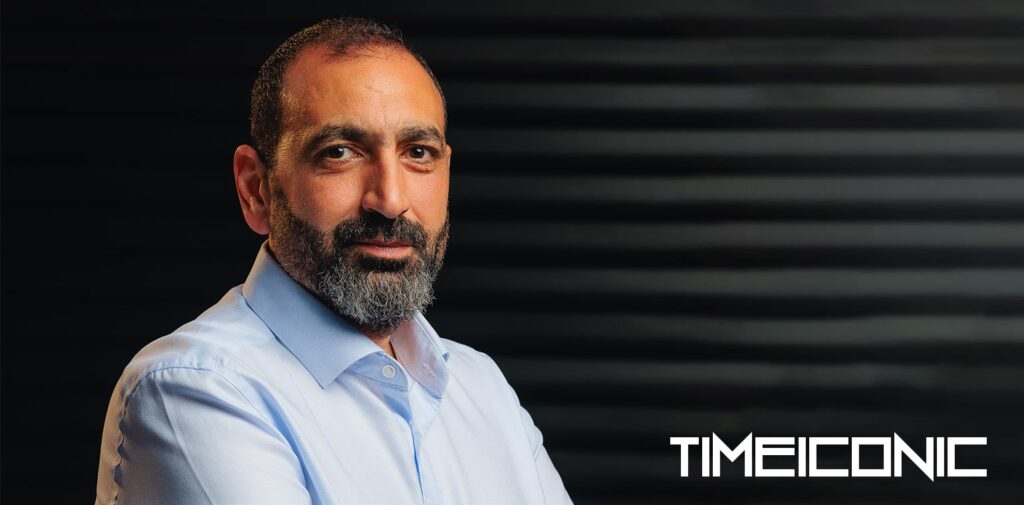
Every industry has its own version of the same complaint. Boards approve ambitious plans, budgets are allocated, consultants are hired, and yet, months later, the promised transformation has quietly stalled somewhere between the strategy deck and the daily operations of the business. Mohammad Mousa has spent more than two decades studying exactly that gap, first as an entrepreneur, then as a consultant and technology leader inside some of the world’s largest organizations, and now as the founder of MentalX, a firm built entirely around closing it.
Mousa’s career reads like a map of the modern business world’s biggest shifts: from the earliest experiments in AI-driven language technology, through global consulting and national identity programs, to the current race to embed artificial intelligence into everyday decision-making. What connects all of it is a single conviction that he returns to again and again. Strategy is not the hard part. Execution is.
As founder of MentalX, Mousa now spends his days advising boards and leadership teams who are grappling with a version of the same question he has been answering for most of his career. They have the ambition, the resources, and increasingly the technology. What they often lack is the connective tissue that turns all three into results that show up in performance reports rather than strategy documents. That connective tissue, built from ownership, accountability, and disciplined execution, is what Mousa has made the center of his professional life.
From a Speech Technology Startup to Global Transformation
Mousa’s story begins in 1999, a time when the idea of machines translating human speech in real time still sounded like science fiction. That year, he co-founded a real-time speech-to-speech translation startup, betting early on a technology that would take the rest of the world another two decades to fully embrace.
“AI-driven language technologies were far from mainstream, but we believed technology could eliminate communication barriers and create entirely new possibilities,” Mousa recalls. The company was eventually acquired by a United States-based organization, a milestone that gave Mousa his first real education in what it takes to move an idea from concept to commercial reality. That early venture, he says, taught him lessons about innovation, resilience, and execution that would shape everything he did afterward.
Over the following two decades, Mousa built a career across some of the most demanding environments in global business. He worked with IBM, Rackspace, PwC Middle East, NTT DATA, and Emirates German Security Printing, alongside numerous government modernization initiatives across the Middle East, Africa, and Europe. Each stop added a new layer to his understanding of how large organizations actually function, and how easily even well-resourced institutions can lose their way between ambition and delivery.
Those years exposed him to commercial transformation, digital trust, cybersecurity governance, identity solutions, and national-scale modernization programs, a breadth of experience that few executives accumulate in a single career. But it was a quieter observation, repeated across every sector and geography he touched, that ultimately shaped his leadership philosophy.
“Success rarely depends on strategy alone,” Mousa says. “Organizations often know what they want to achieve. The real challenge lies in aligning people, technology, governance, and execution.” That realization did not just inform how he led teams. It became the founding insight behind MentalX itself.
Working across public and private sector programs, Mousa also learned to move fluidly between very different kinds of pressure, from the commercial urgency of a private enterprise to the accountability and scrutiny that define government-led transformation. Few leaders operate comfortably in both worlds. Mousa built his reputation doing exactly that, and it gave him a rare, ground-level view of what separates plans that succeed from plans that quietly disappear.
That breadth of experience also shaped how Mousa evaluates a transformation program’s chances of success before it even begins. Rather than looking first at budgets or timelines, he says he looks at whether the people responsible for delivery are the same people who helped shape the strategy. Programs designed in isolation from the teams expected to carry them out, he has found, are the ones most likely to stall, regardless of how much capital or talent is behind them. It is an early version of the alignment thinking that would later become central to his work at MentalX.
The Human Side of Execution
Ask Mousa what separates high-performing organizations from those that struggle, and he does not point to technology, budgets, or even talent shortages. He points to people, and more specifically, to the invisible layer of ownership and accountability that determines whether a strategy actually gets carried out.
“The biggest lesson is that execution is fundamentally a human challenge before it is a technological or operational one,” Mousa explains. He has watched organizations build exceptional strategies, back them with significant investment, and still fail to convert those plans into measurable outcomes. The reason, in his experience, is rarely a lack of intelligence or resources. It is a lack of ownership, alignment, accountability, and operational discipline.
This is where Mousa introduces a phrase that has become central to his thinking: execution leakage. As objectives move through the layers of a large organization, from boardroom to business unit to frontline team, value gradually disappears. A strategy that looks complete and coherent at the top can arrive at the bottom of the organization diluted, misunderstood, or simply disconnected from the daily decisions employees are actually making.
“Employees must understand not only what the strategy is, but why it matters and how their work contributes to it,” he says. “When strategy remains confined to leadership presentations, value gets lost.” For Mousa, closing this gap is not a matter of better slides or clearer communication alone. It requires integrated leadership, clear accountability, strong governance, and continuous visibility into performance, the same disciplines he now builds into MentalX’s engagements with clients.
Mousa traces much of his leadership philosophy to three lessons learned the hard way, across years of complex, high-pressure transformation programs. The first is that resilience matters more than perfection. Every major transformation faces resistance, uncertainty, and unexpected obstacles, and leaders must stay focused while helping the people around them maintain confidence through periods of change.
The second lesson concerns trust. “Trust is the most valuable currency in leadership,” Mousa says. “Technologies evolve, markets change, and business models shift, but organizations ultimately move at the speed of trust.” Sustainable transformation, in his view, only happens when stakeholders have confidence in both the vision being pursued and the people leading it.
The third lesson is about letting go. Earlier in his career, Mousa admits, he often felt personally responsible for every aspect of delivery, a common instinct among driven leaders that can quietly become a bottleneck. Over time, he learned that empowering capable teams produces far greater and more sustainable outcomes. “Leadership is not about controlling every decision,” he says. “It is about creating an environment where people can perform at their best.”
Taken together, these lessons form the backbone of how Mousa now advises the organizations he works with, many of which have no shortage of strategic ambition but struggle with exactly the human and organizational discipline he spent years learning to build.
AI as a Strategic Capability, Not a Project
If execution has been the constant theme of Mousa’s career, artificial intelligence has become its most urgent current chapter. As organizations rush to adopt AI across every function, Mousa is careful to push back on what he sees as a common and costly misconception.
“AI should be viewed as a business capability, not a technology project,” he says. In his view, the most successful organizations are not asking how to implement AI. They are asking how to create better decisions, stronger customer experiences, higher productivity, and new sources of growth using AI. It is a subtle distinction, but one that Mousa believes determines whether an AI initiative delivers real value or simply adds another line item to the technology budget.
AI’s true value, he argues, lies in its ability to amplify human intelligence, accelerate execution, and improve organizational agility. When it is integrated properly, AI does not sit apart from the business as a standalone project. It becomes embedded across strategy, decision-making, sales, service delivery, and operations, working quietly in the background of everyday decisions rather than as a headline initiative on its own.
This philosophy also shapes how Mousa advises leaders to avoid one of the most common traps in AI adoption: a collection of disconnected pilots and tools that never add up to measurable business value. “Too many AI initiatives start with tools rather than problems,” he says. Sustainable value, in his experience, comes from identifying specific business challenges, defining measurable objectives, and then determining how AI contributes to those outcomes, not the other way around.
Getting this right, Mousa stresses, also requires the same organizational discipline he applies to execution more broadly. Strong governance, data quality standards, change management frameworks, and clear adoption strategies are essential, because AI does not scale successfully without trust, accountability, and clear ownership. Most importantly, he says, organizations must ensure that AI supports decision-making and execution, rather than simply generating insights that never lead to action.
Mousa also sees AI fundamentally reshaping the relationship between commercial strategy and execution. Historically, he notes, organizations often struggled because decisions were made based on limited information and delayed feedback cycles. AI is changing that dynamic, enabling leaders to move from reactive decision-making toward predictive, and increasingly proactive, management.
The impact, he explains, is visible across every part of the business. In sales, AI improves forecasting, opportunity prioritization, and customer engagement. In operations, it strengthens efficiency, resource allocation, and risk management. In customer experience, it enables personalization at a scale that was previously impossible. Across leadership teams, it supports faster, more informed decision-making at every level.
For Mousa, this shift is not just about speed. It is about the quality of the decisions leaders are able to make and the confidence they can have in them. A forecast built on real-time data and pattern recognition is a fundamentally different tool than one built on quarterly reviews and gut instinct, and organizations that learn to trust and act on that difference, he says, tend to move faster than competitors still relying on delayed feedback loops.
“What excites me most is the potential for AI to significantly reduce the distance between strategy and execution,” Mousa says, “by providing real-time visibility into performance and enabling more agile responses to change.” For a leader who has spent his career chasing that exact distance, closing it, AI represents not just a new technology to manage, but the most powerful tool yet for solving the problem that has defined his professional life.
THE LEADERS THE AI ERA WILL REWARD
Looking further ahead, Mousa believes the leaders who thrive in this new era will be defined less by their technical fluency and more by their ability to combine that understanding with human-centered leadership. They will need adaptability, curiosity, resilience, and a willingness to keep learning, alongside a strong commitment to governance, ethics, trust, and accountability. Perhaps most importantly, he says, they will need the ability to translate complexity into clarity, helping employees, customers, and stakeholders find direction amid constant change. The future, in Mousa’s words, belongs to leaders who can balance innovation with responsibility, speed with governance, and growth with purpose.
Building Mentalx: From Insight to Institution
Mousa’s answer to the problem he spent two decades diagnosing is MentalX, a firm built specifically to close the distance between what organizations plan and what they actually deliver. Its founding, he says, was a direct response to a pattern he saw repeat itself across industries and geographies.
“Organizations were investing heavily in strategy, technology, and transformation programs, yet many struggled to achieve measurable business outcomes,” Mousa says. “There was often a disconnect between strategic ambition and operational reality.” MentalX was created to bridge that gap by integrating strategy, commercial excellence, AI, technology, operations, and governance into a single execution-focused model, rather than treating each discipline as a separate specialty.
The firm’s philosophy is deliberately simple, and it doubles as its guiding mantra: Change the Game. Own Relevance. Deliver Value. Where many consulting relationships end with a set of recommendations, Mousa built MentalX to stay involved through implementation, capability building, performance management, and measurable value realization. “We focus on helping organizations achieve results, not simply produce reports,” he says.
An Integrated Model for Measurable Value
Most organizations, Mousa points out, manage strategy, commercial performance, and operations as separate disciplines, each with its own leadership, metrics, and timelines. MentalX connects these functions because, in his view, business outcomes are created through their interaction rather than in isolation. Strategy sets the direction, sales generates growth, and operations deliver the value that strategy promised. When these areas move in alignment, organizations accelerate execution and improve performance in ways that siloed structures rarely allow.
That same integrated thinking extends to how MentalX approaches artificial intelligence with its clients. Rather than starting with specific technologies, the firm begins by identifying strategic priorities, operational challenges, revenue opportunities, and customer outcomes, then works backward to determine where AI can generate the greatest value. The focus stays on practical adoption, governance, measurable return on investment, and organizational readiness, because, as Mousa puts it, the objective is never simply to deploy AI. It is to create stronger business performance.
MentalX works particularly well with organizations facing growth challenges, transformation initiatives, digital modernization programs, performance improvement objectives, or AI adoption journeys, drawing clients from both the public and private sectors who share a common goal of improving relevance, competitiveness, efficiency, and long-term value creation.
The Next Decade: Execution Intelligence and Legacy
Looking back across his career, Mousa points to a specific category of work that he considers his proudest achievement, transformation programs that created lasting impact rather than temporary improvement. He cites national identity and passport modernization initiatives, including his involvement in projects such as the UAE ePassport, as clear examples of how innovation can strengthen national security, improve citizen experiences, and contribute to broader national development goals. “These initiatives reinforced my belief that transformation is ultimately about people, not technology alone,” he says.
Looking ahead, Mousa’s ambitions for MentalX extend well beyond any single engagement. “My vision is for MentalX to become a trusted catalyst for organizations navigating the intersection of business transformation, AI, commercial performance, and operational excellence,” he says. He believes the next decade will be defined by organizations’ ability to continuously adapt while maintaining trust, relevance, and measurable business value. AI will accelerate the pace of change, he notes, but successful organizations will still need strong leadership, clear strategy, disciplined execution, and responsible governance to make the most of it.
Central to that vision is a concept Mousa calls Execution Intelligence, an idea he believes will define competitive advantage in the years ahead. For years, he explains, organizations focused primarily on strategic intelligence, understanding markets, competitors, and opportunities. The next era, in his view, will be defined by something different: the ability to combine strategy, human capability, data, AI, governance, and operational discipline into a unified system that continuously converts decisions into outcomes.
“As AI matures, competitive advantage will no longer come from access to technology alone,” Mousa says. “It will come from an organization’s ability to translate insight into action faster and more effectively than others.” The leaders who succeed in this new landscape, he believes, will not necessarily be those with the most ambitious strategies on paper. They will be the ones who consistently execute, adapt, learn, and create value in an increasingly complex world.
That belief runs through every stage of Mousa’s career, from the speech-technology startup he co-founded in 1999 to the national identity programs he helped modernize, and now to the firm he has built to carry that lesson forward at scale. As for the legacy he hopes to leave behind, Mousa is characteristically direct. He hopes to be remembered as someone who helped organizations turn ambition into achievement, developed future leaders, and demonstrated that meaningful transformation happens when strategy, execution, technology, and people move together toward a shared purpose.
In an era where nearly every organization claims to have a bold strategy and an AI roadmap to match, Mousa’s career stands as a reminder that neither means much without the discipline to deliver. Strategy sets direction, he says, and execution creates value. It is a lesson two decades in the making, and one he has now built an entire firm to help others learn faster than he did.