The modern world is built on connections that few people ever stop to consider. Every video conference, remote medical consultation, financial transaction, cloud application, and smart home interaction depends on networks operating quietly in the background, expected to deliver speed, reliability, and security without interruption. As digital experiences become woven into everyday life, the conversation around telecommunications has shifted dramatically. It is no longer simply about connecting people to the internet. It is about creating the digital foundation upon which businesses grow, communities communicate, and innovation flourishes.
This transformation has elevated the role of technology leadership. Building networks for the future demands more than engineering expertise or operational excellence. It requires the ability to anticipate change before it arrives, unite diverse teams behind a common purpose, and make decisions that remain relevant long after today’s technologies have evolved.
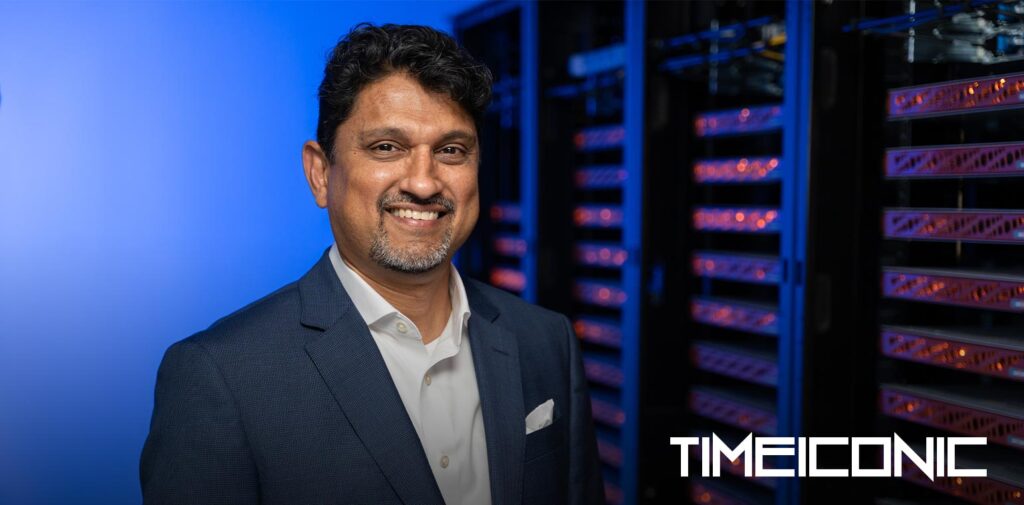
At the intersection of this evolution is Pragash Pillai, Chief Technology Officer at Hotwire Communications. Rather than treating technology as mere infrastructure, Mr. Pillai has defined his career by championing a philosophy where technical breakthrough always serves a human purpose. It is this customer-first, people-driven mindset that has guided his journey through one of the world’s fastest-changing industries—and continues to shape how he prepares organizations for the digital landscape of tomorrow.
“The greatest technology solutions are built by teams that never stop learning.”
The Human Element of Innovation
Many careers in technology begin with a fascination for systems, software, or engineering. Mr. Pillai’s motivation has always extended further. What drew him to telecommunications was the opportunity to shape solutions that improve the experiences of customers while helping the people behind those solutions grow professionally. For him, innovation has never been measured solely by technical achievement. Its real value lies in the positive impact it creates, both for the communities being served and for the teams responsible for delivering it.
That perspective has remained remarkably consistent despite the industry’s constant transformation. Telecommunications has experienced wave after wave of disruption, with new technologies repeatedly redefining how networks are designed, managed, and experienced. Each transition has introduced fresh opportunities to rethink established practices rather than simply refine existing ones. Instead of viewing these shifts as obstacles, Mr. Pillai has embraced them as opportunities to expand his own understanding while encouraging those around him to do the same.
Watching teams mature through periods of technological change has become one of the most rewarding aspects of his career. Engineers develop new capabilities, operational teams adapt to emerging technologies, and collaborative problem-solving often produces solutions that no single department could have achieved independently. These experiences reinforced a simple belief that continues to influence his leadership today: sustainable innovation depends as much on developing people as it does on developing technology.
Experience undoubtedly shapes leadership, but Mr. Pillai believes the most valuable lessons rarely come from working in isolation. Throughout his career, the opportunities that left the deepest impression were those that brought together professionals with different expertise, perspectives, and responsibilities. Working across engineering, operations, product development, and business functions revealed how closely each discipline depends on the others when delivering meaningful outcomes.
“The strongest solutions emerge when different perspectives work toward the same objective.”
Leading Through Continuous Learning
This collaborative approach has also influenced how he makes decisions. Rather than relying exclusively on established methods or personal experience, he values environments where ideas can be challenged constructively and where learning flows naturally across teams. In an industry that rarely stands still, adaptability becomes a competitive advantage, and organizations that encourage open dialogue are often the ones best prepared for the next wave of change.
The result is a leadership style built on participation rather than hierarchy. Technical excellence remains essential, but long-term success comes from creating shared ownership, aligning diverse expertise, and ensuring every team understands how its contribution supports a broader organizational vision.
One of the greatest challenges facing technology leaders is not responding to change but staying ahead of it. As new platforms, architectures, and digital capabilities continue to reshape telecommunications, experience alone is no longer enough to guarantee effective leadership. Yesterday’s expertise can quickly become outdated if it is not supported by an ongoing commitment to learning.
Mr. Pillai believes curiosity and humility have become defining leadership qualities in this environment. Organizations move forward when their leaders remain willing to question assumptions, explore unfamiliar ideas, and recognize that innovation often begins by admitting there is still more to understand. Those who assume they already possess every answer risk becoming disconnected from an industry that continues to reinvent itself.
This mindset influences far more than personal development. It shapes organizational culture, encouraging teams to experiment thoughtfully, learn from one another, and remain responsive as customer expectations and technology continue to evolve. Leadership is not about having the loudest voice in the room. It is about creating the conditions where knowledge continues to grow across the entire organization.
That philosophy would prove especially valuable as he stepped into his role at Hotwire Communications. Joining the company was not simply an opportunity to oversee technology strategy. It was an opportunity to strengthen how technology, product development, and operational execution work together, laying the foundation for the company’s next chapter of growth.
Building One Technology Organization
Stepping into the role of Chief Technology Officer at Hotwire Communications represented far more than a leadership transition. It was an opportunity to strengthen the connection between ideas and execution, ensuring that technology strategy did not exist independently from the teams responsible for delivering services every day. As broadband providers compete in an environment where customer expectations continue to rise, organizational alignment has become just as important as technological advancement.
For Mr. Pillai, the starting point was not introducing new products or pursuing the latest industry trend. Instead, his focus centered on creating stronger collaboration across the company’s product, technology, and service delivery organizations. While each function possessed its own expertise, their greatest potential could only be realized when they operated with shared objectives and a continuous exchange of knowledge.
Engineering teams gained a clearer understanding of operational realities, while insights gathered from field teams and customer interactions began shaping future product decisions. Rather than allowing development to end once a solution reached deployment, the organization established a continuous cycle of learning where real-world experience informs future innovation. Every implementation, customer interaction, and operational observation became another opportunity to refine the next generation of solutions.
“Innovation becomes sustainable when the people who build technology learn continuously from the people who deliver it.”
Bridging Strategy and Execution
Technology organizations often succeed or struggle based on how effectively they translate strategy into everyday execution. Mr. Pillai believes that the distance between these two functions should be as small as possible. The closer engineering remains to operational experience, the better positioned an organization is to solve meaningful problems instead of theoretical ones.
This philosophy has encouraged closer collaboration across teams that traditionally worked within separate responsibilities. Product development is no longer guided solely by technical possibilities, nor is service delivery limited to executing predefined plans. Instead, both functions contribute to a shared conversation where practical experience, customer feedback, and engineering expertise shape one another throughout the development process.
The result is an organization capable of adapting more naturally as market expectations evolve. Rather than reacting after challenges emerge, teams develop a stronger understanding of potential opportunities before they become urgent priorities. This approach creates greater agility without sacrificing operational discipline, allowing innovation to progress with purpose rather than speed alone.
While broadband infrastructure remains the foundation of Hotwire Communications, Mr. Pillai recognizes that software increasingly defines how customers experience that infrastructure. Digital platforms have become an essential part of modern telecommunications, shaping everything from account management to service visibility and operational efficiency.
Custom Software and Future-Ready Architecture
To strengthen that capability, Hotwire expanded its dedicated in-house software development expertise, allowing the company to design and refine solutions specifically around its own operational model and customer expectations. Building internally creates a level of flexibility that packaged solutions rarely provide. New capabilities can be introduced more quickly, refined through direct customer feedback, and continuously improved without depending on external development cycles.
That strategy also strengthens collaboration inside the organization. Software engineers work alongside network specialists and operational teams, ensuring that digital platforms evolve with a clear understanding of both technical performance and customer needs. The outcome is not simply faster software development but a closer relationship between technology and the people it serves.
One of the clearest examples of this approach is MyFision, Hotwire’s proprietary platform designed to simplify how customers interact with their services. By providing intuitive access to account management and network information, the platform reflects the company’s broader commitment to making sophisticated technology feel straightforward and accessible.
“Digital experiences should remove complexity, not introduce it.”
Building stronger internal capabilities is not only about addressing today’s priorities. It is also about preparing the organization for technologies that will reshape telecommunications over the coming decade. Mr. Pillai believes companies must create the capacity to absorb innovation before it becomes a competitive necessity, ensuring that new technologies can be adopted thoughtfully rather than under pressure.
This long-term perspective has influenced how Hotwire prepares for the growing role of artificial intelligence across its operations. Rather than viewing AI as a collection of isolated tools, the company has established the foundation for an AI Center of Excellence, providing a structured framework for exploring how machine learning can support network operations, customer engagement, and internal productivity.
The emphasis is not on adopting artificial intelligence for its own sake. Instead, the objective is to identify practical applications that improve decision-making, strengthen operational efficiency, and enhance the overall quality of service. By approaching AI through disciplined governance and measurable outcomes, Hotwire is positioning itself to integrate emerging technologies in ways that create lasting value for both the organization and its customers.
As these initiatives continue to take shape, they reveal a broader philosophy that extends beyond technology investments alone. Building the future requires organizations capable of learning, adapting, and growing together. With that foundation in place, attention naturally turns to the experience customers ultimately receive, and to the infrastructure that enables Hotwire Communications to distinguish itself in an increasingly competitive broadband market.
Creating the Broadband Experience of Tomorrow
Competition in the broadband industry has moved well beyond the race for faster speeds. Customers rarely evaluate their provider by technical specifications alone. Their expectations are shaped by every interaction they have with the service, from the consistency of the connection and the simplicity of managing their account to the confidence that support will be available when it is genuinely needed. Delivering that complete experience requires far more than robust infrastructure. It demands an ecosystem where technology, software, and service operate in harmony.
That philosophy sits at the center of Hotwire Communications’ approach to innovation. Rather than treating connectivity as a standalone product, the company views it as the foundation for every digital experience its customers depend on. As households become increasingly connected through remote work, streaming, cloud applications, online learning, and smart devices, the objective is not simply to keep pace with changing expectations but to anticipate them before they become the industry standard.
For Mr. Pillai, creating that level of consistency begins with understanding a simple truth: customers rarely think about the network when it performs exactly as expected. The highest compliment a technology organization can receive is often invisibility, where reliable connectivity allows people to focus entirely on what they are trying to accomplish rather than the infrastructure supporting it.
“The best technology is the kind people rarely have to think about because it simply works.”
The Power of Fiber-First Architecture
Behind that seamless experience lies an architectural philosophy that distinguishes Hotwire Communications in a crowded marketplace. While many broadband providers continue to rely on legacy infrastructure that shares bandwidth across multiple users, Hotwire’s fiber-first network is designed around dedicated, symmetrical connectivity capable of supporting the demands of modern digital life.
The difference extends far beyond headline download speeds. As digital activities increasingly depend on real-time interaction, consistent upload performance, stable latency, and dependable responsiveness have become equally important measures of network quality. Video conferencing, cloud collaboration, online gaming, and content creation all require a level of performance that traditional approaches often struggle to sustain during periods of high demand.
By investing in fiber architecture, Hotwire has positioned itself to deliver a more predictable and resilient experience. Customers benefit from connections designed to maintain consistent performance, even as households continue adding more devices and more bandwidth-intensive applications to their daily routines. Rather than building for yesterday’s internet habits, the company is preparing for a future in which digital connectivity becomes even more deeply integrated into everyday life.
Emerging technologies often dominate industry conversations, but Mr. Pillai believes meaningful innovation starts somewhere much closer to the customer. Before introducing new capabilities, organizations must first understand how existing services are being experienced, where friction exists, and which improvements will create the greatest value.
That understanding comes from maintaining close relationships with the people who interact with customers every day. Support specialists hear recurring questions. Field technicians observe how services perform in real-world environments. Community partners provide insight into evolving local needs. Collectively, these perspectives offer a far richer picture than technical metrics alone ever could.
Merging Digital Simplicity with Human Expertise
By bringing these observations back into product and technology discussions, Hotwire creates a continuous cycle of refinement where customer experience directly influences future development. The process ensures that innovation remains grounded in practical value rather than becoming an exercise in introducing technology for its own sake.
This balanced approach also allows the organization to remain responsive as new opportunities emerge. While industry trends provide valuable direction, Mr. Pillai believes lasting differentiation comes from listening carefully enough to understand what customers truly need before deciding how technology should respond.
“The most valuable innovations are often inspired by listening before building.”
Technology has made self-service an increasingly important part of everyday life, and broadband is no exception. Customers expect the ability to manage services, monitor their accounts, and access information quickly without unnecessary complexity. Digital platforms have therefore become an essential extension of the network itself, providing greater visibility while simplifying routine interactions.
Yet Mr. Pillai does not see digital transformation as a replacement for human relationships. Instead, he believes technology should create space for more meaningful support when customers need it most. Routine tasks can be completed independently, while more complex situations deserve direct access to knowledgeable professionals capable of resolving issues with confidence and efficiency.
This balance between digital convenience and personalized assistance reflects Hotwire’s broader service philosophy. Automation improves speed and consistency, but expertise, empathy, and responsiveness continue to define exceptional customer service. Rather than competing with one another, technology and human interaction become complementary strengths that together create a more complete customer experience.
That same philosophy of thoughtful preparation also influences how the company approaches the future. As artificial intelligence, immersive applications, and increasingly connected lifestyles reshape the broadband landscape, the focus shifts from meeting today’s expectations to preparing for entirely new possibilities.
Preparing for an AI-Native Future
The next chapter of telecommunications will not simply be defined by faster networks. It will be shaped by networks capable of making intelligent decisions, responding dynamically to changing conditions, and supporting digital experiences that are only beginning to enter everyday life. Artificial intelligence, immersive computing, remote healthcare, cloud-native applications, and increasingly sophisticated connected homes are all accelerating a fundamental shift in how broadband infrastructure must be designed and managed.
Mr. Pillai believes artificial intelligence will play a defining role in that transformation. Its greatest potential lies not in replacing people, but in enabling organizations to operate with greater precision, efficiency, and foresight. Networks that can recognize patterns, anticipate issues before they affect customers, and adapt in real time will establish a new benchmark for operational excellence. As these capabilities mature, AI will become an integral part of how telecommunications providers maintain reliability, strengthen cybersecurity, and deliver more personalized digital experiences.
The organizations that benefit most will not necessarily be those adopting artificial intelligence first. They will be the ones integrating it thoughtfully, ensuring every implementation solves a genuine business challenge while creating measurable value for customers and employees alike.
“The future belongs to networks that can learn, adapt, and continuously improve.”
Infrastructure Built to Last
The digital services emerging today will place demands on broadband infrastructure unlike anything seen before. Augmented and virtual reality, cloud gaming, real-time AI assistants, and advanced telemedicine all depend on connections that remain responsive regardless of how many devices are operating simultaneously. These applications require more than raw bandwidth. They rely on low latency, symmetrical performance, and unwavering consistency.
This is where Mr. Pillai sees one of fiber’s most significant long-term advantages. Unlike legacy technologies that often require substantial physical upgrades to increase capacity, fiber provides an infrastructure capable of expanding alongside future demand. As digital requirements continue to grow, the network can evolve without repeatedly rebuilding its physical foundation.
That scalability is becoming increasingly important as homes transform into sophisticated digital environments. Every new connected device adds another layer of demand, making resilient infrastructure essential for supporting the experiences consumers will expect over the next decade. Preparing for that future requires decisions made years in advance, long before those technologies become commonplace.
Greater connectivity inevitably expands the cybersecurity landscape. Every connected device, cloud application, and digital interaction introduces new opportunities for malicious actors, while advances in artificial intelligence have made cyber threats more sophisticated and increasingly difficult to detect.
A Shared Culture of Resilient Security
Mr. Pillai believes effective cybersecurity begins with proactive design rather than reactive response. Protection should be embedded within the network itself, supported by continuous monitoring, intelligent threat detection, and regular software updates that strengthen resilience without disrupting the customer experience. When security becomes part of the architecture rather than an afterthought, organizations are better positioned to address emerging risks before they escalate.
He also recognizes that cybersecurity is a shared responsibility. Even the most advanced network benefits from informed users who adopt strong passwords, enable multi-factor authentication, update devices regularly, and configure home networks securely. As digital lifestyles become increasingly interconnected, these everyday practices remain an important part of protecting personal information and maintaining trust in the technologies people rely upon.
“Strong technology and informed users together create the most resilient digital environment.”
Looking across Mr. Pillai’s career, one theme consistently rises above the technologies themselves. While platforms, architectures, and digital capabilities continue to evolve, leadership remains rooted in principles that are remarkably enduring. Success comes from creating environments where talented people can collaborate effectively, where ideas are encouraged to challenge convention, and where organizations remain willing to learn regardless of how much experience they have accumulated.
That perspective has shaped his contribution at Hotwire Communications, where strengthening organizational alignment, expanding software capabilities, and preparing for intelligent network operations all serve a broader objective. Each initiative reflects a commitment to building an organization capable of adapting confidently as the industry continues to evolve, ensuring innovation is supported by disciplined execution and a clear long-term vision.
As telecommunications becomes increasingly central to every aspect of modern life, the responsibility of technology leaders extends far beyond delivering connectivity. They are helping create the digital infrastructure that enables economies to grow, communities to remain connected, and future innovations to flourish. Through thoughtful leadership and a commitment to continuous progress, Mr. Pillai is contributing to that future, one where technology is not only more powerful but also more purposeful, resilient, and prepared for the opportunities that lie ahead.
“The true measure of technology is not how advanced it becomes, but how naturally it improves the lives of the people who depend on it.”